Coming Home With Hope, and Some Uncomfortable Questions
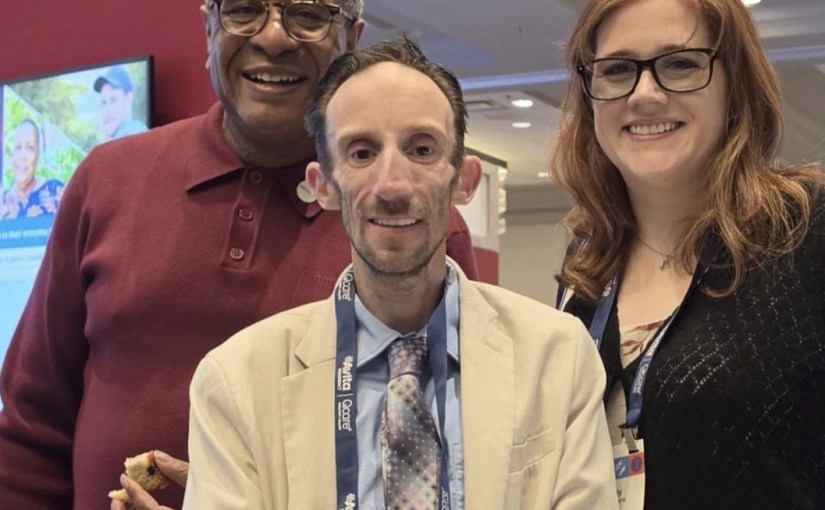
I came home from the Ryan White Program’s National Conference inspired.
I also came home uncomfortable.
Both things can be true.
Throughout the conference, I met people doing extraordinary work under increasingly difficult circumstances. Health departments, AIDS service organizations, community leaders, providers, and people living with HIV are finding creative ways to keep serving people while navigating funding uncertainty, political scrutiny, restrictions on language, and an environment where some people feel monitored, erased, constrained, or afraid to say too much.
People are protecting their livelihoods while still trying to protect their communities.
That is a difficult line to walk, and I left with tremendous respect for the people walking it.
But conferences also have a way of holding up a mirror.
I attended presentations from communities describing Planning Councils and health departments working in genuine partnership. They talked about shared decision-making, empowered community members, transparency, innovation, and mutual accountability.
And I found myself thinking about home.
We don’t have a terrible partnership. There are good people throughout our system who care deeply and work incredibly hard.
But if we’re going to be serious about continuous improvement, we also have to acknowledge that we have dysfunction. We have politics. We have unresolved grievances and unspoken truths. We sometimes whisper about problems privately that we’re reluctant to discuss collectively.
And all of us, including me, are participants in the system we’ve created.
That’s what makes the conversation difficult.
It would be easy to blame staff, the Recipient, providers, Planning Council leadership, community members, or whoever happens to be frustrating us at the moment. But systems don’t become dysfunctional because of one person. They evolve that way because behaviors become normalized, difficult conversations get postponed, responsibilities become blurred, and eventually “this is how we’ve always done it” or “we should so this because it worked before” becomes an acceptable explanation.
The conference reminded me that partnership has to mean more than meeting the requirements of the legislation.
Real partnership requires transparency when transparency is inconvenient. Shared decision-making when the decision actually matters. Clear responsibilities. Honest feedback. Accessible data. Community members who understand the information they’re being asked to act upon. And enough trust to put uncomfortable issues on the table instead of discussing them quietly after the meeting.
The House Was on Fire
One of the most powerful reflections I heard came near the end of the conference.
In the early years of the Ryan White Program, the house was on fire.
People were dying. Treatments were limited. Communities organized because there was no alternative. People living with HIV demanded a seat at the table because decisions being made in those rooms were literally matters of life and death.
The program that emerged from that crisis has accomplished something extraordinary.
Viral suppression among people receiving Ryan White services has improved dramatically. Treatment has transformed HIV from an almost-certain death sentence into a manageable chronic condition for people who can access and remain engaged in care.
That success creates our next challenge.
The people our systems serve well are increasingly doing well.
So who isn’t?
Who doesn’t know their status? Who has been diagnosed but isn’t connected to care? Who fell out of care? Who doesn’t trust healthcare institutions? Who is dealing with housing instability, substance use, mental health challenges, stigma, poverty, criminalization, or competing priorities that make another medical appointment pretty far down the list?
And perhaps the most uncomfortable question:
What if some people aren’t “hard to reach”? What if our systems are hard to access?
That’s a fundamentally different question.
It requires us to stop assuming that another flyer, another outreach event, or another referral will solve the problem.
It asks us to listen.
Viral Load Is Not Human Value
There is a danger in focusing intensely on viral suppression.
We can accidentally turn a clinical outcome into a judgment about people.
People who aren’t virally suppressed aren’t failures. They aren’t irresponsible. And detectable does not automatically mean someone is recklessly exposing other people to HIV.
Someone may use condoms. Their partners may use PrEP. They may choose lower-risk activities. They may make informed decisions with partners. They may be struggling with adherence while doing everything else they can to protect themselves and others.
My viral load does not determine my value.
Neither does theirs.
Ending the epidemic requires us to care deeply about viral suppression while refusing to reduce people to a laboratory result.
That tension matters.
Harm Reduction Gets Harder When We Add Barriers
I was reminded of this personally before the conference.
I recently tried to connect someone actively using drugs with syringe services. I wasn’t trying to solve their addiction. I was offering a lifeline that could reduce their immediate risk and protect their health.
Then came the conversation about identification and registration requirements.
They checked out.
That moment has stayed with me.
We can debate policies in conference rooms, but eventually someone encounters those policies while standing in front of another human being who needs help.
Every additional barrier has consequences.
That doesn’t mean programs can ignore laws or regulations. It means we need to understand what those requirements actually do to engagement and keep asking how we can reduce barriers wherever we still have discretion.
Maybe Innovation Doesn’t Start With a Big Idea
I expected to come home with projects.
And I did collect ideas.
Better orientation. Better data visualization. Stronger community engagement. Clearer roles. More useful meeting materials. Better agreements between Planning Councils and Recipients. More intentional training.
But the biggest thing I brought home wasn’t a project.
It was hope.
Other communities struggle with many of the same things we do: engagement, meeting participation, data literacy, unclear responsibilities, bureaucracy, fatigue, funding pressures, and translating mountains of information into actual decisions.
We aren’t uniquely dysfunctional.
But that cannot become an excuse for remaining dysfunctional.
Because I also saw communities experimenting.
They tried things. They asked for feedback. They changed processes that weren’t working. They invested in community leadership. They made information understandable. They treated continuous improvement as part of the work rather than as criticism of the work.
That’s the piece I want us to bring home.
We don’t need to blow up everything we’re doing.
We need feedback loops.
Take PSRA, arguably the most consequential responsibility of a Ryan White Planning Council. We spend months reviewing data and ultimately make decisions that direct millions of dollars in HIV services.
And then what?
Do we systematically ask members whether the process worked?
Did they understand the data?
Did they feel prepared to make the decisions?
What information was missing?
What was confusing?
What should we do differently next year?
If we’re not asking those questions, we’re leaving one of our most important processes largely unevaluated.
That can change.
Gratitude Isn’t Complacency
I came home incredibly grateful for the Ryan White Program.
I am grateful to the people who fought to create it. I am grateful to the people who administer it. I am grateful to the providers who make it real every day. And I am especially grateful to the people living with HIV who continue to show up and insist that programs designed for us include us.
But gratitude cannot require silence.
In fact, I think the opposite is true.
If we value this program, we should be willing to challenge it.
If we value our Planning Council, we should want it to become stronger.
If we value partnership, we should be willing to have uncomfortable conversations with our partners.
And if something isn’t working, “this is how we’ve always done it” cannot be our final answer.
The early HIV movement responded because the house was on fire.
The fire looks different today.
It’s stigma. It’s distrust. It’s inequity. It’s people disconnected from care. It’s political interference. It’s exhausted systems and exhausted people. It’s communities we haven’t figured out how to reach because sometimes we haven’t stopped long enough to ask whether they want what we’re offering, in the way we’re offering it.
The conference didn’t give me an answer to all of that.
It gave me something I probably needed more.
It reminded me that people all over this country are wrestling with the same questions, trying new things, failing sometimes, learning, adapting, and continuing the work.
We aren’t alone.
We have accomplished something extraordinary.
And we’re not finished.
Keep Tellin’ The Story
Professor Peacock