When I was approached to create art for a recent Spirit & Place event around HIV criminalization and stigma, I was scared to death. How could I convey something meaningful through photography? I literally thought – I’ll have nothing. I can’t do this. Why did I agree to this?
I struggled in fear for several weeks, which I’ve learned is part of my process. Sans the fear, it’s actually a great way to percolate ideas and let them grow. I’ve also learned the best way to dispel fear is to act. So one day, I sat down and started to create some prototypes in Photoshop. It worked! I suddenly had several ideas I loved that really spoke to how I was feeling.
I’ve used the term “artivist” in my signature line for awhile. I picked up this term working on CelebrateUU. Since the initial rush of creation in 2019/2020, I hadn’t really done much work on artivism apart from social media. So I dove head first into creating pieces that used photography & art to address the topic of HIV criminalization.
How does it make you feel?
“How does an image make you feel?” This is the question that is always in the back of my mind as I create digital art from photographs. This questioning is also a form of art therapy, helping me to reclaim the shame & stigma I experience in life through digital art.
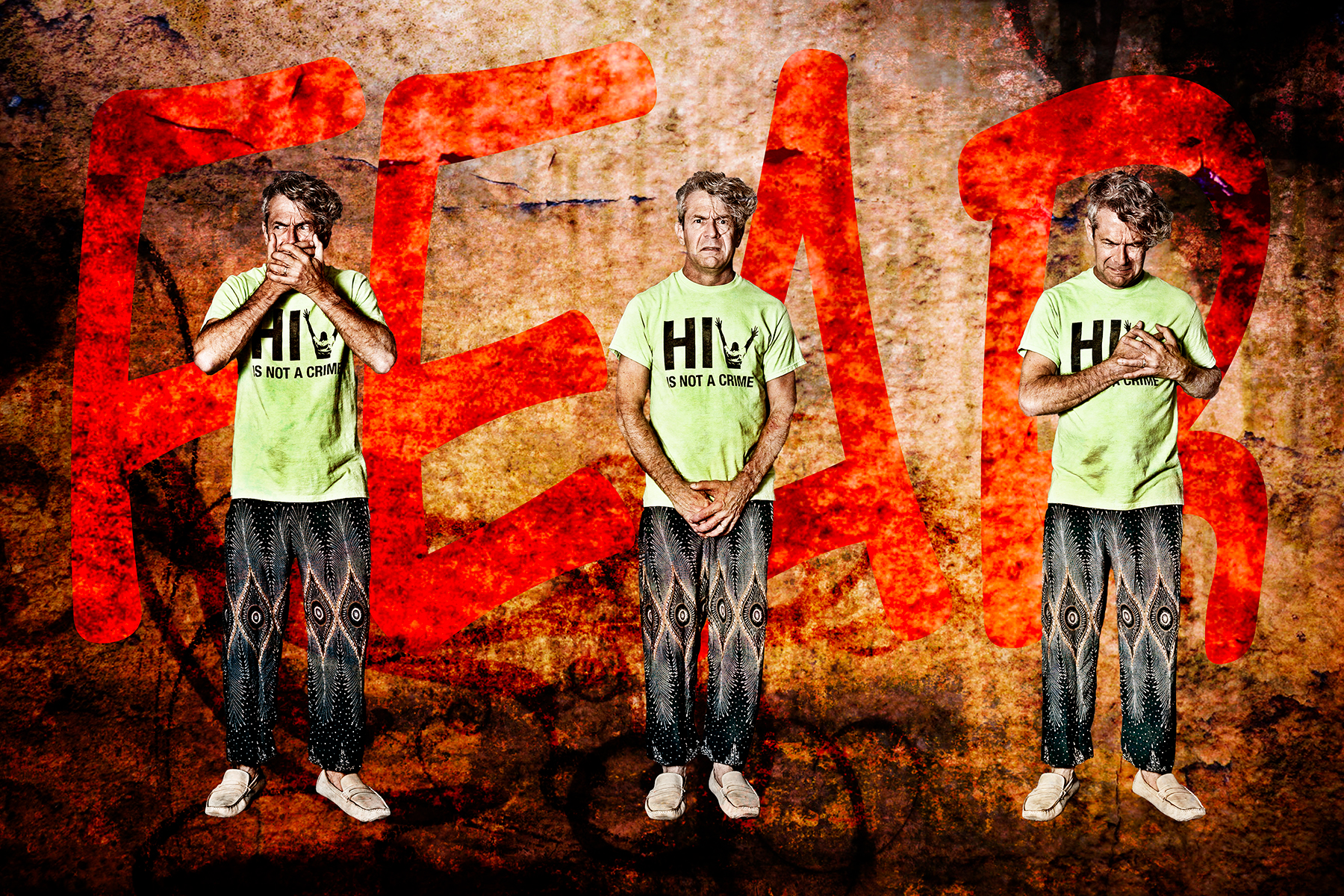
There is so much fear living with HIV. It’s kind of on “slow repeat” in the background of my life.
Fear of disclosure.
Fear of sex.
Fear of not being loved.
These are by far the top 3.
From that, came my first piece. Fear of…
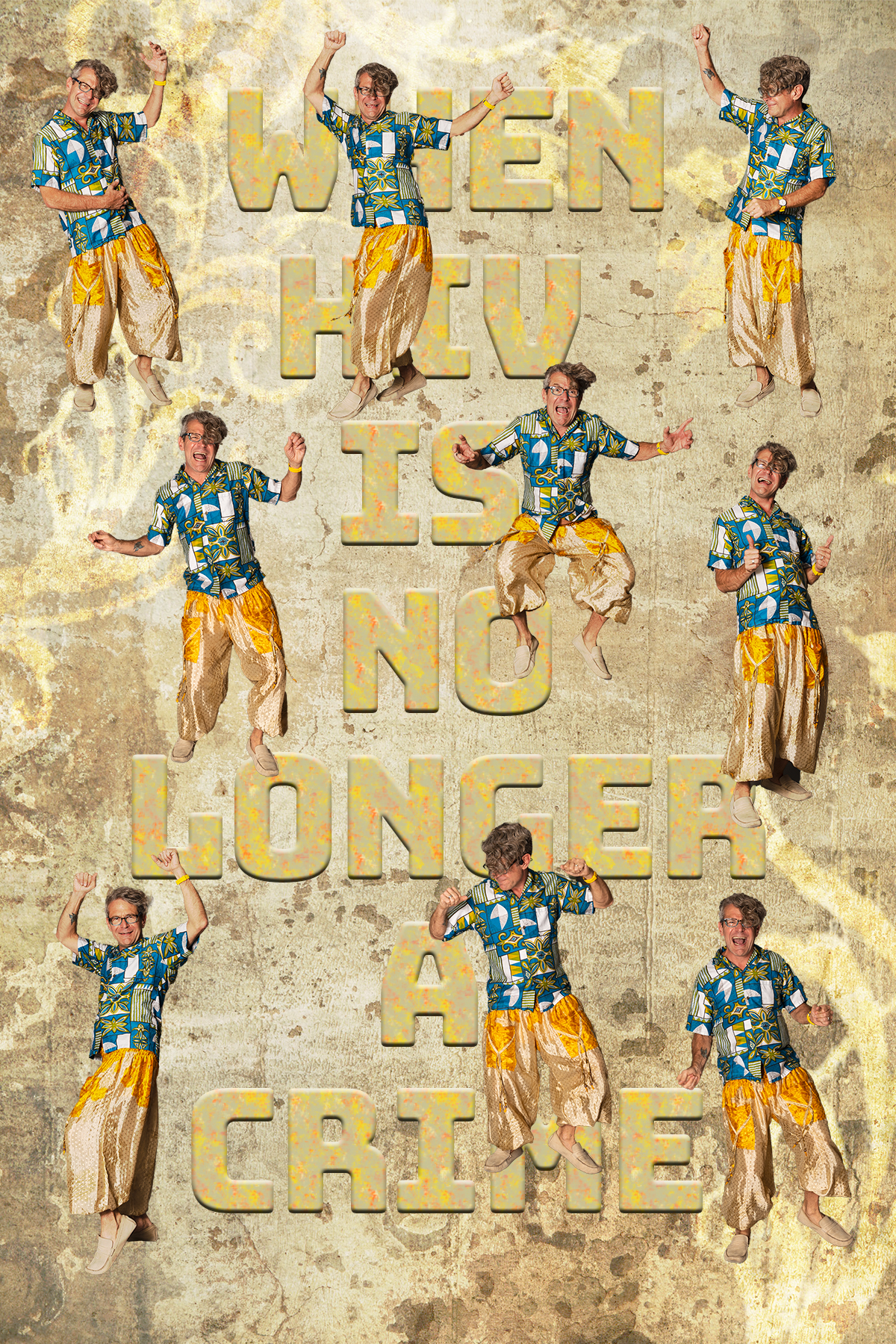
Looking for something positive
Pun aside, I wanted to show more than fear or shame based art. I wanted to use this experience to bring healing, reclaiming the shame and stigma I experience living with HIV.
It was easy to identify with the stigma and fear created by our HIV criminal laws. wanted to go beyond that to rescript the negative messaging around HIV criminalization.
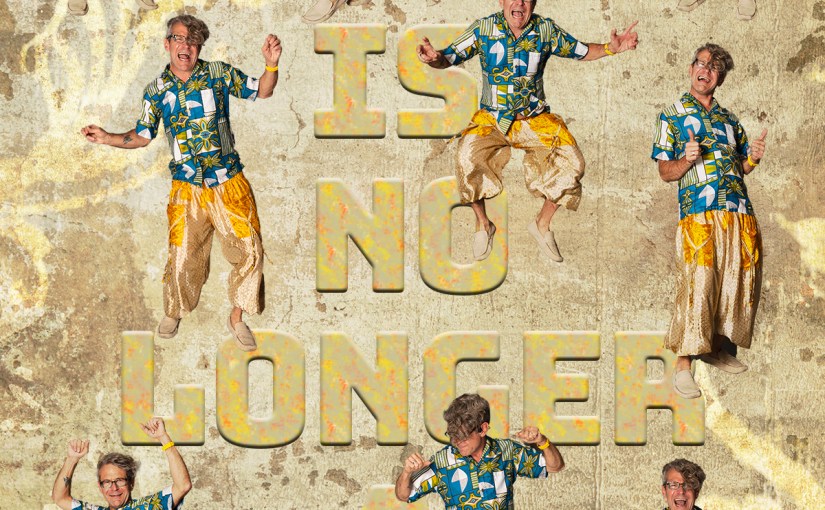
I reflected on “what will it feel like when these laws are modernized?” Immediately, I thought of joy. And when I feel joy – I love to dance. From there flowed my central piece of the exhibit, Happy Dance
Expand my skills, sharpen my tools
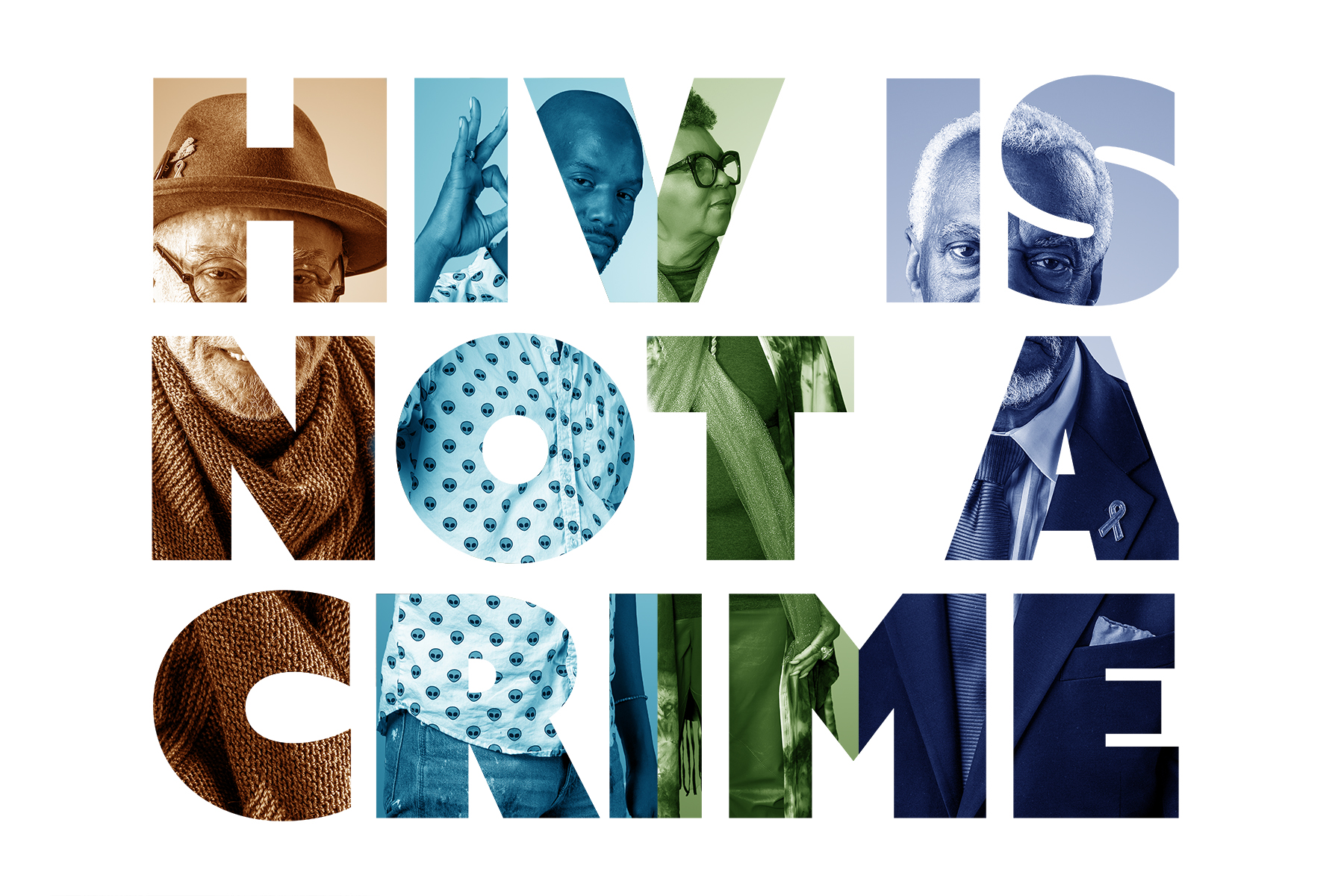
With artivism, words and graphic design are an important element of the creative process. I had seen a great example of images and text in a marketing banner for a local university. Students faces were used to mark out text in a cutout form. It was really cool. And I had almost no idea how to do it in Photoshop.
So this gave me an opportunity to sharpen my tools, and expand my skills in Photoshop. Most of the tutorials I found were for text cutouts based on a single image. I had multiple images, which needed to be moved around to align with the text. It was more complicated than the marketing banner. But each time I reworked it, I found a smarter way to do things. Would started out as a manual process, requiring lots of rework if I tweaked the design turned into a pretty slick smart object that allowed me to move the images around to show up best under the text.
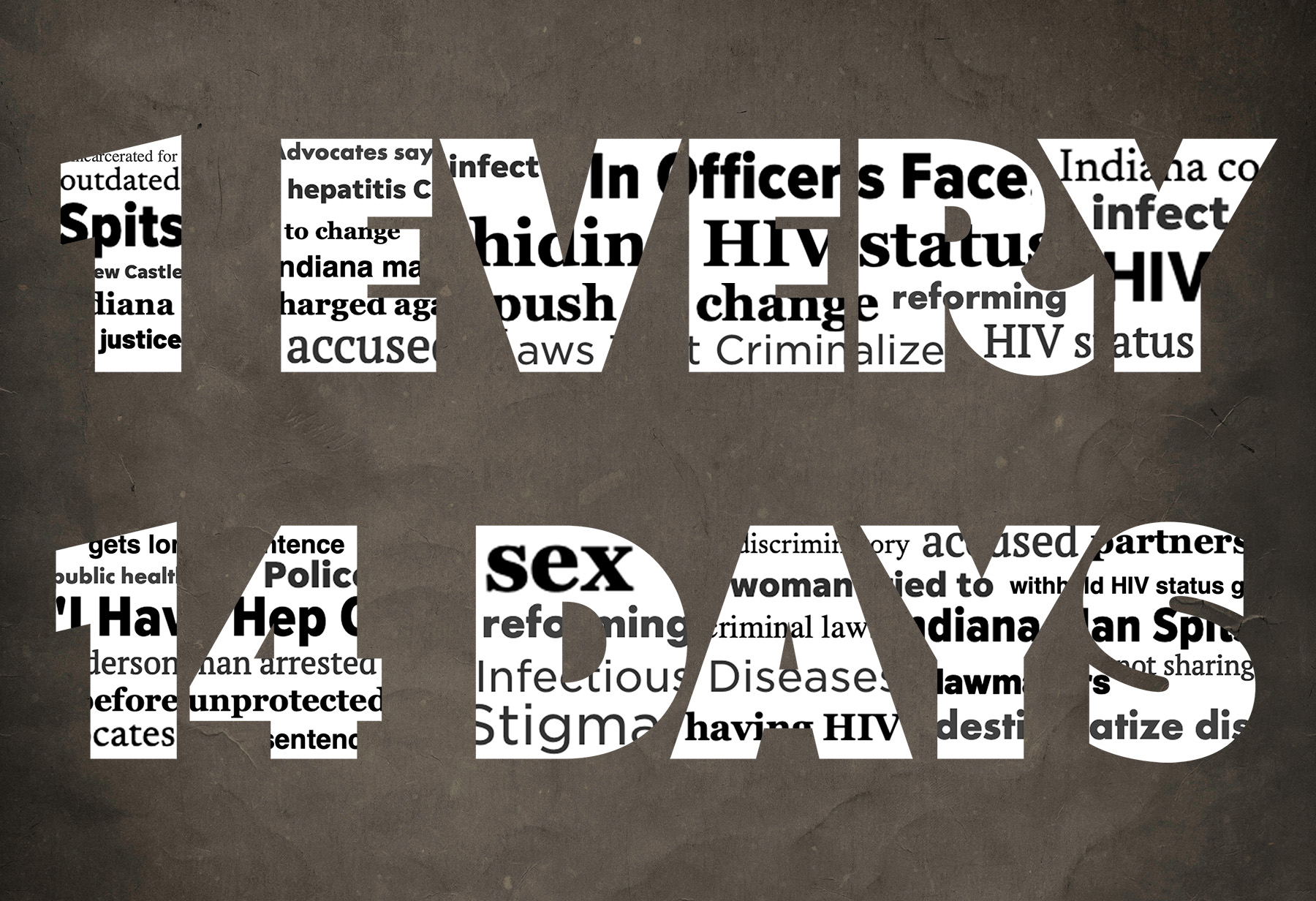
I used this technique in the next two pieces – HINAC Warriors and 1 Every 14 Days.
1 Every 14 Days
Every 14 days in Indiana, someone in Indiana has court contact under outdated laws that unfairly criminalize people living with HIV or viral hepatitis. Nobody should ever be arrested because of a health condition.
“There is a movement in the U.S. to modernize HIV-specific criminal laws to bring them in line with current medical sciences and best criminal justice practices. …Experts argue that law reform is needed to effectively end the HIV epidemic.” – HIV Criminalization in Indiana Law Enforcement Research; Authors: Foote, Cisneros & Sears; 2022.
For more information on efforts to modernize Indiana’s outdated criminal and public health laws,go to hivmodernizationmovement.org.
Manifest destiny – intention in art
I have seen how setting any intention can bring about the very outcome we desire, even when things are outside of our control.
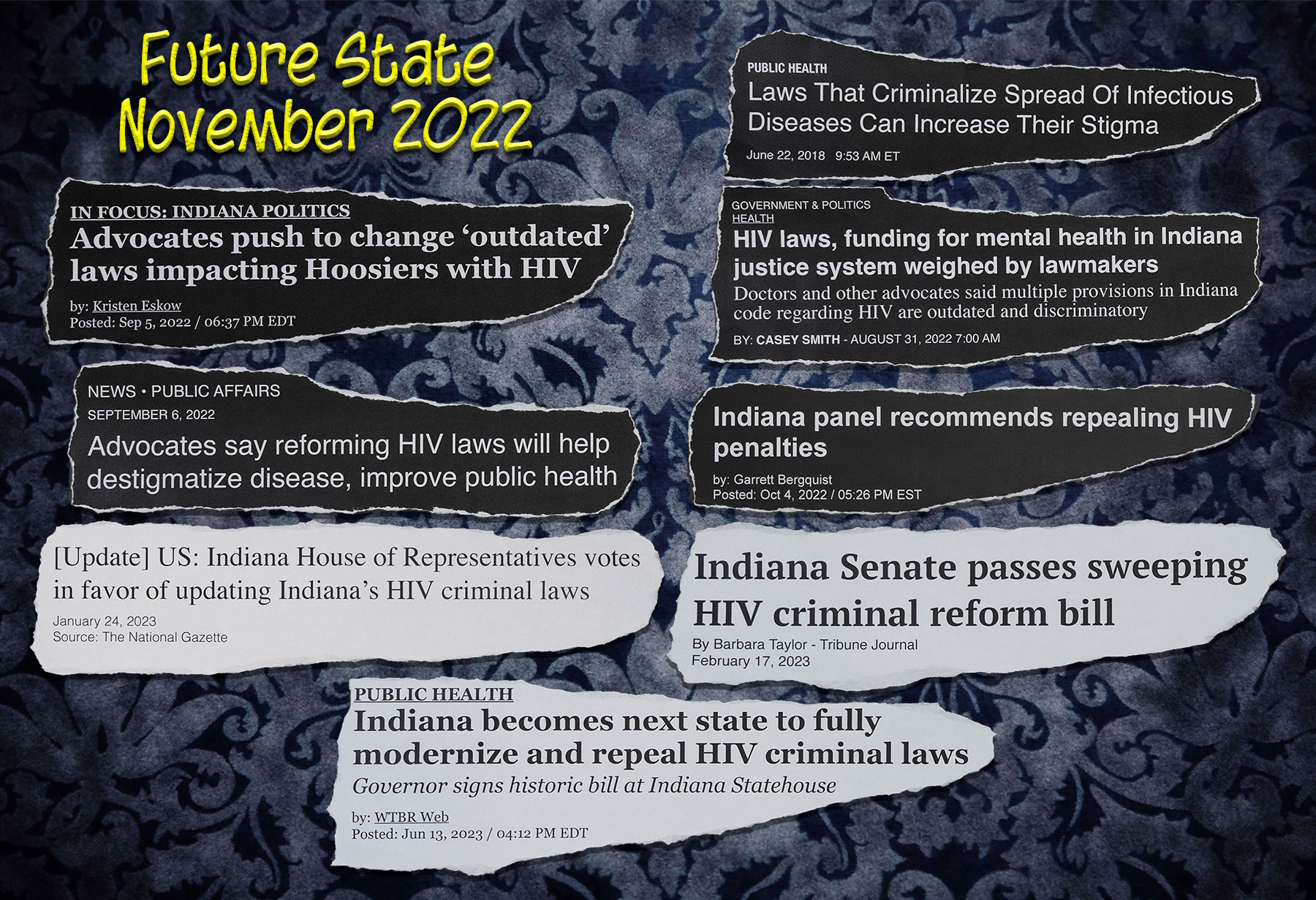
We’ve gotten a fair bit of decent news coverage this past year with HIV modernization in Indiana. I wanted to use these to tell part of the story. At one point, they were going to be part of Happy Dance, to somehow convey the moment when we were successful in changing that laws. In the end, I found they stood on their own – and were a way to set an intention for our work.
From there came the final piece around HIV Criminalization, November 2022 Future State: Will Life Imitate Art?
#CelebrateUU
I wanted to bring in U=U to the conversation, because our HIV criminal laws are based on 30 year old science. Since 2016, we know that when modern treatments reduce HIV to undetectable levels, it can’t be sexually transmitted. That’s also known as U=U – undetectable equals untransmittable. That’s huge.
If I my viral load is undetectable – which it is – why should I even have to disclose, because there is no risk of transmission?
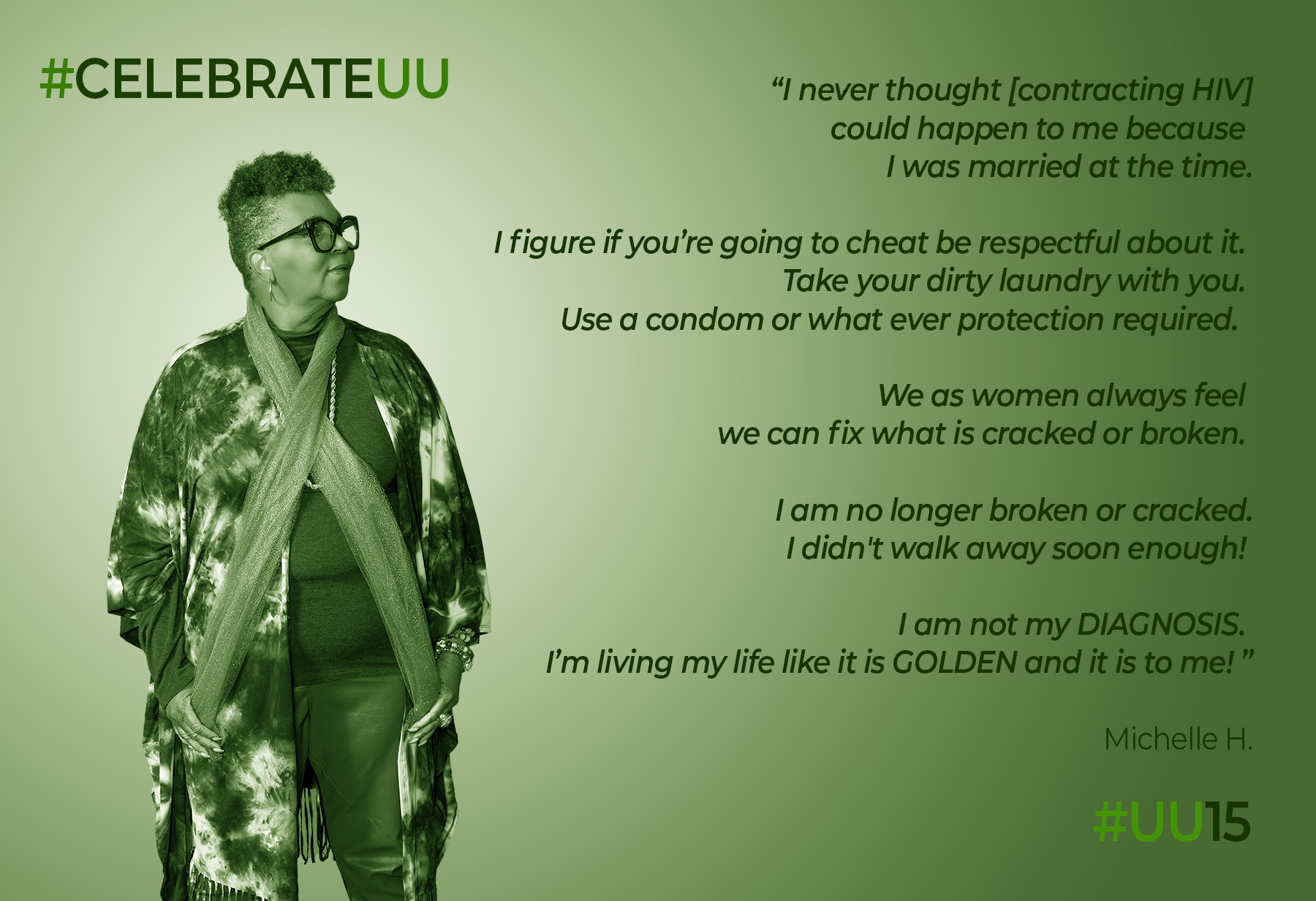
CelebrateUU builds on the concept of Undetectable=Untransmittable (U=U), calling on individuals living with HIV to start recognizing and celebrating our anniversaries of having an undetectable viral load. With this movement, we are putting a face and story to HIV and educating people about the science behind U=U. This is one powerful way to help end the stigma associated with HIV/AIDS.
I started CelebrateUU with 3 other individuals in 2019 & 2020. I had shared their stories on my CelebrateUU page, but had never shown them in a gallery setting. I’ve learned that every art pieces changes me, and that becomes even more true when I print them out. There’s something tangible and real to the story.
I also reached out to two friends who work in the HIV modernization space here in Indiana to include them as two new stories. Their faces & voices were premiered at Spirit and Place.

HIV Modernization
Ending The Stigma of People Living with HIV
Part of the Spirit & Place Festival
About this event
Through an art exhibit and panel discussion, learn how people living with HIV and their allies are working to end HIV stigma by modernizing Indiana’s outdated HIV criminal laws.
People living with HIV often face stigma and discrimination related to Indiana laws that criminalize them due to their positive HIV status. This event features speakers living with HIV who are working to end HIV criminalization through legislative change, activism, art, and community support.
A visual art show featuring Indy-based artist Contonnia Turner, Jr. and photographer/digital artist Todd Fuqua will provide a backdrop for the discussion. Contonnia Turner, Jr. is a talented young Black Hoosier with multiple layers of intersecting identity who creates artwork that reflects who he is physically, mentally, and spiritually. Todd Fuqua is an Indianapolis-based artivist (activism through art) who started a social movement called CelebrateUU, building on the concept of HIV Undetectable=Untransmittable (U=U).