
Understanding the Emotional Impact of an HIV Diagnosis


“It took me nine years to really begin processing my diagnosis.”

When I was first diagnosed with HIV, I didn’t fully grasp how traumatic that moment was. I understood the medical facts, but what I didn’t understand was the grief – the dreams I thought I lost, the fear of stigma, and the quiet loneliness that followed me for years.

It took me nine years to finally begin dealing with my diagnosis. Nine years before I let myself acknowledge the loss, the shame, and the resilience I would need to rebuild my life. Looking back, I can’t help but feel that the system failed me—or at least, it could have done better.

We don’t just need medical care after a diagnosis. We need mental health care too.

Imagine if, six months after someone tests positive, their care coordinator or peer HIV navigator sat down with them for a simple mental health screening. Not a rushed checklist, but a real conversation. A chance to ask: How are you coping? What’s hardest for you right now? Where are you finding strength, and where do you need support?

I recently used a tool that reminded me how powerful those questions can be. It’s a simple worksheet that invites people living with HIV to reflect on different areas of life: identity, health, stigma, relationships, hope, and emotional wellbeing. In a support group, we each scored ourselves, shared our highs and lows, and talked about what mattered most. The therapeutic value was extraordinary – not because of the paper itself, but because of the way it opened space for one person to help another. HT to Robin who helped author this tool.

That’s why I want to share this tool, not as a solution in itself, but as a conversation starter. It can be used by providers, peer navigators, or anyone supporting people living with HIV. It creates an opening to talk about the emotional journey, not just the lab results.

For me, it shouldn’t take nine years to reach that point. If we build mental health check-ins into HIV care – whether at six months, a year, or whenever someone is ready – we can help people grieve, heal, and find resilience much earlier.

Because living with HIV is not just about managing a virus. It’s about reclaiming hope, rebuilding purpose, and reminding people: you are more than your diagnosis.

Keep tellin’ the story,

Professor Peacock

Note: These are my thoughts and my story. I used AI to make helpful edits to my ramblings and online journaling, including some organization to be more blog-friendly. AI created the featured image used in my blog.

I Don’t Need a Specialist Anymore — And That’s a Good Thing


When I was first diagnosed with HIV in 2012, the idea of seeing anyone other than an infectious disease specialist would have felt reckless, even dangerous. This was before PrEP, before U=U. Specialists were the gatekeepers – the people who knew the ever-changing science, the ones who gave me the sense of being in the safest possible hands. For a long time, they were the difference between life and death.

So when I learned today at my routine HIV lab follow-up that the Damien Center is shifting away from relying on infectious disease doctors, and instead training primary care physicians to handle HIV, my first reaction wasn’t celebration. It was shock. Fear. Even a little sadness. A part of me wanted to feel special, to believe that my care required the highest tier of expertise, that my condition set me apart in a way that demanded more than “just” primary care.

But sitting with that discomfort, I realized something important: this change is a milestone.

It’s not about being less cared for. It’s about HIV care becoming ordinary in the best possible sense. What was once an emergency requiring specialists is now a chronic condition that can be managed alongside everything else. Just like diabetes, high blood pressure, or asthma. And just as most people with diabetes don’t see an endocrinologist every month, most people living with HIV don’t need an infectious disease doctor at their side for every check-up. We need skilled, compassionate primary care providers who are equipped with the right training. That’s exactly what this new model is delivering.

The truth is, the biggest factors in HIV health today aren’t whether you have access to a specialist; they’re whether you can access care at all, whether your doctor treats you with dignity, whether you have support for housing, food, mental health, and transportation. Medicine has advanced so much that the day-to-day fight isn’t with the virus itself – it’s with the systems that surround care. And if we’re honest, it’s with stigma itself. Stigma kills.

When I was first diagnosed, I was in the hospital. A case of misdiagnosed stage-2 syphilis landing me in the ER. Thankfully, my visit to the ER is the reason I was diagnosed so soon after being exposed to the HIV virus. My infectious disease doctor told me they caught my HIV very early – he only saw a handful of cases each year like mine. I was lucky to be in his hands.

Around the time I was diagnosed in 2012, newer medications were available, and the medical advice began to shift towards starting treatment right away. Why? Because the side effects of the latest antiretroviral treatments (ARTs) were much milder, making it smarter to begin medication quickly to lower the viral load. This was all before the idea of U=U was introduced.

So, I’m very thankful for my infectious disease specialist, because he caught me “on the forefront of change.” Looking back, that was huge step forward.

Now, 13 years later, the fact that I don’t “need” one anymore isn’t a downgrade — it’s proof of progress. It means that medications work so reliably, and outcomes are so good, that HIV can finally be seen for what it is: not a death sentence, but a manageable chronic condition.

Of course, specialists still exist for rare or complicated cases – and that’s important. But the default has shifted. HIV no longer requires a small elite circle of experts. Instead, it belongs in the hands of everyday doctors, woven into the fabric of routine healthcare.

That’s not loss. That’s victory.

So yes, there was some grief in letting go of the idea that I needed a specialist. But in the end, this shift means something profound:

I am not defined by HIV. My care is not extraordinary because of this virus.

This disease is not terminal. It’s ordinary.

And that’s extraordinary.

Keep tellin’ the story,

Professor Peacock

Note: These are my thoughts and my story. I used AI to make helpful edits to my ramblings and online journaling, including some organization to be more blog-friendly.

Body Positivity in Art: A New Project on Sexual Wellness


#CelebrateUU – Looking Ahead

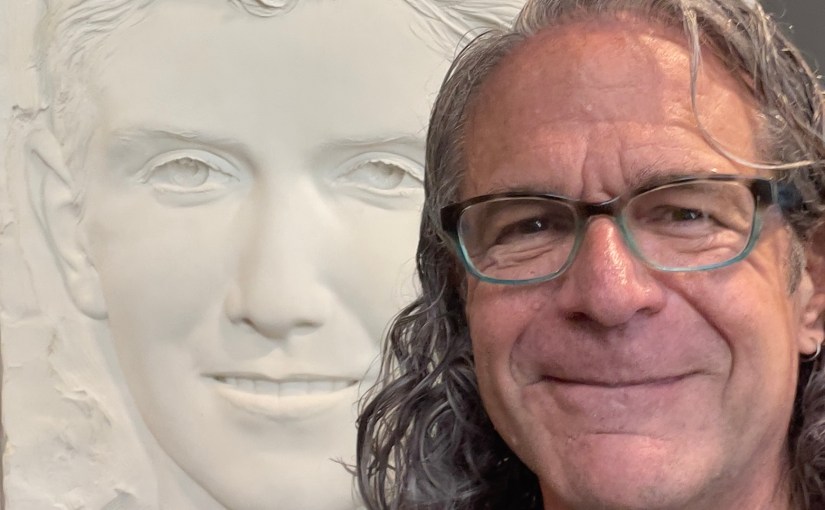
Since 2019, I’ve been increasingly involved in bringing #CelebrateUU to life. When I first came up with the idea of celebrating #CelebrateUU anniversaries, I had no idea it would grow to a citywide exhibition. It’s a #BigMagic moment, from a book I read about the creative life (Big Magic, by Elizabeth Gilbert). I’ve learned to go with my creative flow, investing the time and energy, then seeing how far the Universe wants to me take the idea.

I’ll be releasing 10 new stories on December 1, 2024 at the exhibition opening that is part of a citywide World AIDS Day Community Reception hosted by the Marion County Public Health Department’s Ryan White HIV Services Program.

For the month exhibition, I’m grateful for sponsorship from the MCPHD Ending the HIV Epidemic Task Force, as well as Roberts Camera. I’m also grateful to the Marion County Library for allowing me to show my art in their public spaces. Through this project I learned of this FREE exhibition space – available to resident artists in Marion County!

#JustTheTip Campaign

I’ve had some creative setbacks this year – though I don’t like that language or self-talk, but it is my unfiltered mind response. I try to rephrase things today, to something like I have a great idea to raise awareness around harm reduction, and will be looking for new creative sponsorship or grant funding in 2025. There. The fact that I didn’t get the Indy Arts Council Arts for Awareness grant funding stream still stings a little. But, I have come to re-see this as a “not now, but…” response, not a “no, never” response from the Universe. That’s why I have networks with the @Indy Rainbow Chamber of Commerce, which has now gone statewide. I’ve also learned that @StepUp could be a reliable fiscal sponsor. They already serve that role for other statewide coalitions. This would allow my to ask for contributions that would be tax-deductible, that would fund the full project. I learned a lot from the grant response Q&A session after the notice of non-acceptance. It truly was a learning process – and I can’t wait to bring the #JustTheTip campaign to Indiana, on whatever level that looks. #BigMagic

Closing Out #CelebrateUU

So, when the stylized portrait phase of #CelebrateUU comes to a close on December 29th, I’ll have a huge time void. I’ve been asking the Universe to give me ideas, so I can hit the ground running. A creative life without projects is a dead one – or dying one. I’ve learned that the hard way.

I’ll have the input from my art intervention, where I ask people “How Did This #CelebrateUU Exhibit Make You Feel?” – inspired my a artistic mentor of mine. Thanks Al Duvall. HT to Dr. Carrie Foote, because I borrowed some inspiration from your workshop creative introduction. I’ll find ways to work quotes from that intervention into future social media posts, to keep working at HIV stigma through the stylized portraits and stories.

I know I want to continue to work in the HIV space artistically, but not ignoring HIV criminal reform, harm reduction, mental health, recovery, mental health. I will continue to champion the selfie portion of #CelebreateUU. That hasn’t taken off quite like I’d hope to based on the original concept. But there is time….

I’ve also thought about taking CelebrateUU statewide, or even nationally. If I could work the photo taking into a presentation or workshop, then I could take this on the road to Positive Living or US Conference on HIV/AIDS.

I know I want to get back into the @CToddDudeoir groove, and have already started that with a shoot with Logan Bloir, who I met through Man Crush Mania. I played with some of his images today. More to come…

#BodyPositiveSexPositive

I hope this isn’t passé. But, here’s my pitch to the Universe.

 I want to do a creative B&W nude portrait series to promote stories of sex and body positivity. Whatever that looks like to the person(s). 

Could be individuals, couples, thurples.

I’d want it to be a diverse set of individuals – age, gender identity, gender expression, sexual orientation, etc etc. I’ve learned to trust the Universe to bring me the right people. It may take time, but they show up. As they say, build it and they will come!

I like combining the storytelling with photographs. I think I want to do the series in the people’s home to be more intimate. This is out of my comfort zone – I like the control of studio lighting.  So I may change my mind but location aside, it’s one of the next projects I want to work on. 

The doubter in me has already started in on me. But anxiety is telling me to do this for with people who have lived experience with HIV, HepC or harm reduction. I may narrow that later. Make it a series on sexual health, wellness and prevention.

That’s what is unique about this project in terms of focus and storytelling.  I’ve wanted to do something in the HIV space and I realize now that stigma is very real in both areas – well all three, so I think there is a creative trifecta here.

My goal is to start work in this in January, after I’ve completed my #celebrateuu project. Not sure what that looks like at first – but I’ll dive in and start creating.

The new challenge will be finding funding so I can give participants a reasonable stipend for sharing their story and image. But I’m getting better at writing grants and could find help to locate donors or grants. In the meantime, I can do it time for print, where in exchange for their time, people get a select set of images from the photoshoot. I prefer cash.

Just putting this idea out into the universe.  

Thank you for coming to my #bigmagic ted talk.