
As head into Pride month, I want to talk about coming out of a different closet – publicly disclosing one’s HIV positive status. I believe it can play a significant role in ending the HIV epidemic here in Marion County, where 53-68% of people living with HIV are men having sex with men (MSM). The HIV epidemic has most deeply affected our LGBTQ+ community. I believe there are some important lessons we can apply from one community to another.
For me as a queer man, the process of coming out of the LGBTQ+ closet – taking off the mask, pushing through the fear of rejection & discrimination, finding self-love & community – is very similar to the process I went through disclosing my HIV status. In fact, it took almost 10 years for me to fully process the trauma, loss, and grief of my initial HIV diagnosis in 2012. I wish someone had handed me a link or brochure – similar to this one on disclosure from POZ magazine, or this one on Living with HIV regarding duty to inform from the Indiana Department of Health. It might have accelerated my own journey.
If you’re living with HIV, the HIV community needs you to consider coming out of the closet with your HIV status. My hope today is I’ll start you on your journey of self-discovery and acceptance.
If you know someone living with HIV, I hope you’ll share this blog with them. We need to bring about systemic change, and one way to do so is to come out, come out – wherever you are!
Why does this matter – now?
Marion County is a federally designated hot-spot for new HIV cases, according to 2019 data. If we look at the trend of new HIV diagnoses in Marion and surrounding counties, we see a consistent upward trend since 2010. See the following chart from the Epidemiology of HIV in the Indianapolis
Transitional Grant Area: 2022, particularly the — line for 3 year moving average of new HIV cases.
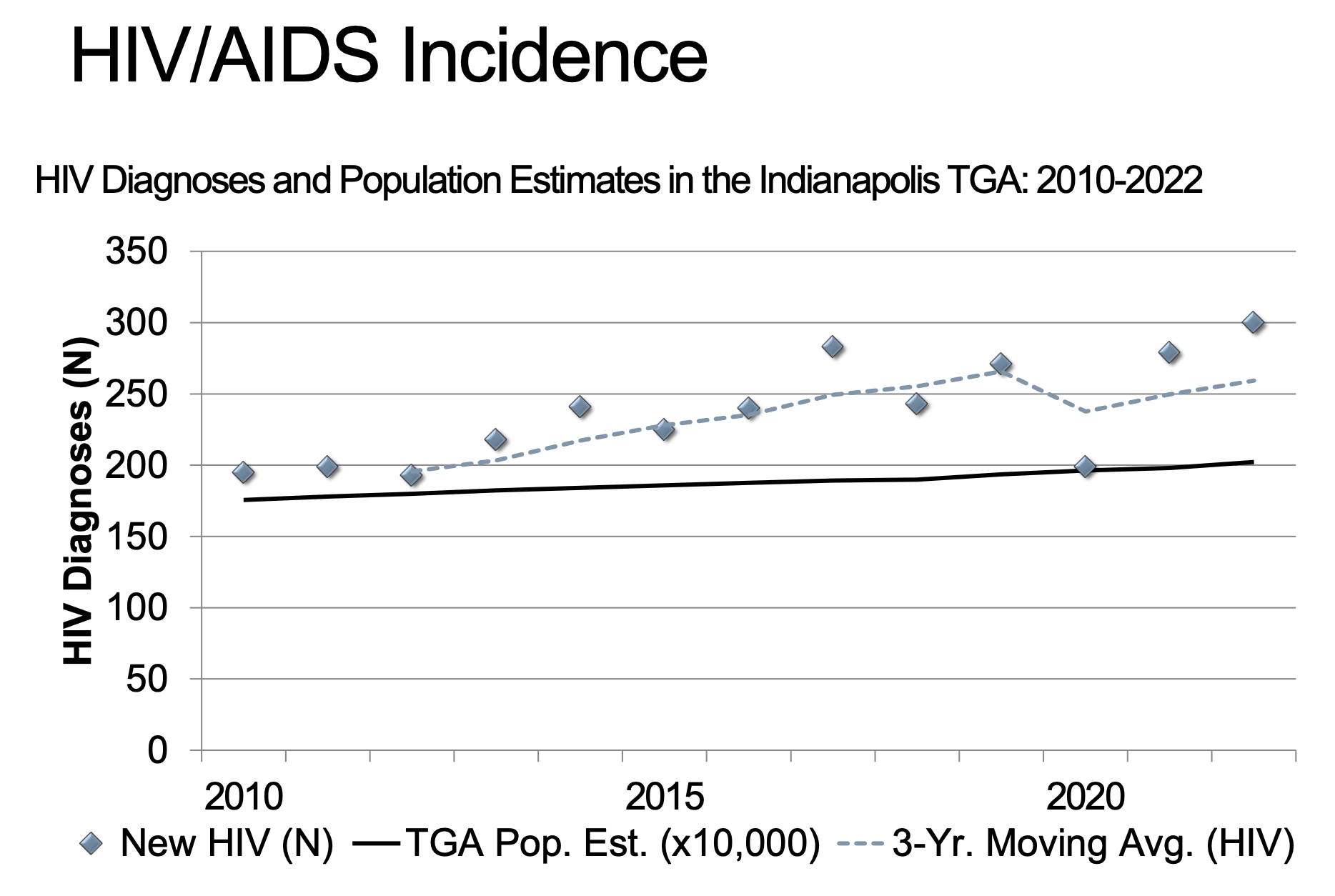
Of the 7,411 people living with HIV in that same area in 2022, an estimated 13% or 964 people are unaware of their status. We know that people who are not aware of their status are much more likely to spread the virus – so it’s imperative that we get more people to know their status through testing.
The CDC recommends that all adults have at least one HIV test in their lifetime; for populations at risk, testing is recommended at least every 12 months. The key to ending the epidemic is early diagnosis, which is one of four pillars in Marion County’s Plan to End the HIV Epidemic. The four pillars are diagnose, treat, prevent, respond. Click here to learn more about the plan, or go to the Side By Side website at endinghivtogether.org
What Anonymous People did for Recovery
“If everyone thinks about alcoholism and addiction as a negative thing, nobody is going to want to get help.” – The Anonymous People
“Over 20 million are suffering in silence.” The Anonymous People
A key shift came in the recovery movement, when people realized that anonymity – a bedrock of the 12-step approach to recovery – had come to hurt the movement by keeping people in silence and limiting their collective voice. Most importantly, people weren’t getting the help they needed.
Over a decade, investments were made in training people across the country in how to tell their story. I was part of that training here in Indianapolis, hosted by Indiana Addiction Issues Coalition. It transformed how we talk about addiction and recovery. It was driven by a lot of organizations like Faces and Voices of Recovery. Check out the Anonymous People video trailer here.
For me, HIPPA is to HIV as the anonymity of the 12 steps was to Addiction. We need to break the cycle of silence because Silence = Stigma. We need our own mini version of Anonymous People for HIV!
I believe most of the 1.2 million people living with HIV in the US – the 13,900 in Indiana – the 5,420 in Marion County – are also suffering in silence.
We need to change that, in order to being about a similar shift in our community’s ability to diagnose, treat, prevent & respond.
Coming out reduces stigma
Coming out – even to just one additional person you know – starts to put a name and a face to HIV. It’s much harder to demonize people living with HIV if you know one personally. Coming out challenges stereotypes and misconceptions that people have about the virus.
HIV-related stigma and discrimination persist as major barriers to our ability to diagnose, treat, prevent & respond. By coming out, people living with HIV can challenge the stereotypes and misconceptions surrounding the virus. The very act of sharing one’s personal story humanizes the epidemic. All of this contributes to reducing the stigma associated with HIV. We also know that when more people openly discuss their HIV status, it helps break down the fear and ignorance that perpetuates stigma and discrimination.
To get help with the the process of disclosure, refer to this brochure from POZ Magazine.
Coming out encourages testing
Publicly disclosing one’s HIV-positive status can inspire others to get tested for HIV, much like coming out of the LGBTQ+ closet inspires others to come out. When people see individuals living with HIV being open about their status, it can motivate those who may be at risk to seek testing and know their own status. Early detection of HIV through testing is crucial for accessing appropriate care and treatment, preventing further transmission, and ultimately curbing the spread of the virus.
We need more people to get tested! We need more people to know their status. We literally need to find the 964 people in Marion & surrounding counties who don’t know their status. Hopefully, the rate shown earlier will begin to go down as more and more people get tested. But in the meantime, it will probably continue to rise as we close the gap on people not knowing their status.
For me this chart sums it all up: when stigma is low, testing is high! When testing is high, people know their status – they aren’t afraid to tell others their status – and we curb the transmission of the virus.
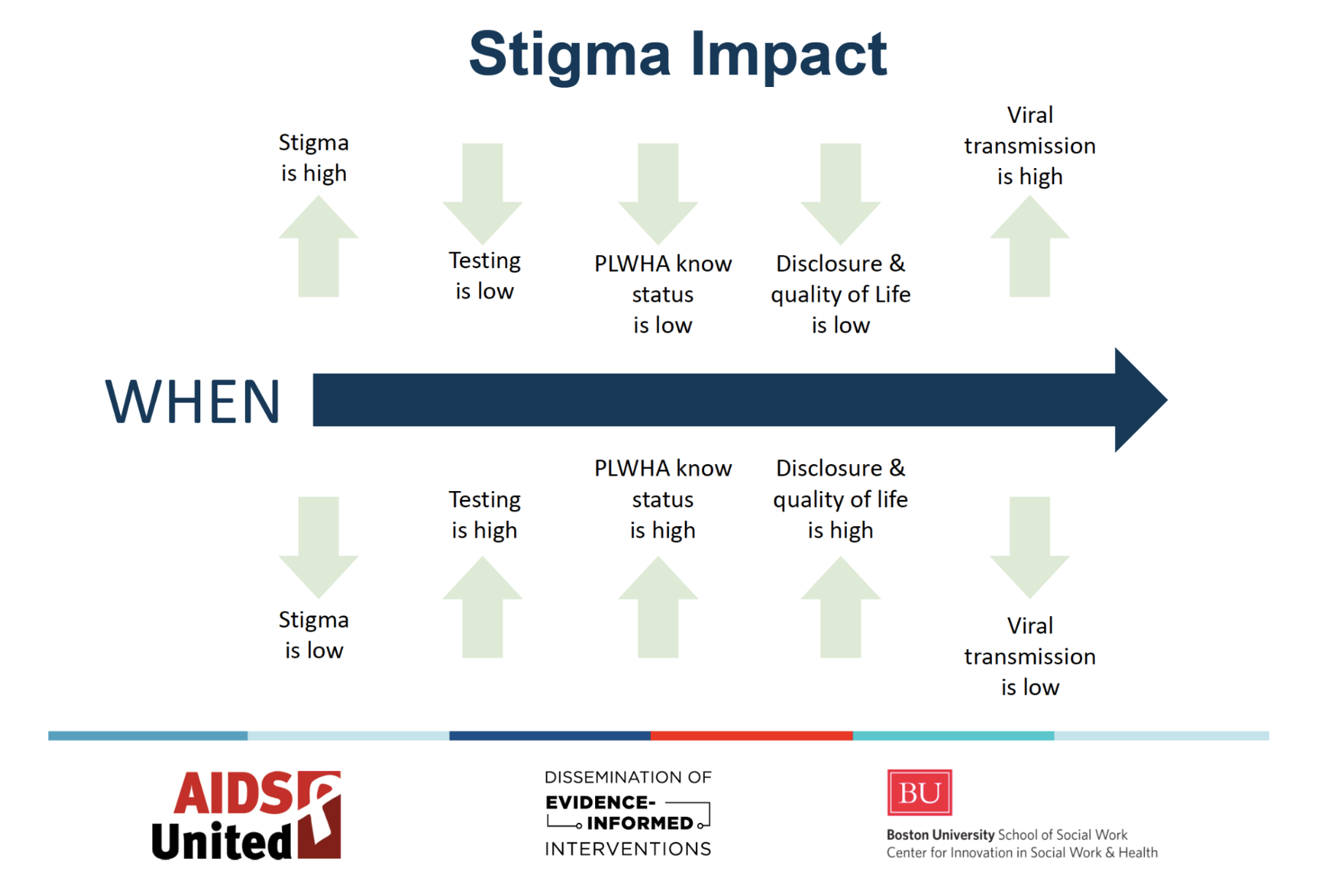
Click here to find testing resources in Marion County.
Free tests are also available at TakeMeHome.org.
Coming out improves your mental health
With the medical advances in HIV science, we know that HIV is no longer a death sentence. It’s a manageable chronic health condition. But, that doesn’t mean it doesn’t feel like a death sentence at first.
I’ve healed a lot over the past 3 years since I came out publicly with my status. Granted, I’m relatively privileged. I’m a GWM and work for myself – so the risk of job-related discrimination is low. As I tell people, my boss knows I’m HIV and doesn’t have a problem – neither should you. Not everyone has that privilege. But I would argue that on a personal level, coming out to others about your status is liberating for your own mental health.
I experienced grief related to my diagnosis without even realizing it. I had largely dealt with the loss of my job in 2010 stemming from my addiction to crystal meth. I learned more about grief when I lost my mom suddenly in 2012 from untreated alcoholism. But nobody had ever helped me connect with the losses related to my HIV diagnosis in 2011. Loss of self-confidence. Loss of love and romance as I feared it. Loss of fear-less sex as I knew it. It took my me years to connect with those losses and properly grieve them.
A key part of my “HIV Recovery” was my support system. I had a great therapist – though I wish “the system” had pushed me harder to get into a support group for newly diagnosed individuals. That’s part of the reason I started the Hoosier HIV+E, a peer-led support group for people living with HIV in Indiana. For our mental health, we need a safe space, peer-led support and community.
If you’re thinking about coming out more with your HIV status, make sure you have a good support system – and at least for a period of time, try out therapy or a support group.
Coming out empowers others
By sharing our stories and experiences, we as people living with HIV can empower others who are facing their own diagnosis. Coming out demonstrates resilience. I learned how resilient I really am through my friends in the HIV community. It also takes great courage and strength to come out – but it shows others that it is possible to live a fulfilling life with HIV. And yes, even have fulfilling sex!
This is where our power in numbers grows. Coming out will encourage others to seek support, to adhere to their treatment and to lead productive lives. It’s that visibility that matters. Ultimately, coming out positively impacts not just ourselves – but the people around us. It’s my way – and hopefully your way – of contributing back to reducing the overall impact of the epidemic.
Coming out educates & informs the public
Many people are not aware of the breakthrough advances we’ve made like Undetectable = Untransmittable (U=U) and PrEP. I believe we have the science to end the HIV epidemic. But stigma – stemming from ignorance and fear – stands in the way.
Just like when I came out of the closet as a gay man, people had questions for me. It led to conversations, and through that, they became educated about being gay. When I came out more publicly as living with HIV, I also got a lot of questions. I quickly learned, I needed to learn more about the disease I had been living with for 7 years at the time! Just living with HIV doesn’t necessarily make me an expert on everything about the disease.
Coming out as HIV-positive helps raise awareness about the virus and its impact on individuals and our communities. We can educate others about HIV transmission, prevention methods, the importance of regular testing, and the availability of effective treatments. When people know more, they can make better decisions about their own sexual health. This in turn leads to improved uptake of prevention measures like PrEP, more testing, and better adherence to treatment. Yep, the four pillars are all lifted up when the larger public knows more!
Click here to learn more about HIV 101. Click here to learn more about PrEP. Click here to learn more about U=U.
Coming out builds power in numbers for advocacy
As I’ve gotten involved with HIV Criminalization Reform, I’m learning that legislative change requires two things – power and money. Power is largely defined by the number of constituents who care enough to speak up! That’s another reason why we need more people to come out of the closet in states like Indiana, where our laws are dated on 30-year old science and unfairly prosecute people living with HIV.
Coming out with one’s HIV status can be a catalyst for policy change, as it brings attention to the issues faced by people living with HIV. By sharing our personal experiences and advocating for our rights, individuals living with HIV can contribute to shaping laws, policies and programs that are more responsive to our needs. This can lead to improved access to healthcare, prevention services, anti-discrimination laws, and increased funding for research and support initiatives – ultimately finding a cure!
To learn more about Indiana’s efforts to modernize HIV laws, join the email list for HIV Modernization Movement – Indiana.
Coming out requires support!
It is important to note that coming out as HIV-positive is a deeply personal decision, and individuals should carefully consider their own safety, support systems, and readiness before doing so.
Coming out can have negative effects and adds a level of vulnerability that can be triggered or triggering. Find a support network from healthcare providers, counselors and peer networks like the Hoosier HIV+E in Indiana. If you’re new to advocacy, get a mentor.
Being public about your status brings its own rewards, helping normalize HIV with a face & voice. I understand that not everyone is in the position (aka privilege) to disclose their status publicly, but the more of us who do find the courage, the more effective change we can bring about in ending the HIV epidemic.
Will you join the HIV Anonymous People Movement?
So as we start out this Pride month, I invited you to consider your own “coming out story” as it relates to living with HIV. If you know someone living with HIV, be their friend – ask them how they are doing – share this blog with them. Every voice matters, every voice counts. We need your stories to change public opinion, to end the HIV Epidemic.
Keep tellin’ the story,
Thanks for listening
Professor Peacock


 The Magical Storybook of Professor Peacock