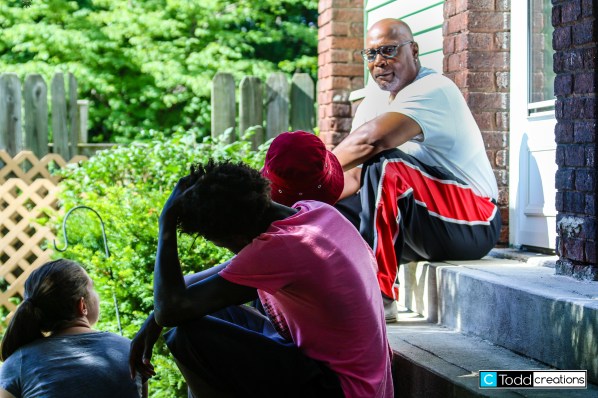
Lifestyle Photographer here. Can I get your opinion on something please?


Do you have experience or information around IP (intellectual property) or rights ownership as it relates to artists, photographers, etc. and the work they create.

If so, I’m looking for input, thoughts, information. Rather than form my own opinion from a Google search alone, I want to hear how you might react on a personal level to being included in a “random” (public space) photograph!  Read on…

Lifestyle What?

Early in their dating phase my brother Jon and his wife Michelle sold all they had and travelled around the country, chasing the best powder they could find. They lived out of the back of a converted van or SUV of some sort. They took showers at the local campsites, YMCA or community shelters. They kept in touch via mail with a post office box at their former dwelling and public email at local libraries.

I used to call him a “ski bum.”

I now call him a “lifestyle skier.”

That shows a lot more respect to him for his life choices, passions and pursuits.

And, I am pretty confident none of his siblings (e.g. me or my sister) have had a two page newspaper article written about them (as well as a Guidepost magazine story based on a true story/near-death experience they were a part of on a wintery evening…)

Click on each thumbnail to read the article on two lifestyle skiers

Lifestyle Photographer

So this year, I’ve started my own sometimes nomadic journey from “photography bum” to “lifestyle photographer.”

This year, I’m launching one of two solo enterprises.  

CToddCreations (www.CToddCreations.com) focuses on my passion for photography and videography (visual story-telling).

Historically, I’ve developed an interest in unusual close-up or macro- composition, particularly of nature and architecture. As in my life intentions, I try to see the world through a different lens. I try to be open to what the universe is perhaps trying to teach me about nature – or man’s efforts to construct habitats and homes.

Looking forward, I want to shift my art in two directions.

First, I want to respect my love of untouched, natural photographs. But, I also want to experiment with other artistic and creation-oriented techniques (play more with the images)

Second, I want to experiment with several ideas for expanding my work to include people subjects and people portraits.

As I think about the people part, I see these falling into four categories:

1. Contracted service to shoot personal portrait(s) for one to several individuals, especially families. This could also include professional headshots, dudeoir, etc;

2. Contracted service to shoot candid photos for a private event, where my services are contracted by the host/organizer for publicity and marketing purposes;

3. Solo shoot with candid photos at a sponsored event (public or private), where photography / videography is not rightfully and lawfully prohibited;

4. Solo shoot with candid photos of others in public spaces, where photography / videography is not rightfully and lawfully prohibited (individuals could be known or unknown to the photographer)

Where I need your help / input…

Questions come to mind, for which I’d be grateful to hear your input / suggestions / experience.

  1. What (if any) copyright, intellectual property or other “rights of ownership” laws, ordinances, etc. exist at the local (Indianapolis), state (Indiana), or federal levels – related to the “artistic work” (photograph) which is being taken by a professional photographer for revenue-generating purposes?
    • Do any of these laws, etc. impact my four “categories,” but particularly the last two?
    • How is this different from a professional photojournalist working for the AP or a local newspaper?
  2. What professional norms might exist, regarding how to be considerate of the “public” who get captured in a photograph which is being taken by a professional photographer for revenue-generating purposes?
    • If only of people I don’t know…?
    • If includes people I know, are friends or acquaintances with?
    • A group is part of an informal social community – a group of people with similar interests who gather for recreation, play, sports, the arts etc.
    • How is this different from a person taking a picture and posting it on social media sites?

Please reply here with a COMMENT, or shoot me an email or find me on Facebook!

Thanks

Todd


We’ve come a LONG WAY baby! #MYINDYPRIDE


This is the headline for this month’s The Word, a mainstay newspaper for the Indianapolis LGBTQ for 25+ years. This is from my frame of reference. I moved to Indy for the first time in July 1990 to take an entry level position at Eli Lilly. It was the era of Brother’s (now Ollie’s), OP’s (now Greg’s), the Metro and Jimmy’s (now the home of the Indiana Arts Council). I was barely 22 years old – the world was my oyster (literally, with my business travel) – and I was out and proud…slowly…everywhere…but work.

As I reflect upon my own journey from those first sometimes terrifying years in my career, worried what would happen at this “conservative, midwestern-values based career-oriented Fortune 100 Company” if they ever found out one of their top recruits was a “known homosexual?” I shuttered to find out…the stress at times was unbearable, wearing a mask and hiding who I was.

In those early years of coming out, I experience the Garage Party, the Grand Masquerade, Bill McKinley and Terry Woods at Jimmy’s Nightclub, the move/expansion of IYG into their current location, the Damien Center, the Bag Ladies, the Horny Hole / Unicorn, the 501, various other clubs that came and went, early Pride (without Corporate tables and national sponsors) and more… (Well, in my version of the past, they were all there then…)

Let’s take a “TBT” walk down memory lane – from then to now.  We’ve come a LONG way baby!


ctftbt-1
Here’s me, dressed up as a Fairy Godmother for the Grand Masquerade (early 1990’s). This was taken with a dear friend, Ron Meyers – since departed, but an important early mentor of mine. To this day, they are finding fairy dust in the crevices of his downtown condo! 😉


Fast forward, and I’ll be back to Indy Pride tomorrow – riding with the Indiana Men’s Motorcycle Club – also known as bear-backs – I mean, the gay men’s motorcycle club. Here I am, 25+ years later, ready to be out and about again (ah, there’s another fond memory – Bruce Seybert and Out & About!)

IMG_4751.JPG
Here I am, 25+ years later – ready to head “Out and Proud” again in this month’s gay pride parade.  Look for me with the Gay Men on Bikes!


Recovery Day


I’ve reflected a bit on Memorial Day this year. It’s been a mixed bag – but there was one gem to come from my reflections.

I’ll break my college writing class, and cut to the chase.

As I reflect on what Memorial Day means to this country, it’s about celebrating those who lost their lives in service to their country.

I want to create a movement called Recovery Day.

It needs to be in September because of National Recovery Month. To not have it confused with Labor Day, I’d propose the final Monday**. Conceptually, it becomes similar to Memorial Day’s purpose, though uniquely focuses on those lost their lives because of mental health or substance abuse disorders. With addiction and recovery, the US War on Drugs contributed to our current situation and must be shut down, giving way to a new executive order.(***)

On this day, I want to borrow words from our ancestors and others with creative license ^^:


Framing for a New Executive Order

Recovery Day is the final Monday of September each year. It recognizes those who lost their lives because of mental health disorders, including substance use disorders (also known as addiction.) We honor the veterans(^) who fought their personal battles to overcome their problems and advance recovery opportunities for all Americans.

Part of the celebration around Recovery Day includes telling people’s stories, so they are not forgotten. We see this all the time on TV or on the radio (*), where comrades or family or friends share a memory of their lost hero. With Facebook, YouTube and other social media tools, it’s even easier for memories to be shared, creating a common bond connected to some of our deepest yearns – to celebrate life, to be interdependent one with another, to find connection, to find meaning.

Some examples:

Recovery Day is borne out of a desire to honor our dead in the United States of America, much like we do on Memorial Day for those who gave their life in service to their country


Executive Order: National Recovery Day

We request an Executive Order from President Obama, declaring something similar to:

National Recovery Day

The date of National Recovery Day shall be the final Monday of September each year. It is designated for the purpose of strewing with flowers, or otherwise decorating the graves of fellow citizens who lost their lives during their battle with mental disorders and/or substance use disorders and whose memories live in almost every citizen’s heart, in each family tree, in our community memories, or in our nation’s collective memory.

It is the purpose of the Commander-in-Chief to inaugurate this observance with the hope that it will be kept up from year to year, while a person in long-term recovery, family or community members remain to honor the memory of their departed comrade. The Commander-in-Chief earnestly desires the public press to lend its friendly aid in bringing to the notice of comrades in all parts of the country in time for simultaneous compliance therewith.

In this observance no form of ceremony is prescribed, but communities and individuals will in their own way arrange such fitting services and testimonials of respect as circumstances may permit.

Hear ye, Hear ye:

Whereas our current understanding of our Nation’s War on Drugs is that it has been damaging our country since its declaration in 1971;

Whereas our nation lacks broad understanding and community surrounding issues of physical, emotional and mental safety and wellbeing;

Whereas mental and/or substance use disorders often show up in multiple diagnoses for the same person;

Whereas we do not yet fully appreciate the stories which have been being created in the lives of individuals, their families, their communities and their environment;

I do declare that a new day has come for our nation.

Another voice of remembrance is needed to bring deeper understanding, healing and connection as citizens and neighbors.

This national voice of remembrance is needed because:

 I believe those who lost their lives during their battle with mental disorders and/or substance use disorders are veterans of our great nation;

I believe their journey of recovery was personal, though it draws upon common needs and principles to support a life in recovery;

I believe their recovery was a process of change through which individuals are improving their health and wellness, living a self-directed life, and striving to reach their full potential;

I believe their battle was daily, overcoming and managing their disease(s) or symptoms, … making informed healthy choices that support physical and emotional wellbeing;

I believe their battle has been having ripple effects into our families, communities and society at large; like an iceberg approaching our nation’s shores, we must seek to more fully understand the full impact the adverse effects of these diseases are having on our society.

In this observance no form of ceremony is prescribed, but communities and individuals will in their own way arrange such fitting services and testimonials of respect as circumstances may permit.


Background & Supporting Concepts

Recovery, Recovery Coaches and the War on Drugs

Those with substance use disorders in particular have been been fighting their own personal battle on a larger national battleground, created when President Nixon declared our nation’s “War on Drugs.”

In recent years, the “War on Drugs” has been declared a failure and arguably shut down. In recognizing its failure, our leaders are shifting the conversation to one where we focus on recovery. Our current “drug czar” is trying to shed that label from his role, replacing it by “recovery czar.”

Likewise, we need to help at a community level to shift the conversation to one of recovery as well.

Recovery is seen to more holistically help to people reach their full potential, much like the approach a life coach might take with someone. Many states, including Indiana, now offer certified Recovery Coaches – also known as peer recovery support services.

In 2014, President Obama’s Administration issued a national blueprint for drug policy. This Strategy calls for drug policy reform rooted in scientific research on addiction, evidence-based prevention programs, increased access to treatment, a historic emphasis on recovery, and criminal justice reform.

And just last year in 2015, for the first time ever, a person in recovery for substance abuse was appointed as director of our National Drug Control Policy (NDCP), reflecting another shift in how we’re approaching this disease.

On a State Level, one organization that is leading the way in giving a recovery voice at the Indiana Statehouse is Indiana Addictions Issues Coalition, a subsidiary of Mental Health America of Indiana.  They provide strong, consistent and effective advocacy for recovery from both substance abuse and mental health disorders. Learn about their 2016 Legislative Priories and how you can get involved and share your story.

Taking a Leap of Faith: Coming out of the closet

It’s time for more people in long-term recovery to come out of the closet… We’re hurting our own cause, our own acceptance, our own sense of shame.

Building on its success and our collective understanding of the twelve step recovery movement, thinking up until recently is largely steeped in the experience  of the twelve step recovery movement. One can not argue “the steps” have helped millions of individuals recover their lives and their personal self-worth. However, recent thinking and research is helping us see the limitations of anonymity-based personal growth.

The “secrecy” around “the rooms” fuels shame and does nothing to help improve public opinion or to reduce the societal stigma of being of suffering from a substance use or mental disorder. The traditions and steps, as many understand or interpret them, strongly discourage “coming out” in public as someone in recovery for some very important and historically valid reasons. However, we’ve not made as much ground as other sub-cultures who have been wrestling with inadequate civil rights. Some or our “sister movements” are not as old as the Twelve Step movement that started in the 1930’s.  We’re already seeing that we can find language to tell our story that both honors the traditions of the twelve steps while giving a “face and voice” to recovery.  If we look to some of these other movements for ideas along with the current shifts in thinking, I believe we can make much more tangible and long-lasting changes, building on the work already done by many, which I’ve tried to include generously herein as links.

The Cost of Anonymity

To understand how much this culture of anonymity is hurting us, one only has to look at the gay rights civil movement. It started to gain momentum in the late 1950’s with the Cooper’s Donuts Riot, gaining its long-term momentum in the late 1960’s with the Stonewall Riots.

The journey of LGBTQ citizens, from the shadows of our psych wards, through the Stonewall riots, to current day is a powerful “rise to inclusion,” though like any civil rights movement, change is slow and unpredictable.  But, hindsight gives us hope and encouragement that we are making a difference, one closet at a time.

Men and women who are gay, lesbian, bisexual or transgendered are now visible and recognized in the US by most major church denominations; we are sitting in the boardrooms of major corporations; we are running local “mom and pop” cakeries and bakeries. More importantly, for many reasons including changes in laws by Cities, States or at a Federal level, we are clearly seeing changing attitudes towards gay marriage.

asmzfpbkdj1179220110928
Support and Opposition Trends: Same-Sex Marriage in the US


How would this “trend” data look for:

Understanding the Disease, Recognizing Heroes, Finding a Cure

Like any disease, mental disorders and/or substance use disorders do not define individuals, their limitations nor their successes. Much like veterans returning from combat, their recovery is a process.

Like any disease, our understanding and knowledge of its causes, symptoms, treatment methods grows with science and technology. We use that to improve prevention, diagnos(es) better treatment(s) and better quality of life for those living with the disease.

But on a larger scale, our Nation’s “War on Drugs” did more harm in the long run. Our country owes these veterans both recognition for their service, along with a new national focus on finding cures for these chronic conditions. Similar to finding the cure for cancer or HIV/AIDS, there are two sides to this “holy grail.”^^^

The Federal organization that is very much leading the way and setting the tone for behavioral health care and recovery is SAMHSA (Substance Abuse and Mental Health Services Administration). SAMHSA has developed a working definition and set of principles for recovery. A standard, unified working definition will help advance recovery opportunities for all Americans, and help to clarify these concepts for peers, families, funders, providers, and others. Their Recovery Pamphlet can be found here, including a working definition of recovery and “10 Guiding Principles of Recovery.”

In addition to these efforts, I agree with SAMSHA’s position in their Recovery Pamphlet that we  must also continue to work to expand health insurance coverage for treatment and recovery support services.  I also believe we need to overhaul our healthcare system, and continue to expand the concepts of access started in 2010:

Telling Our Story: Advocacy with Anonymity

Through community events, workshops, celebrations and an endless number of possibilities for communities and individuals to lead change, we need:

How can we stand up for our rights while honoring the anonymity tradition of our twelve-step groups?  This is a great publication (Indiana) with practical information, tips and resources. (click link or thumbnail below)

Screen Shot 2016-05-29 at 8.59.07 PM


Footnotes and References

* – well, if you listen to something with more content like via our public airways like PBS – whether through TV, radio, podcasts, video blogs, – or my new favorite, Ted.Com (an app on many smart TV’s)

** -in line with how similar holidays are defined, but not to be confused with Memorial Day, Veteran’s Day, Labor Day, etc.

*** – another thought would be to combine this into one declaration. It recognizes those who lost their lives because of the diseases of mental health and addiction. We honor these heroes and veterans because they somehow maintained hope, connection, and meaning in their lives in spite of and often because of their illness(es). They were able, in their own way, to celebrate their autonomy, their own beauty, and their sense of belonging and contribution to life. Their legacy inspires us to create places of belonging with safety on all levels (physical, emotional, sexual, spiritual, emotional). These micro-communities create connection, interdependence, meaning and autonomy. They practice compassion, hospitality, inclusion and empathy as a way of encouraging reflection, trust, self respect, and self-expression.


^ – Wikipedia’s definition of veteran is broadly

“A veteran (from Latin vetus, meaning ‘old’)[1] is a person who has had long service or experience in a particular occupation or field.[2]” (source link)

It goes on to only further define military veterans vs. war veterans, and military conflict vs. wars. This helps to understand the complex layers – and we’re potentially going to add another one. But, is that any different than these rare but otherwise great examples to follow, where elected or appointed leaders have stepped in and made a declaration on behalf of the nation, to find connection, vulnerability, and healing but focuses uniquely on military veterans. In this same sense, Recovery Veterans become another way to further refine the broad term we use as “Veterans.”

This page refers to military veterans, i.e., a person who has served or is serving in the armed forces. Those veterans that have had direct exposure to acts of military conflict may also be referred to as war veterans (although not all military conflicts, or areas in which armed combat takes place, are necessarily referred to as wars).

^^ I give credit to a lot of content I’m quoting from SAMHSA’s Working Definition of Recovery. They make this an many other useful tools available at a price and/or free of charge. They do require you create a login name/password to use their store. For that reason, I can’t provide a “working link” to their password-protected documents. They will link properly once you create a login and stay logged into their site while clicking any links in my blog.

^^^ – Let’s not kid ourselves.  Having worked for 19 years for a Pharmaceutical company at a mid-level global management position, I never even heard an inkling or whisper of what is on everyone’s mind:

“how do pharma companies rig the game so cures are funded half-seriously purely for good-will, knowing full well that Pharma’s income stream and high profits are because of the free range they have on pricing in the US? We are the last major (or probably minor!) country that does not regulate human and animal pharmaceutical pricing. “

In that world, they have massive incentives:

  • to focus on medications that provide patient relief from chronic symptoms
  • to find better treatments for known diseases
  • to create medical need – creating medical support for new treatable conditions, which of course require the discovery of new medicines to treat their symptoms

All of this is threatened by a single cure.

I’m working on a time-value of money decision analysis tool that helps calculate hypothetical but representational samples of a product’s unit cost combined with various pricing strategies, and using this “NPV” or “EVA” calculation to compare to a representational sample of bring a vaccine or cure to market.  I think this will explain why Pharma companies don’t ever have to “whisper” their evil plan. Good decision analysis for their projects will implicitly kill the “cure option.”  But, just like valuing the “do nothing” option, our FDA must ask Pharma companies to show their analysis BEFORE approving new symptom-based options (when one or more viable options are on the market.”)