Celebrating second chances…this teared me up with joy!


I was recently attending a workshop for asset-based community development (ABCD). I witnessed ABCD in a very personal and powerful way that literally brought tears of joy to my eyes as things unfolded…this stuff really works!  Really!  Read on…

Some context

Back in the Fall of 2010, I attended a workshop sponsored by the Mayor’s Office of Re-Entry, which was under the direction of Maxine Bryant at the time (whom I love and admire for her creative investment in homecomers – my term for ex-offenders).  The Conference provided an opportunity for people with felonies to network and gain knowledge of resources available to us.  Specifically, if our history was creating barriers to employment, the challenge was put to us to consider starting our own business.  And, the Mayor’s Office put their money where their mouth was in very practical ways. (Read more here, starting on page 2 of this newsletter…)

I was fortunate and blessed to make it to the final stage of the challenge, with my proposal and business plan submission.  It has taken shape with time along my recovery journey: I now provide website, videography and social media support for several small businesses/non-profits. I was proud to stand with the five finalists, all of whom had fantastic business ideas…and blessed to be among the three finalists. (That’s me in the blue shirt/orange tie!)

Second Chance Challenge
Second Chance Challenge Finalists (Feb 2011)

Fast forward to the ABCD workshop in November 2014:

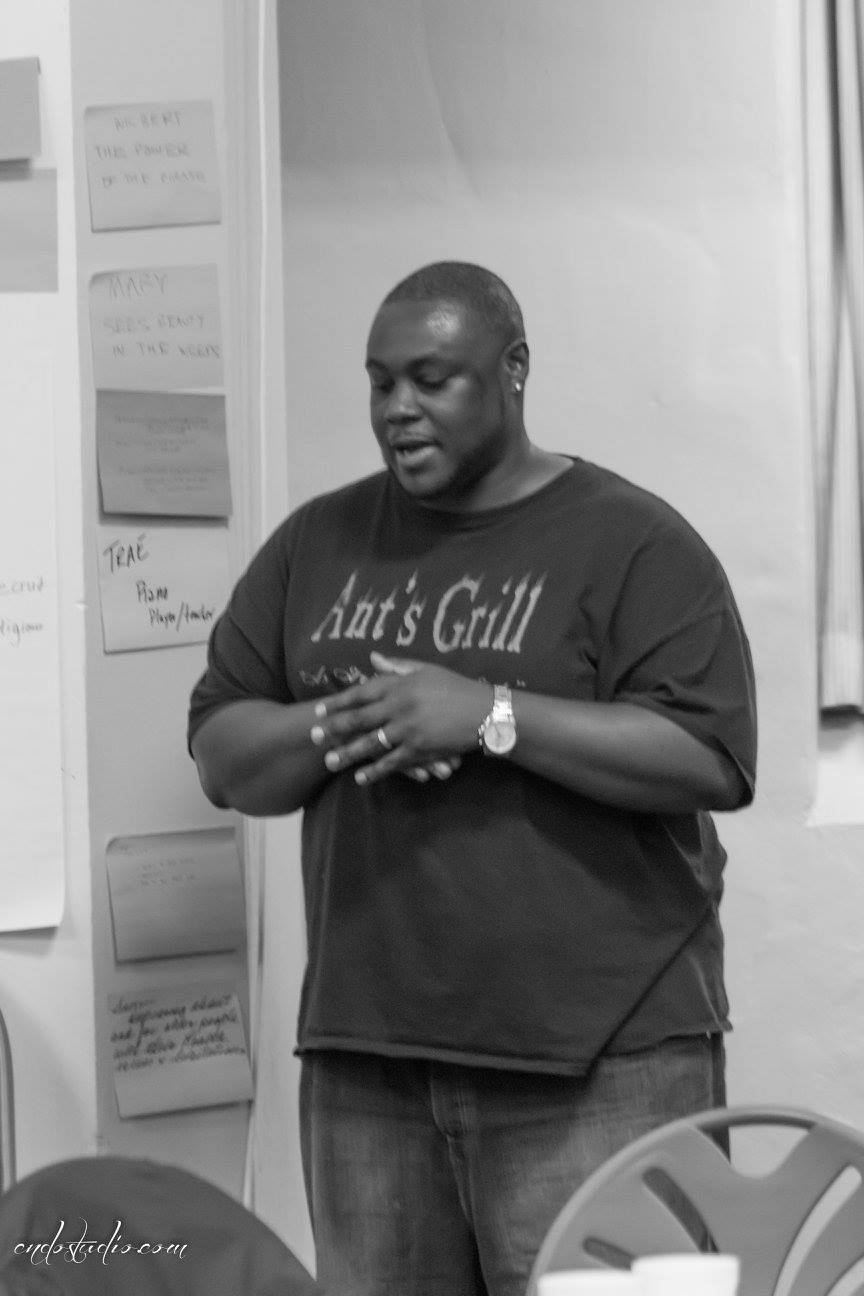
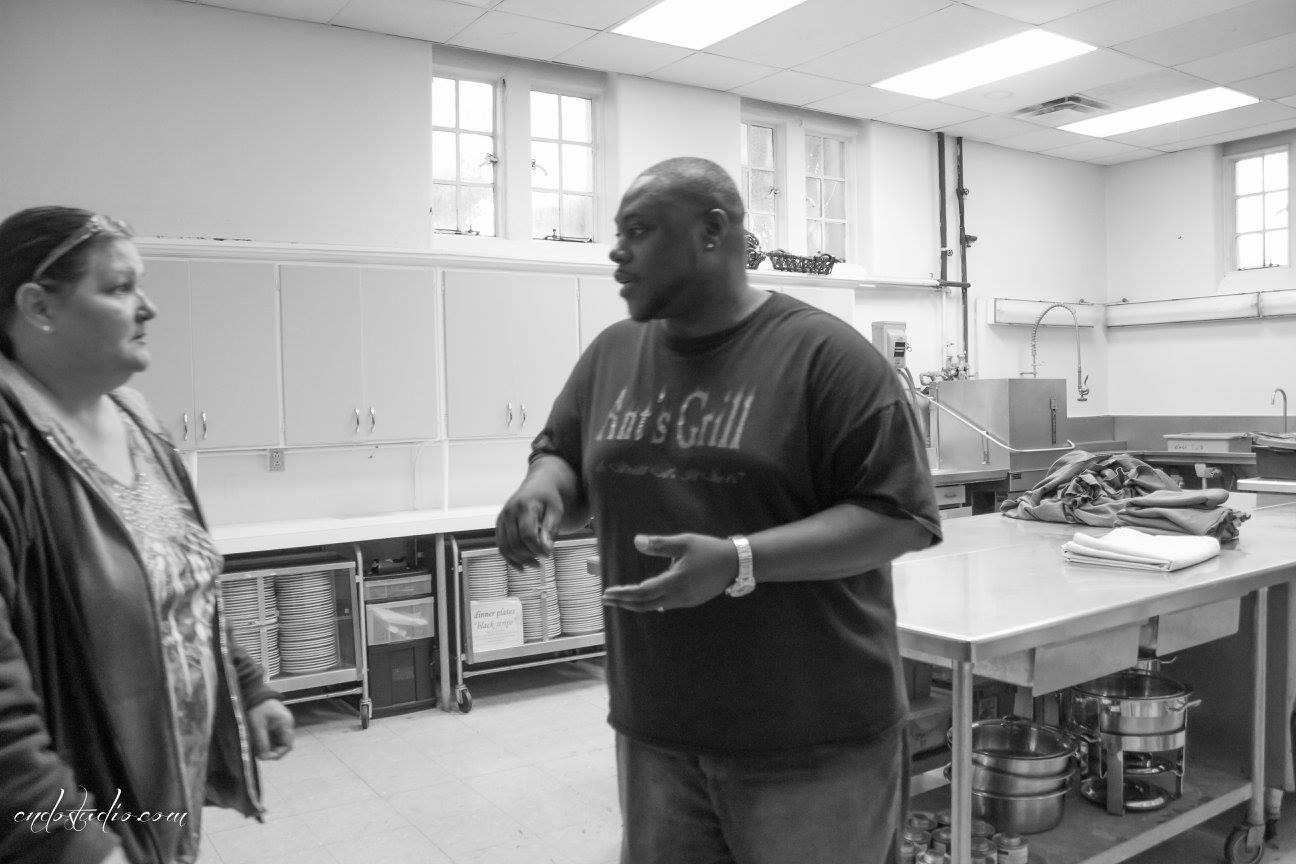
The sponsors (The Learning Tree LLC) put out a bid for cooks, which included them “telling their story.” They selected a BBQ & Catering business because of the owner’s personal journey, turning his full-time health disability due to MS (multiple schelorsis) into an opportunity to follow his passion/dream to own his own BBQ business.  As they invited him up to share his story with the 100+ folks attending the workshop, my jaw dropped…and I started to cry proud tears of joy (as I am even now, writing this blog.)  For in front of me was my fellow “Second Chance Challenge” friend, Antron Alexander…proud owner of “Ant’s Grill and Catering.”  (Above, he is standing to my left, in the light grey-blue shirt).

As he finished telling his story (unaware that I was in the audience), I stood up and approached him.  He recognized me, and we gave each other a heartfelt hug – to the bewilderment of those around us.  I then proceeded to tell the “story behind the story” – how Antron also overcame a felony on his record – another barrier to employment and societal acceptance – in starting this venture.  It was overwhelming to see him standing there, in front of everyone, proudly sharing his home cooking with us…what a difference a couple of years makes!

I was humbled and proud of Antron’s accomplishment and progress – not only working with his medical condition, but also creating success from the employment barriers by starting his own business. How many people do I know who are on permanent disability and do little to nothing – existing, or just “getting by?”  At times, I believe that’s the expectation society can create for those on “permanent disability”…that they have nothing left to offer.  Here was a man who went well beyond what society was expecting of him, becoming a contributing member of society.

And, by the way – the BBQ and vegetarian lasagne was AMAZING!

So, if you want a reason to believe in personal victory, in the power of community, in the tangible outcomes of our city and mayor’s office, and the benefit of seeing “assets” over “needs”…remember my friend Antron at Antron’s Grill.

And, if you need a caterer for your next event, please consider sending him a bid.  You can reach him at antsgrill@gmail.com – “as grill as it gets!”
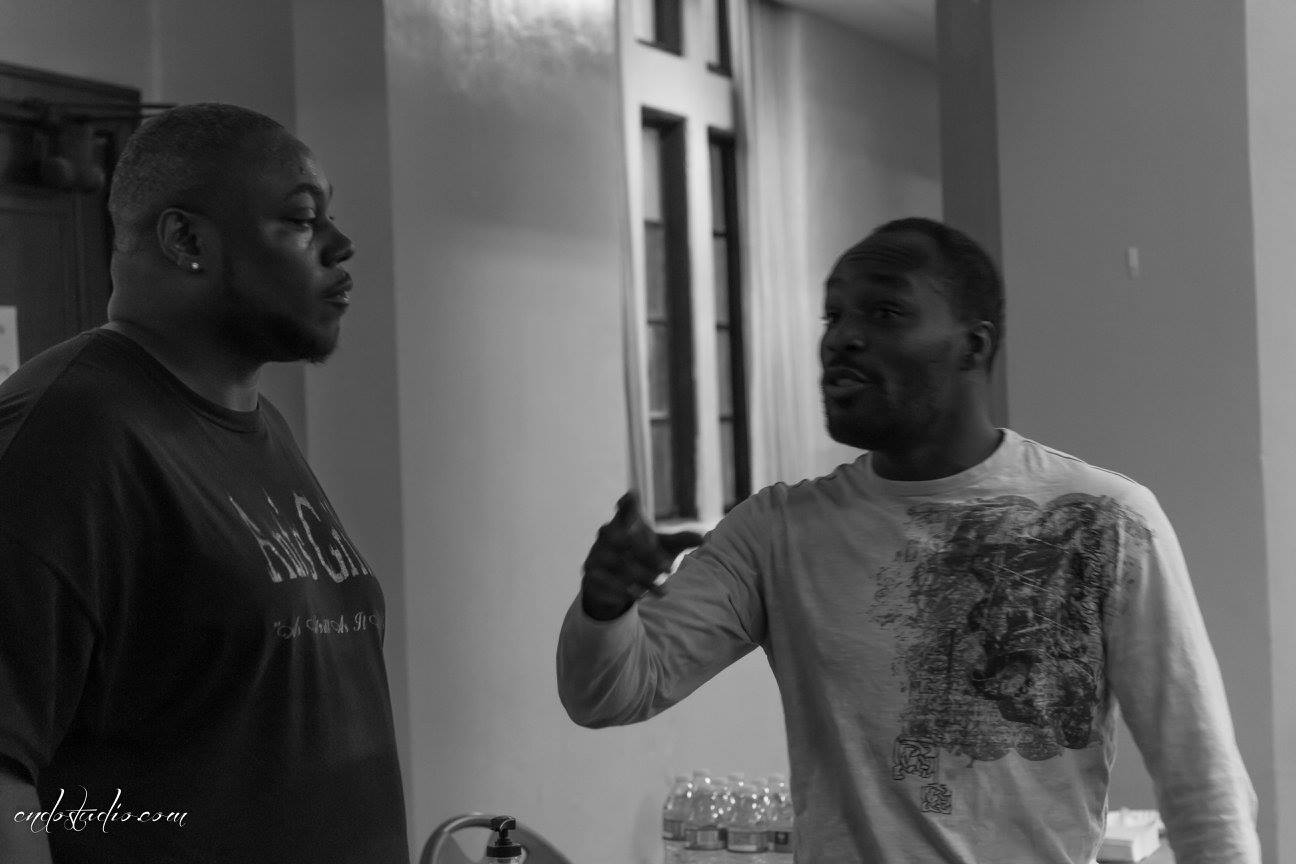
Antron, being introduced by the workshop organizer...
Antron, being introduced by the workshop organizer…
Antron, telling his story...
Antron, telling his story…
Antron, working in the kitchen...
Antron, working in the kitchen…
My personal reunion with Antron

Maxine Bryant, at Indy’s Recovery Rally 2010 – Indianapolis, Indiana from CToddCreations

The Power Of A Question: Who Are The Healers In Your Community?


Some of my other entries have touched on the “Power of a Question.”  It can often completely change our thinking or the outcome of a situation because it invites new perspectives.

I have a friend who does this well.  Even when I imagine he has advice to offer, or experience to share – he will hold back, “play dumb” and probe with a series of questions. The beauty in this is it invites dialogue.

Another friend used to say, “I can choose to be right, or I can choose to be happy.  I choose to be happy.”  I’ve taken that a bit further with “I can choose to be right, or I can choose to connect.  I choose to connect.”  Again, by asking a question instead of giving advice, we’re more likely to build rapport and create dialogue, which is far more important to me now than being right.

One of the other places I’ve come across the Power of a Question is from my daily devotional, by Mark Nepo.  The readings introduced me to a series of questions Native America medicine men ask of the sick: When was the last time you sang? When was the last time you danced? When was the last time you told your story? These questions would be put to the sick and dying by the tribe’s medicine man. In my recovery journey, I’m learning it’s just as important to ask these questions of the living. I also used these three questions to celebrate my mom’s life journey last year, reflecting on her song, her dance, her story…


“The right question at the right time changes the way we look at things around us.”

This past Sunday, I heard a sermon by my pastor and friend Mike Mather that embodied this “Power of a question.”  It was truly inspired and moved me. Mike talked about a visit some folks took to meet with Dr. John Rich, recipient of a MacArthur Foundation Fellowship. As a primary care doctor at Boston Medical Center, Rich created the Young Men’s Health Clinic and initiated the Boston HealthCREW, a program to train inner city young men to become peer health educators who focus on the health of men and boys in their communities.  His recently published book about urban violence Wrong Place, Wrong Time: Trauma and Violence in the Lives of Young Black Men has drawn critical acclaim.

Mike shared in the sermon how two simple questions from Dr. John Rich profoundly affected the group, and fundamentally changed how Mike now sees the world. It’s also permeates the structure, mindset and “ministry” of our church. Dr. Rich asked the group:

“Who are the healers in your community?

He then asked them,

“How are you supporting those healers?”

At Broadway, we ask not about what someone’s needs are, but about someone’s gifts. Asking people what they are gifted at rather than what they lack changes the way we see the world. And while we are far from perfect at it, it really is a mindset that transcends a single “leader” and has become a way of life for many or most of us.

Others from outside of Broadway have confirmed this, which helps remind me why we do things the way we do.  It really does make a difference in the long run.  It can be a little messier, or shall I say less tidy and well defined.  It’s harder perhaps to measure or articulate through “program objectives” because the work or ministry doesn’t take place from the center, but is instead supported from the center.  The church’s role becomes one of making visible that which is already taking place – through the gifts, passions and efforts of our members, out in their neighborhoods, workplaces and communities.

The following clips capture some of what I’m talking about, so I will close with them.  You can also find the rest of Mike’s sermon podcast here: http://www.broadwayumc.info/audio/10-19-14_Sermon.mp3

Insight on Self-Preservation vs. Community


About a year ago, I stopped going to 12 Step Meetings, and began exploring a recovery program that works for me.  I wrote about it briefly then.  Looking back, the year had its challenges, but I believe I’m finding my voice through those experiences, and for that I’m grateful.

This past weekend, I was at a camping trip and ran into someone who I knew from the rooms.  We’ll call her Linda for sake of this blog.  Linda and I talked a little about my experiences – I shared how when I would struggle or relapse, which often meant isolating and not attending meetings, I rarely heard from folks — particularly from my homegroup.  I had the impression, from what was expressed, that “they would be there for me.”  Yet, when I would go missing, there was silence – no phone calls, or texts or check-ins…with a few exceptions.  And those two folks, I continue to see today and count as a friends.  The rest are largely AWOL.  As I wrote last October, I was needing more.  I heard the promise of “community” – but what I found was far from it…at least for me.

As I told Linda about my experience, she had a single response:  “Self Preservation.”

And in that word, she summed up the value of my time in twelve step groups — it was about learning to stay alive, literally.  It helped my with some strong fundamentals and gave me new principles — much like my time in a Christian cult at college.  But, she also summed up the limitations of those groups (for me) — the very thing that had saved me reached a point where it was no longer serving my needs.  In fact, it was hindering my growth.  I needed (and still need…) to move from self-preservation to community – in all of its messy, ugly, real, but authentic beauty.  And for that transition, the rooms were no longer serving my needs.

Today, with some work and self-growth, I have a tight network of friends who do demonstrate their concern and support through phone calls, texts, or visits…even when they don’t know what to do or say, they reach out and ask how I’m doing.  They tell me I’m missed, and look for ways to reconnect.  It’s sometimes messy – sometimes awkward – but always real.  For me, that’s community.  For me, that’s the deeper connection and commitment for which I’ve been yearning.

When I was reading Peter Block’s book “Community: The Structure of Belonging” this summer, I found myself repeatedly shouting “Yes, that’s it…”  His insights and challenges are so thick with truth that I could get through about a dozen pages, before having to set it down and ponder that I had just read.  (Here’s a YouTube clip of Peter talking about his book…)  Having put the book down earlier this summer, I’ll be picking it up again – and using it, along with other resources and people in my network, to continue to grow and build deeper connections with others, and refine the role I want to play in creating intentional community.  

And for those fundamental principles, I find my friend Mark McAleavy’s reframing of the 12 Steps into an Asset-Based framework to be useful as well.

As I wrote a year ago, it’s important for me to remember that this doesn’t mean other people are wrong and I’m right. It just means that I found what has worked for me, just for today.

As someone once told me, people are in our lives for a reason, a season or a lifetime.  I’m realizing now that the people in AA and NA were there for me for a reason, perhaps a season…but not a lifetime.