I work with HIV Modernization Movement – Indiana, which seeks to modernize Indiana’s HIV criminal and related public health laws. We celebrated Zero HIV Stigma Day this year with a special event on HIV stigma, sharing stories of how stigma shows up for Hoosiers living with HIV.
Zero HIV Stigma Day, observed annually on July 21st, is dedicated to reflection, education, and action against HIV stigma. This day highlights the harmful effects of HIV-related stigma on our society, particularly the barriers it creates to equitable access to life-saving care. It also serves as a rallying call for our communities to renew their commitment to protecting the dignity and well-being of every individual affected by HIV, regardless of their status.
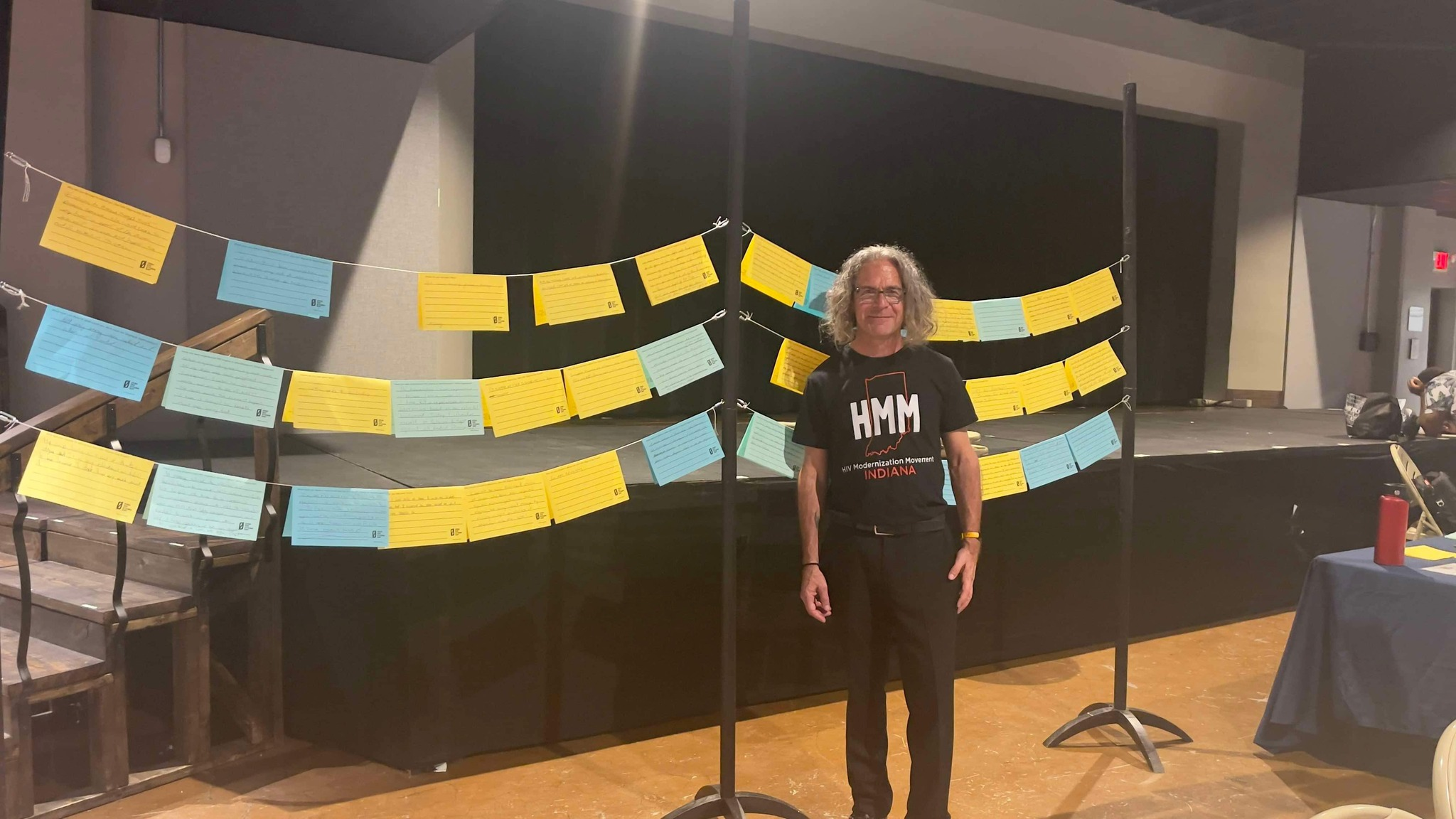
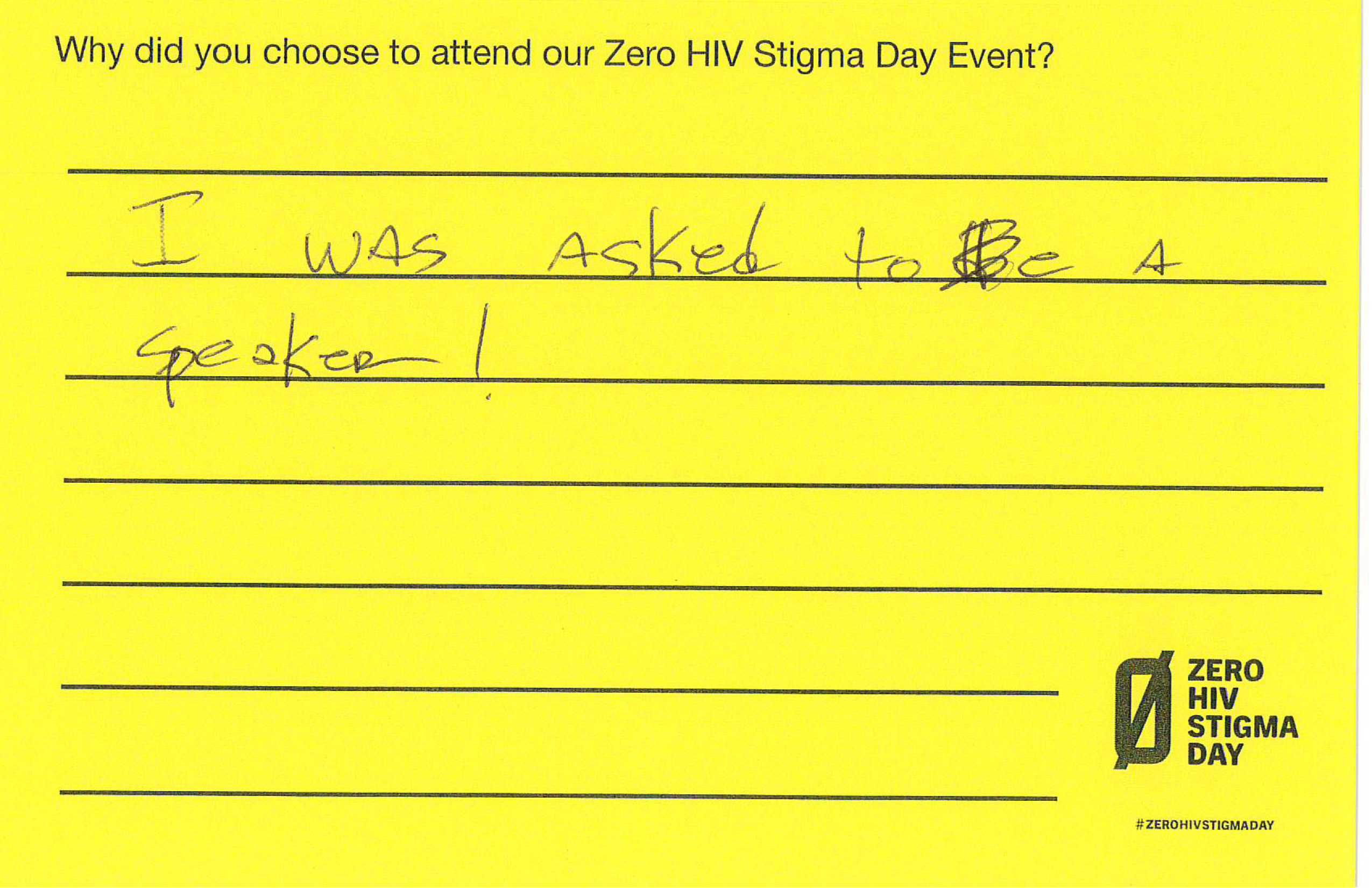
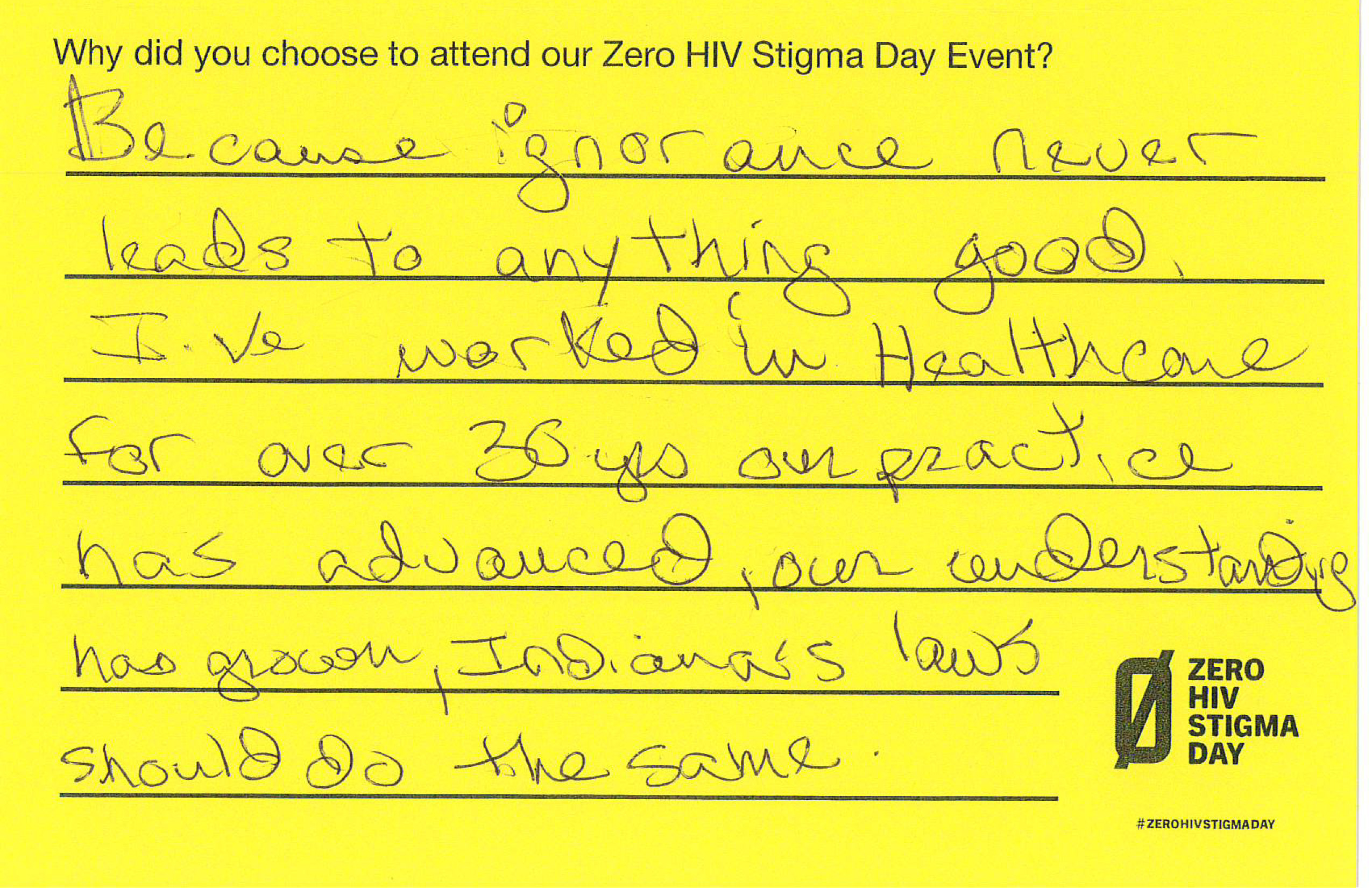
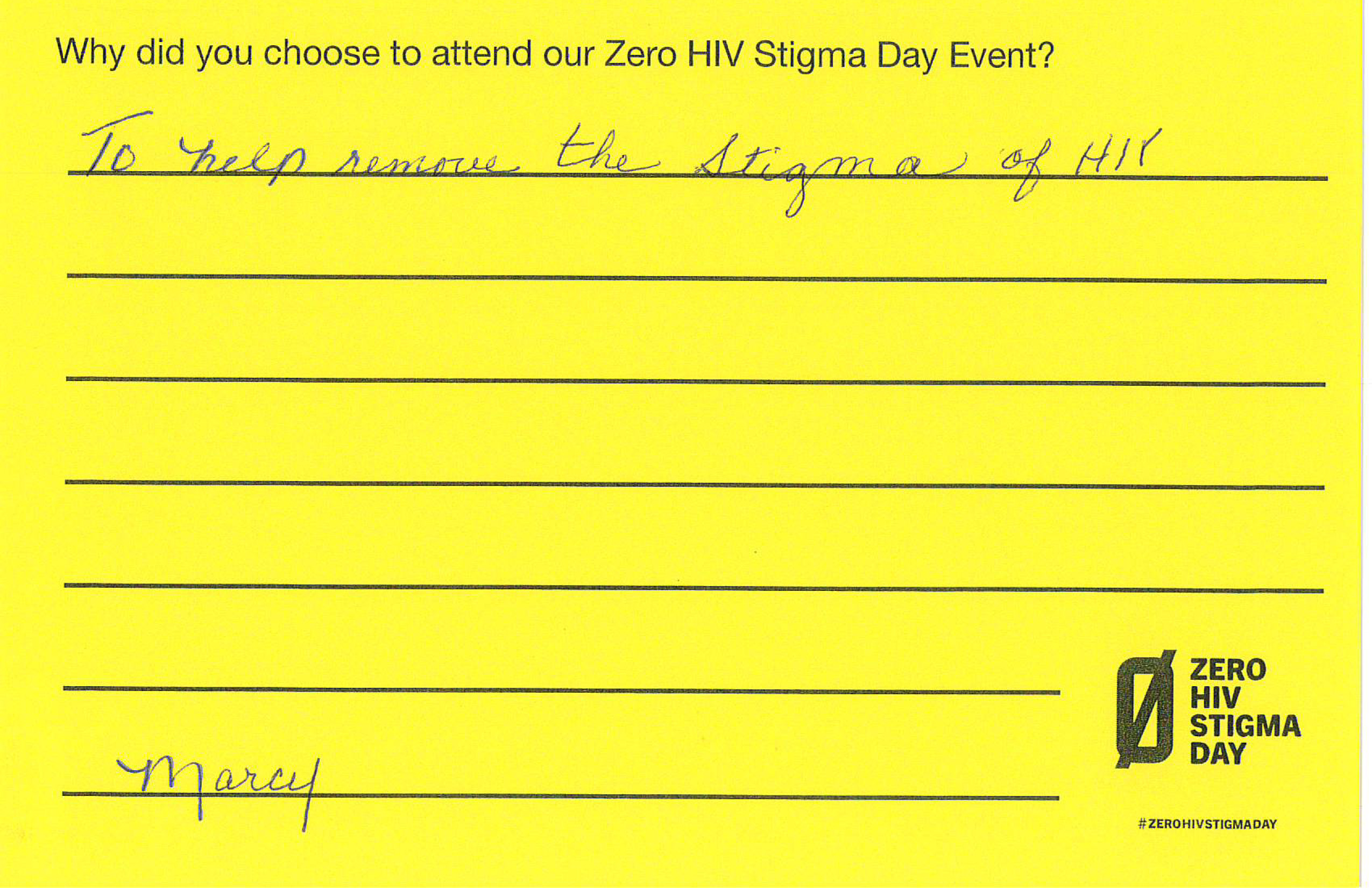
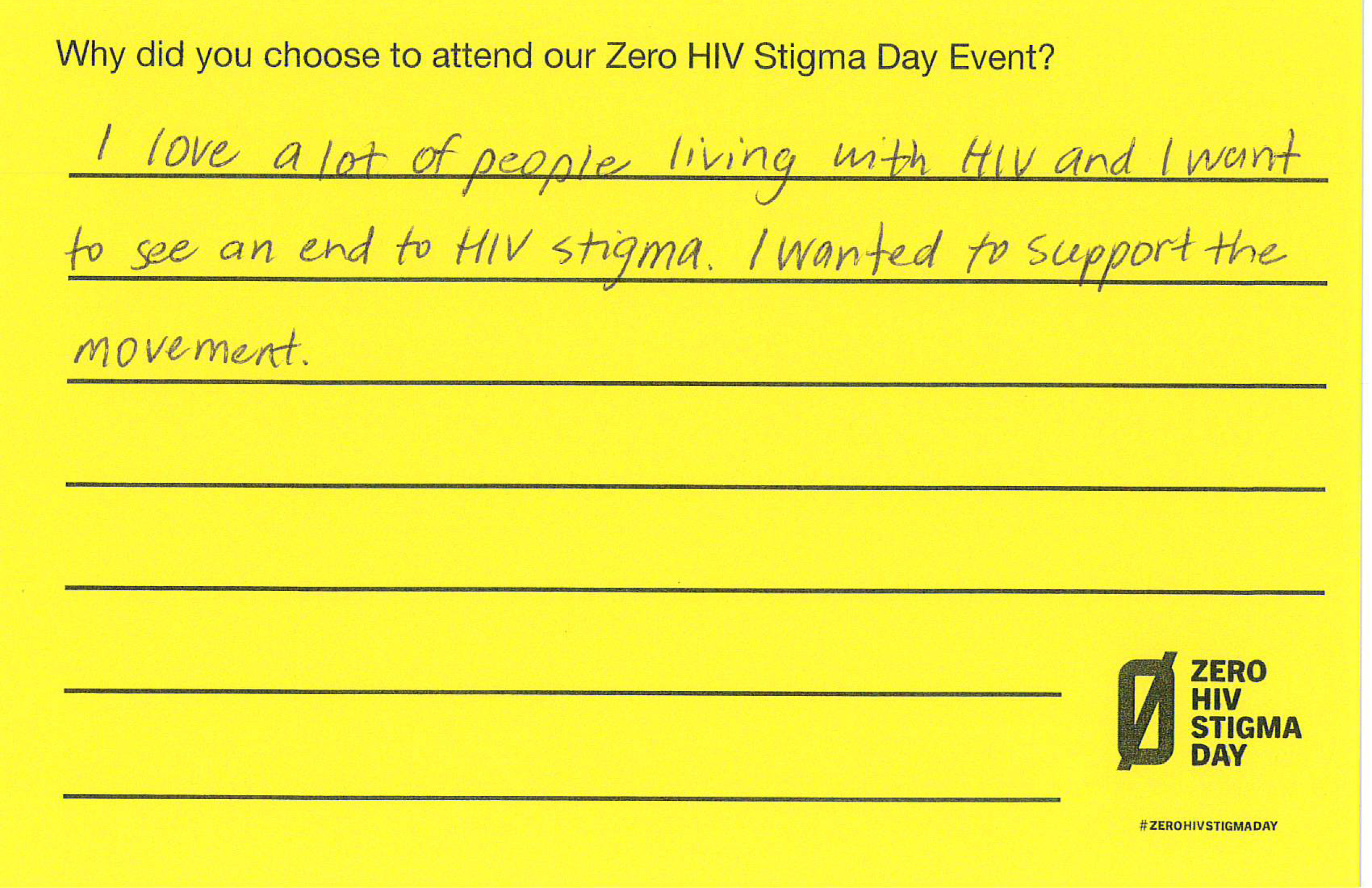
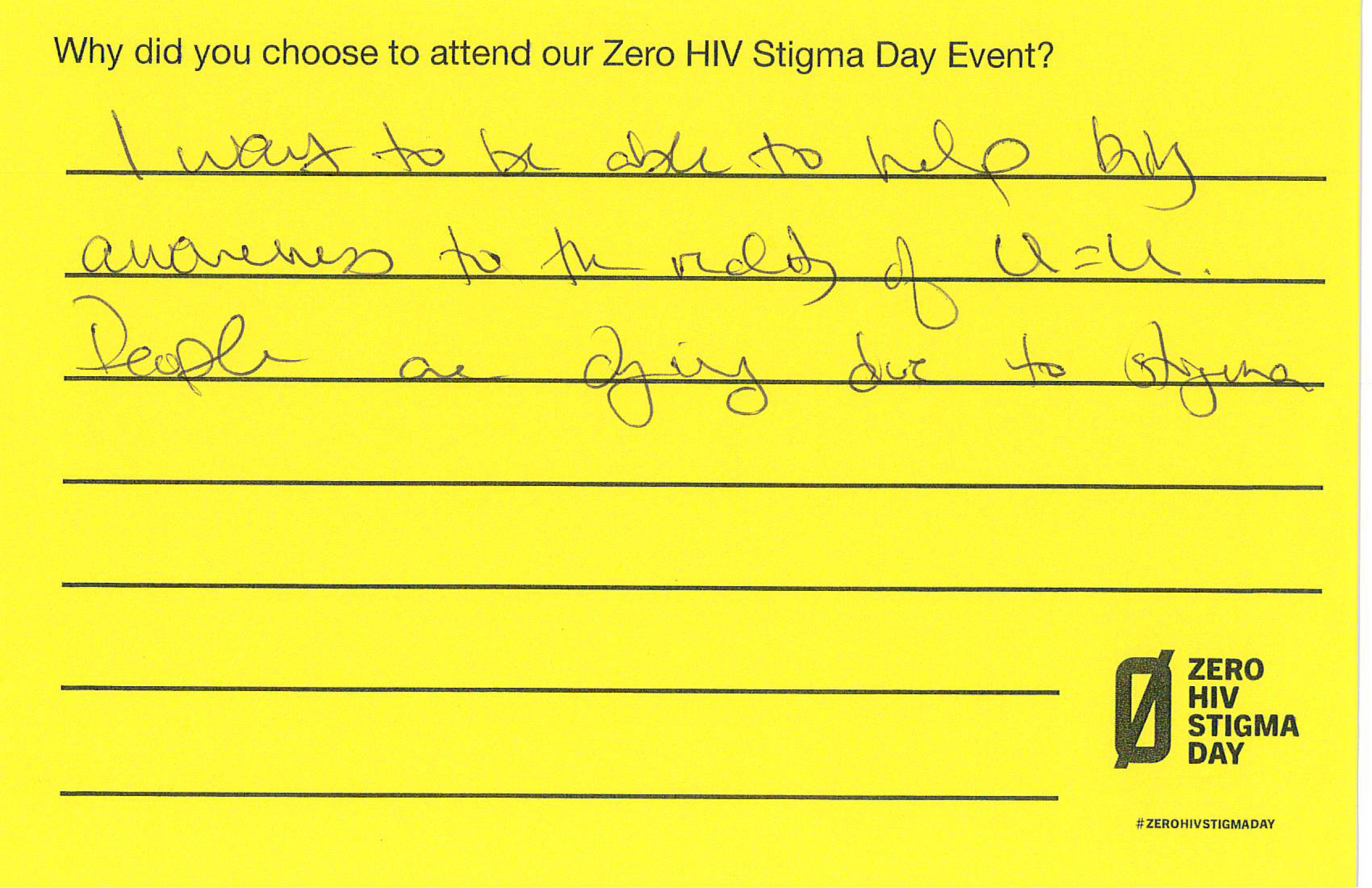
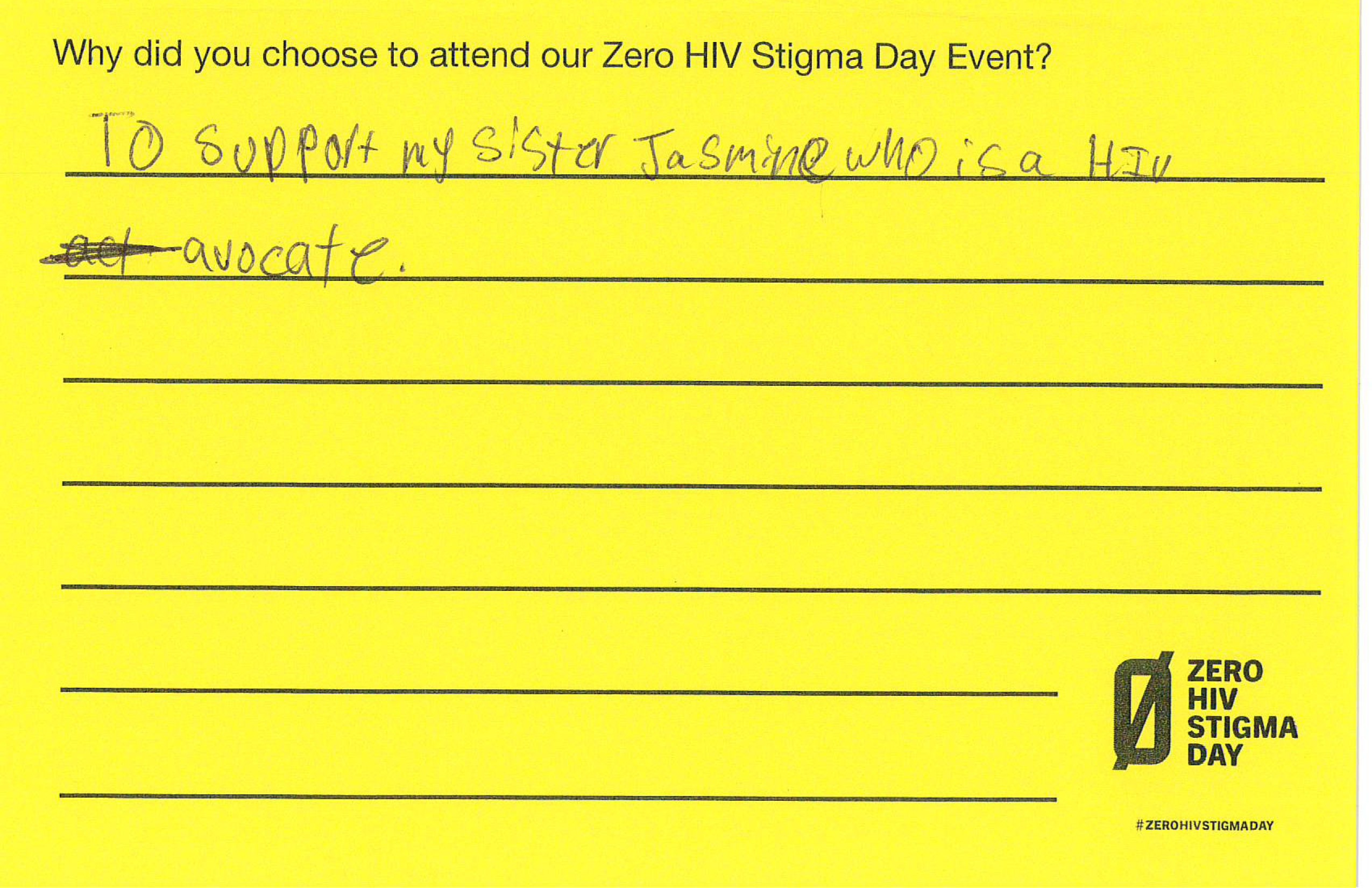
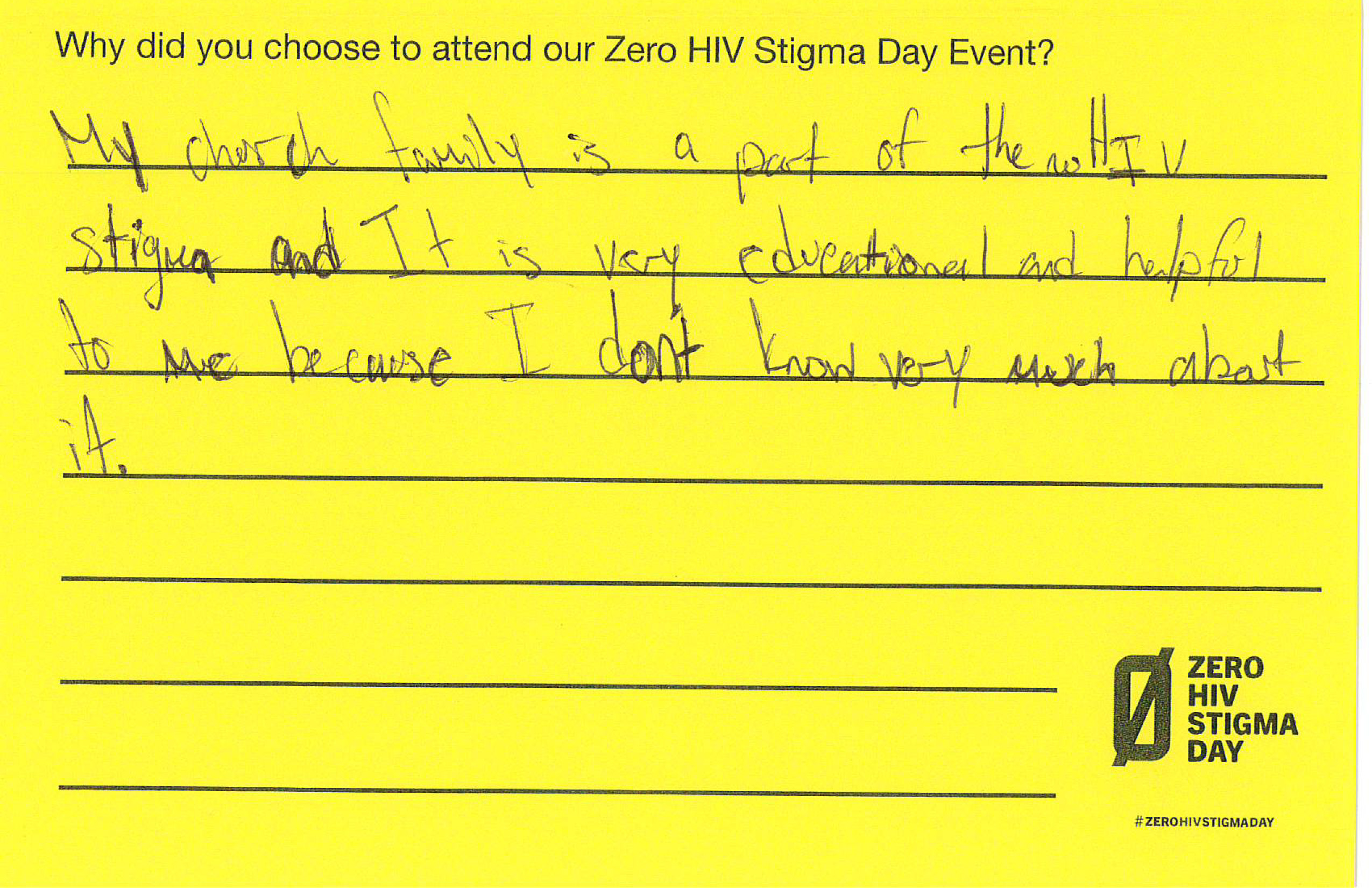
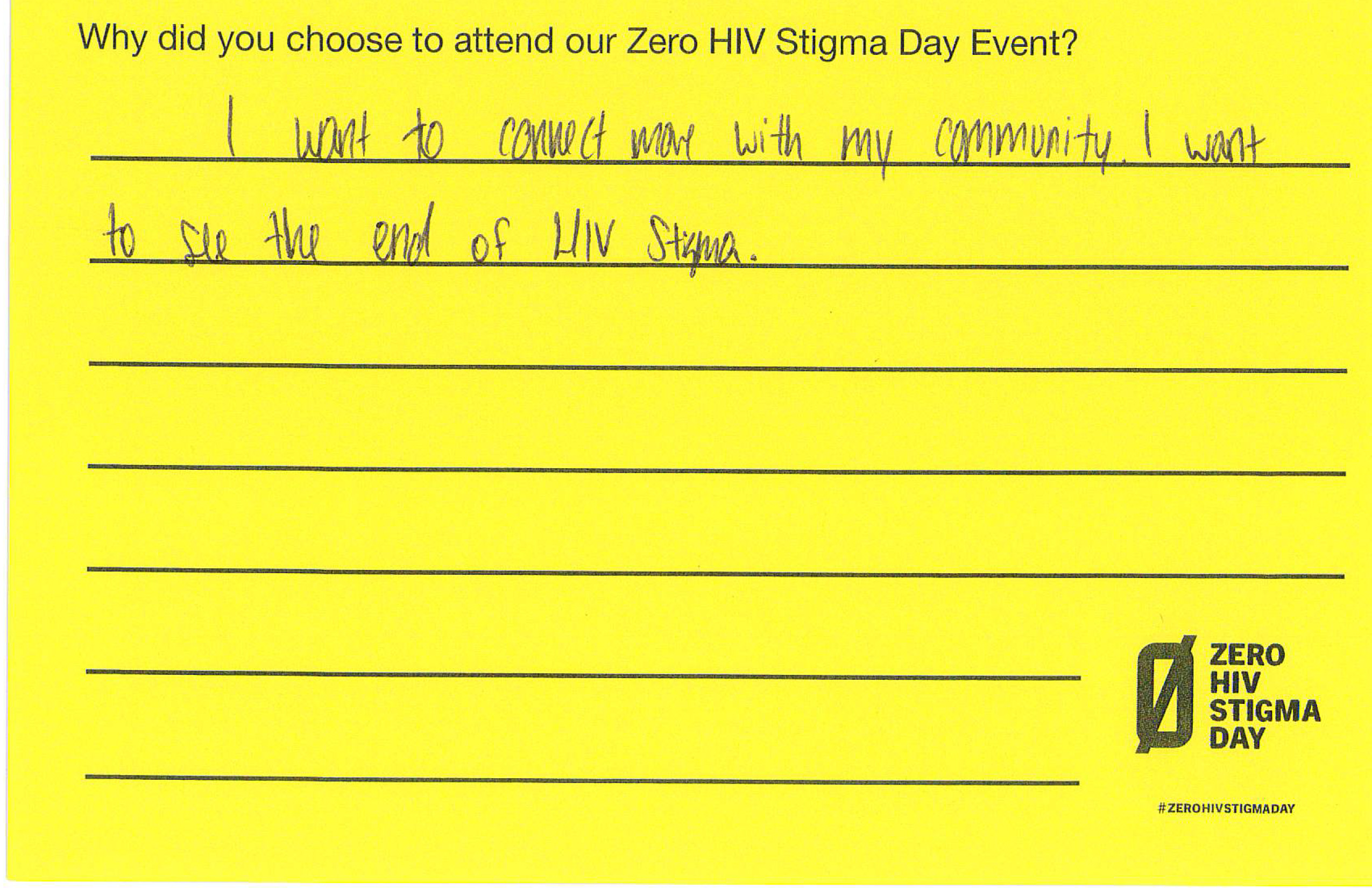
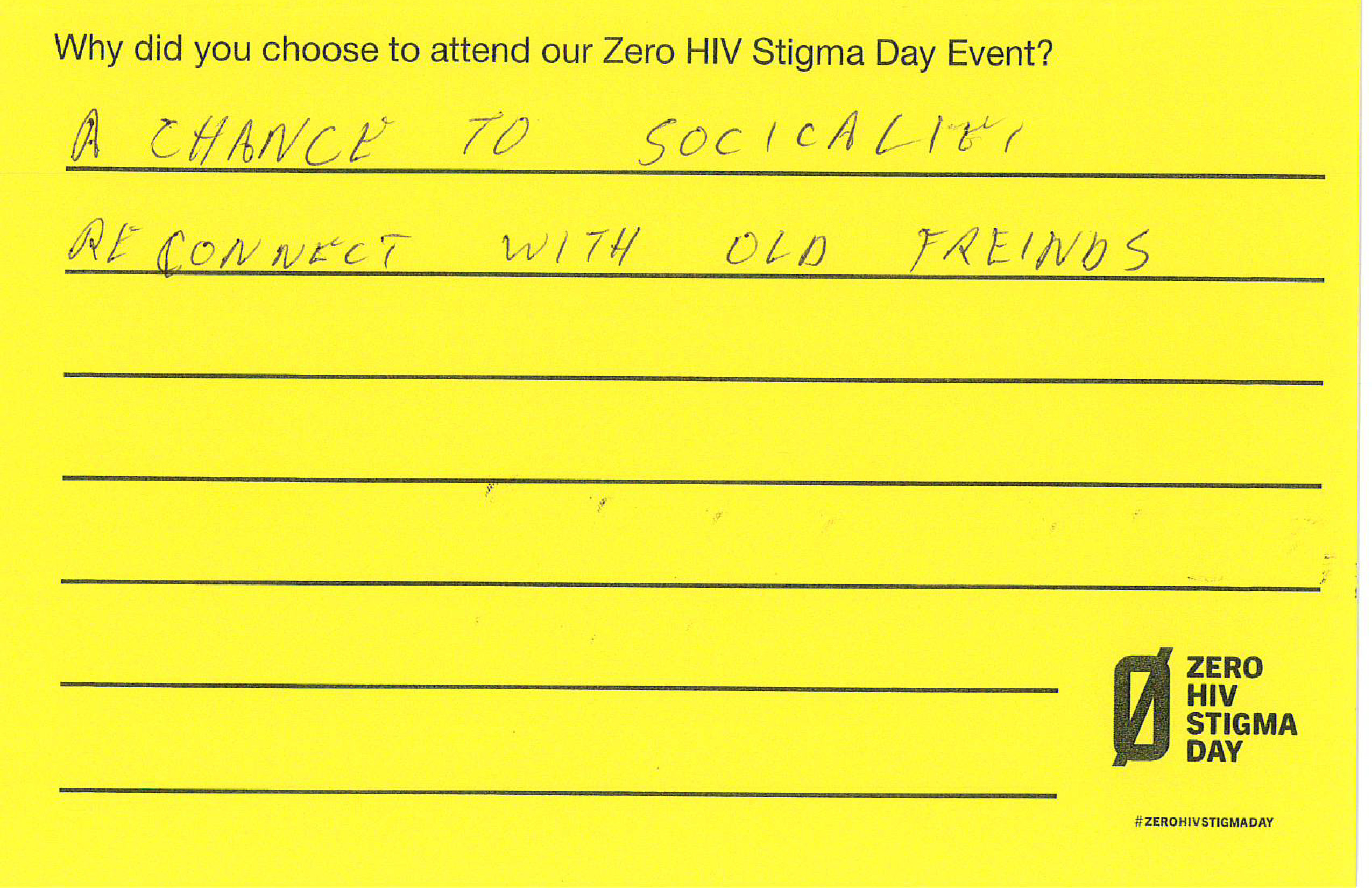
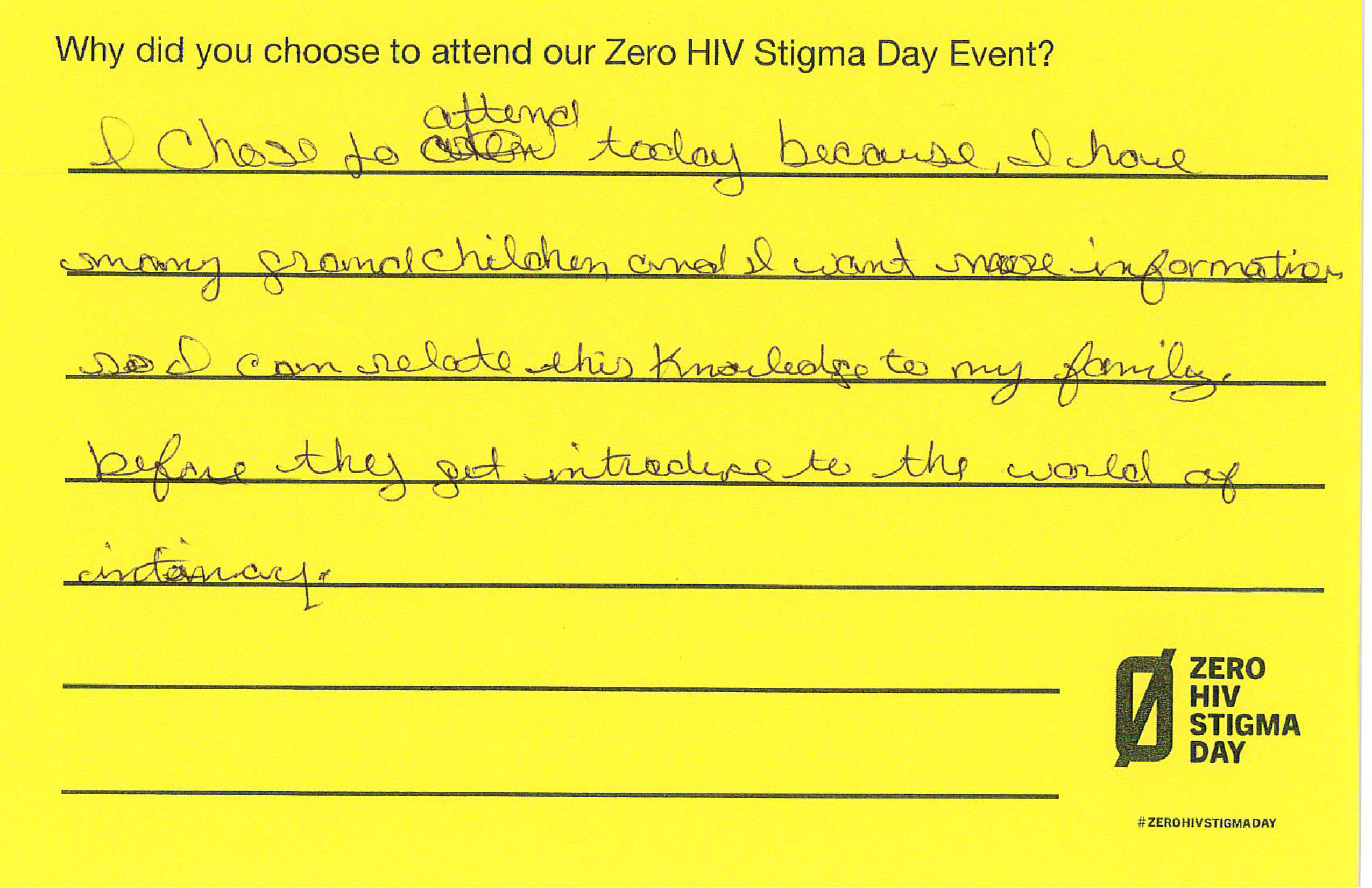
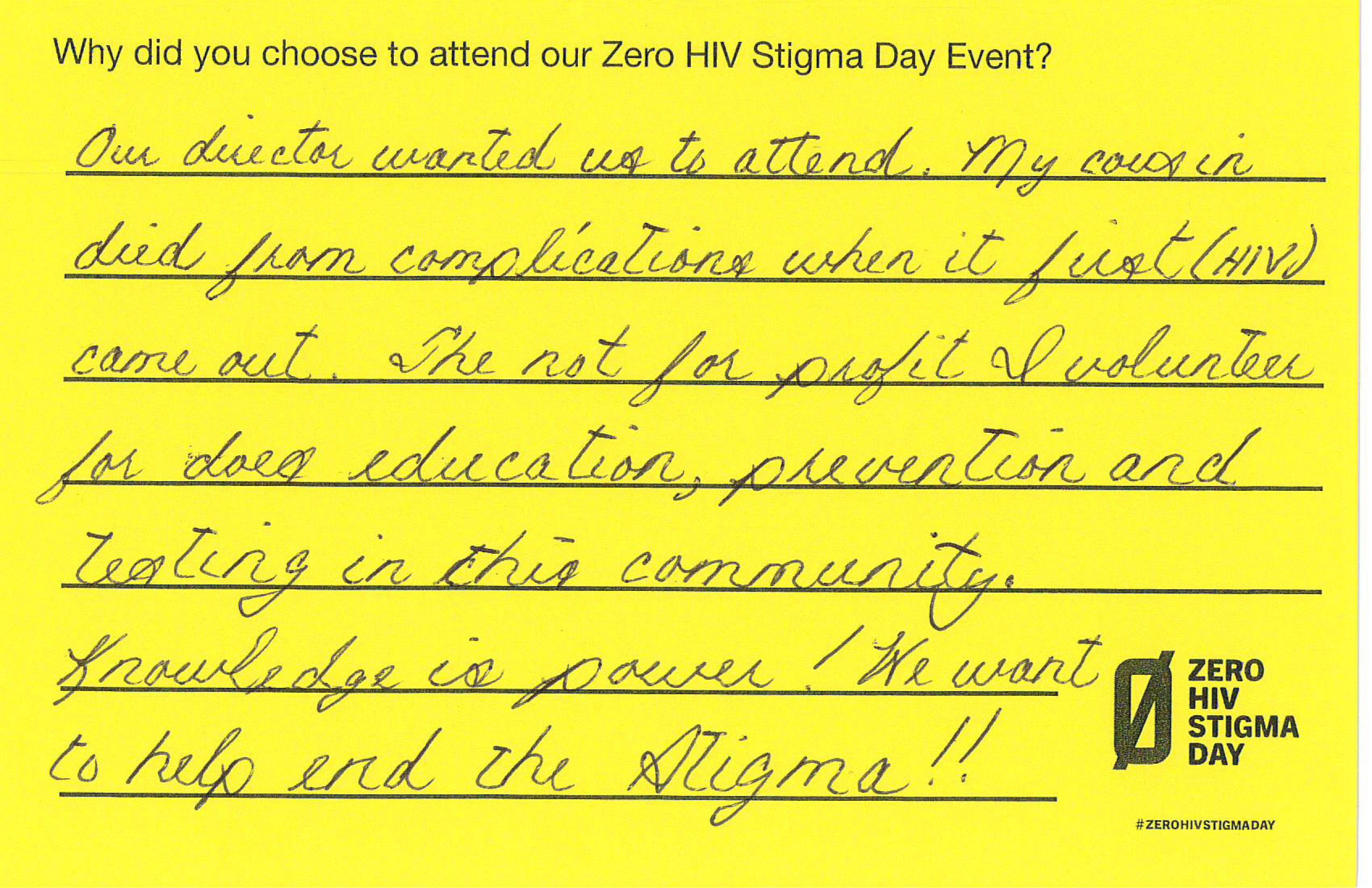
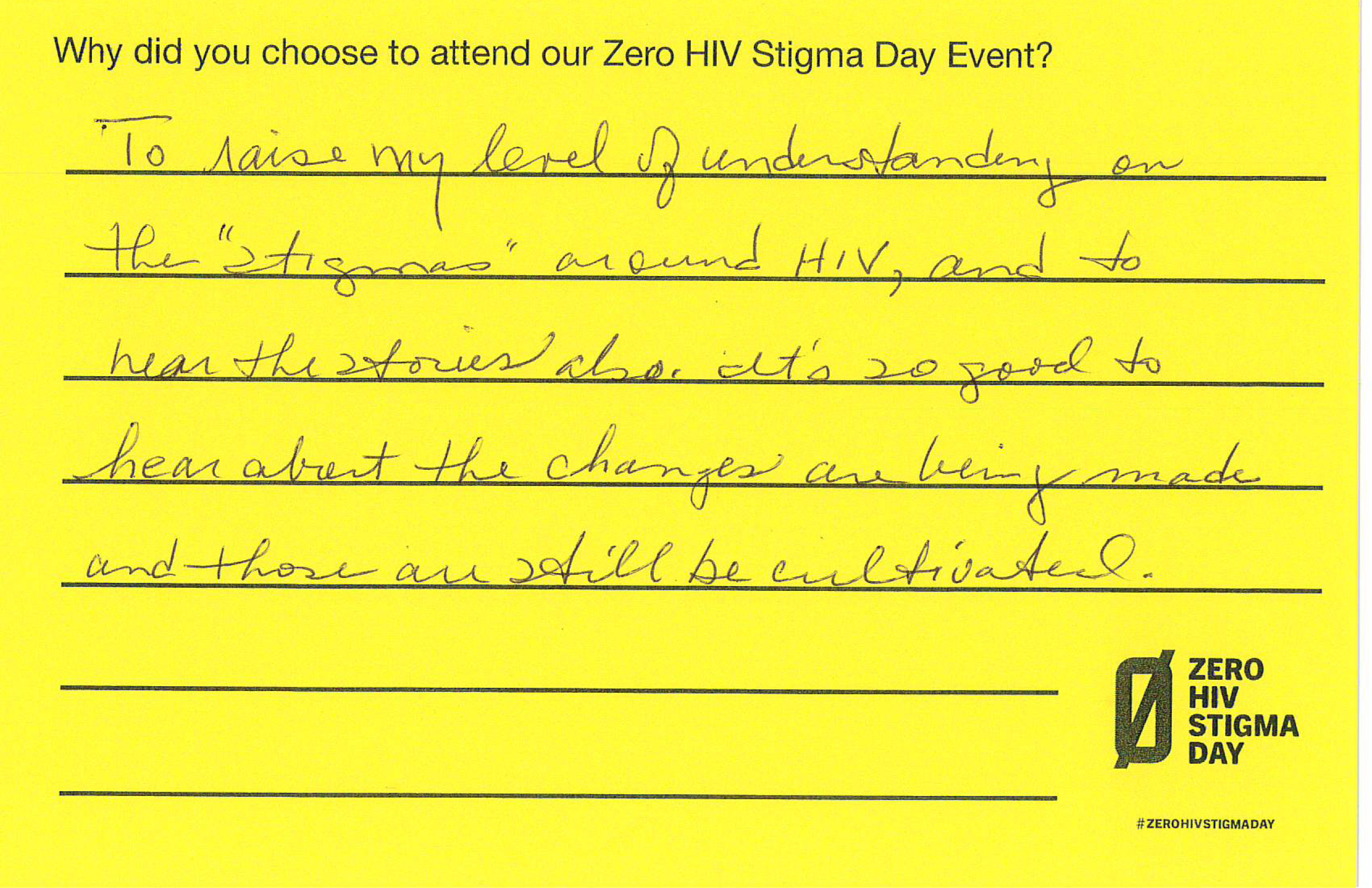
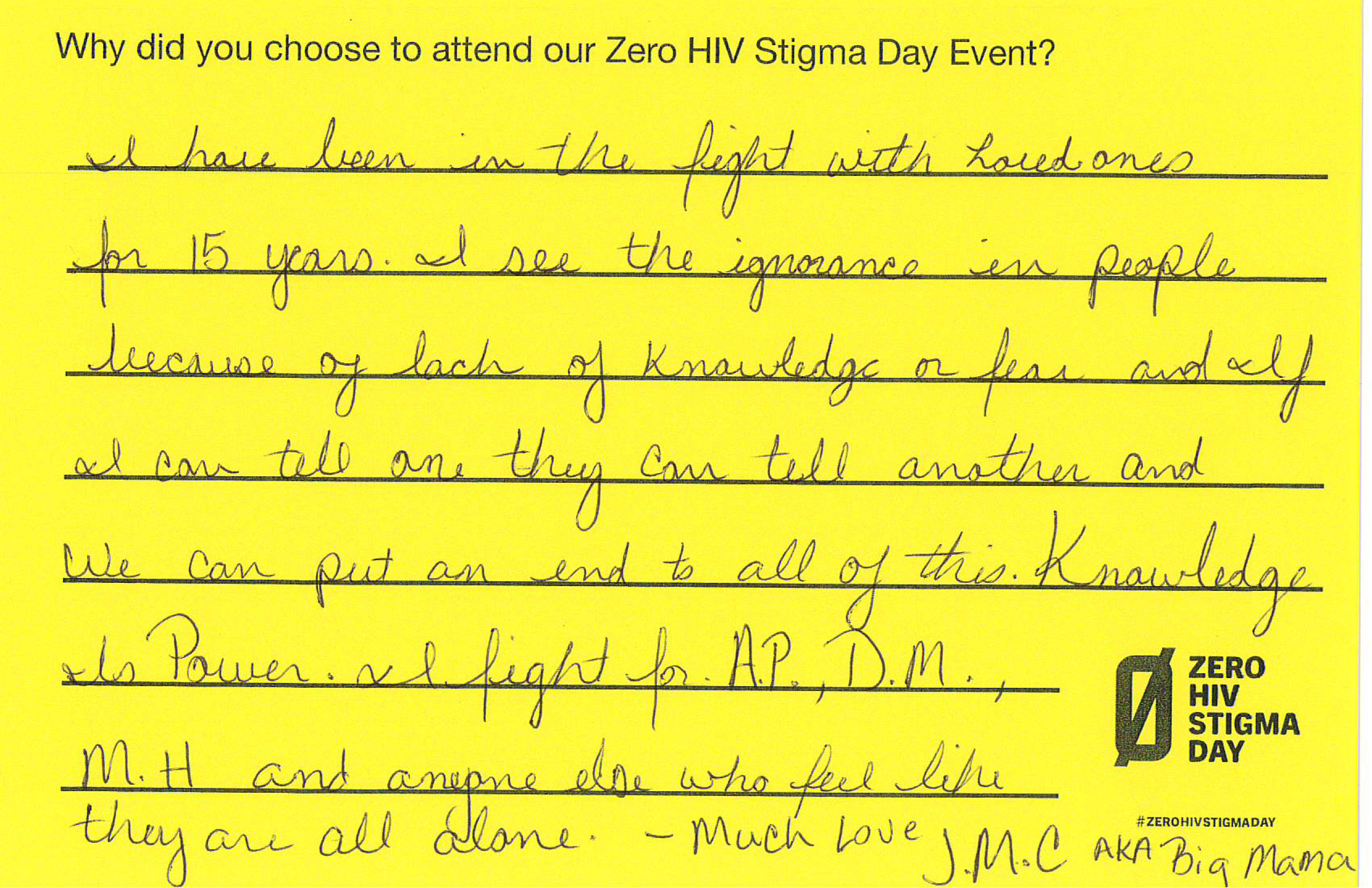
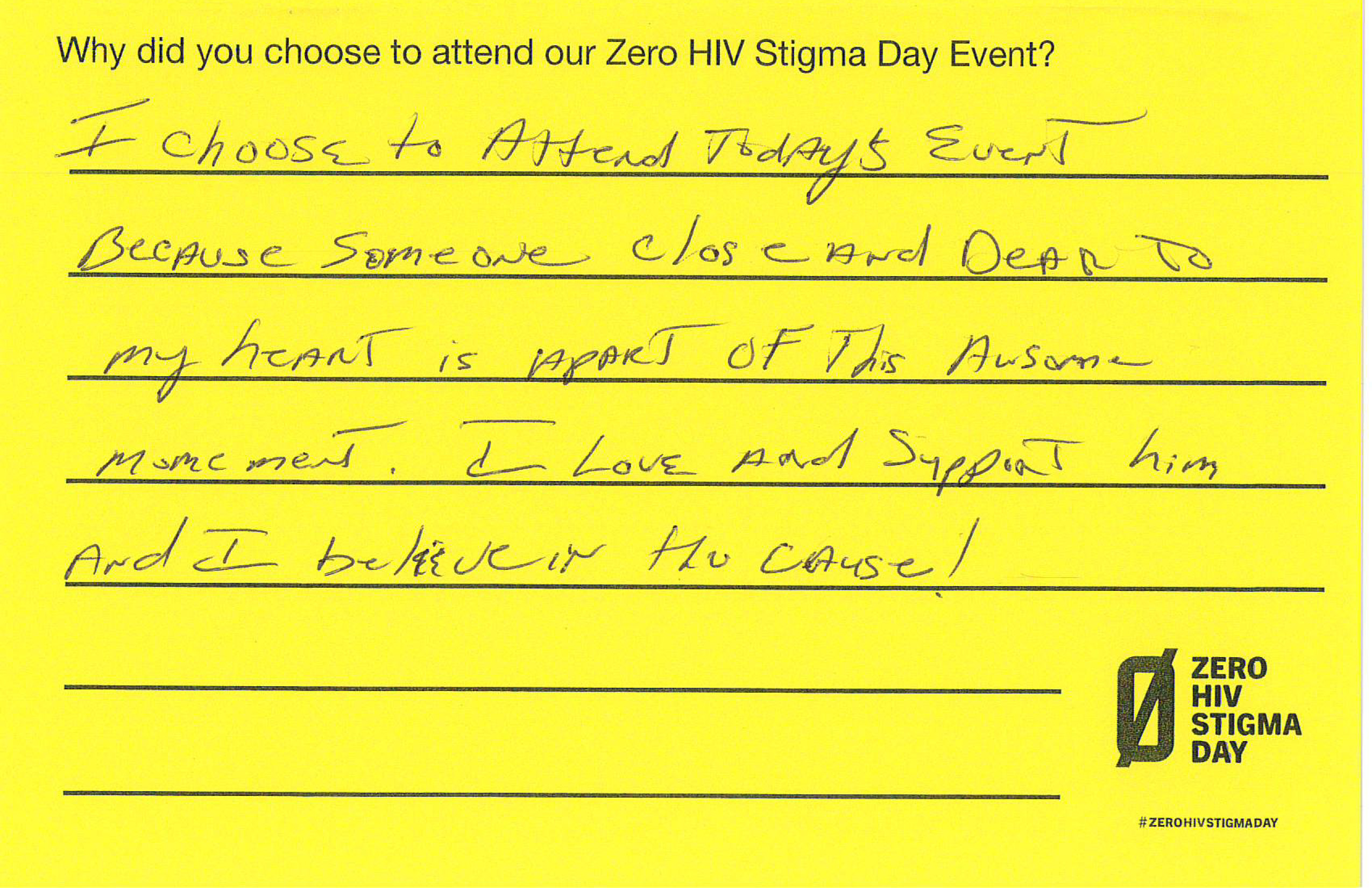
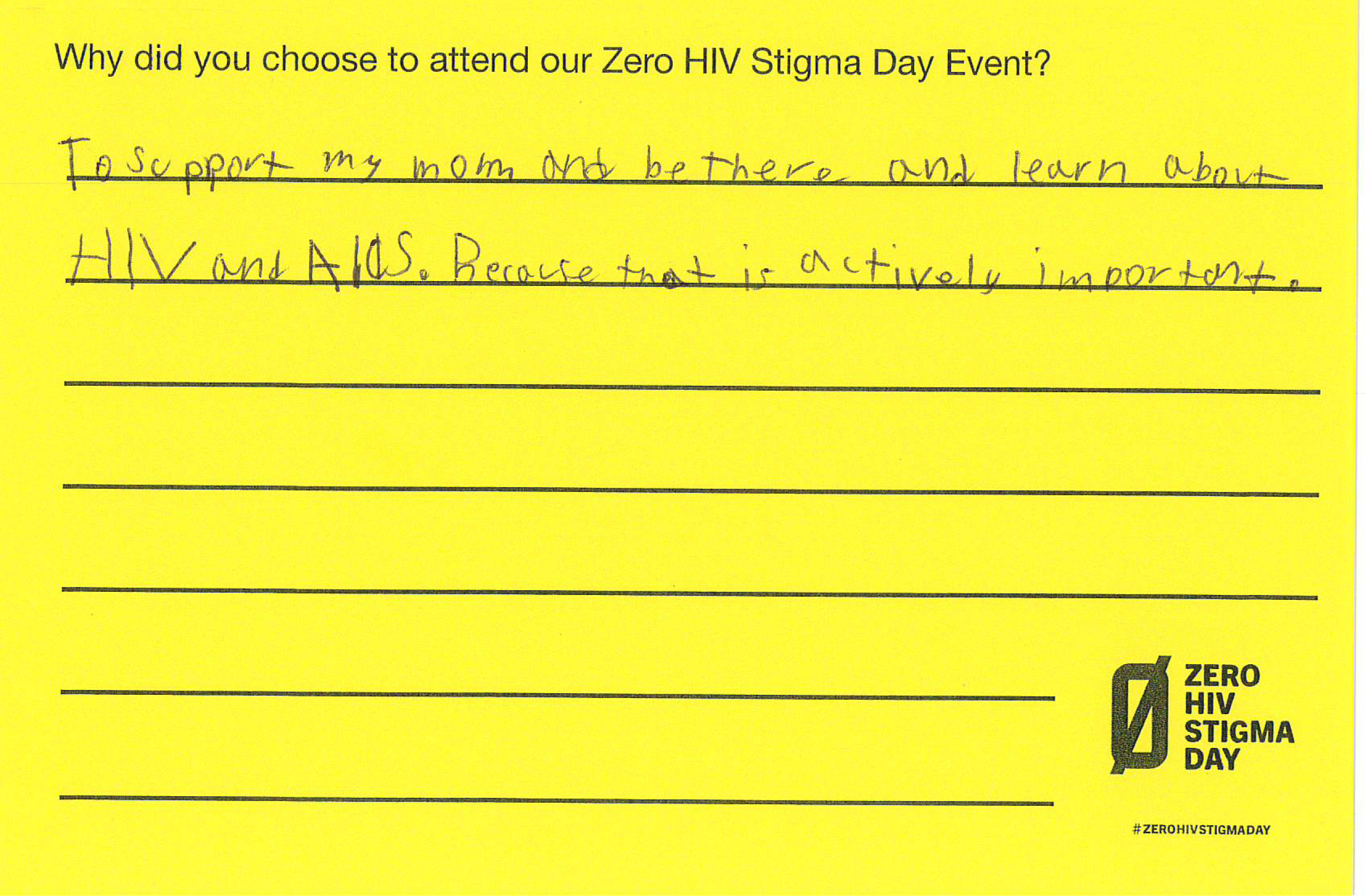
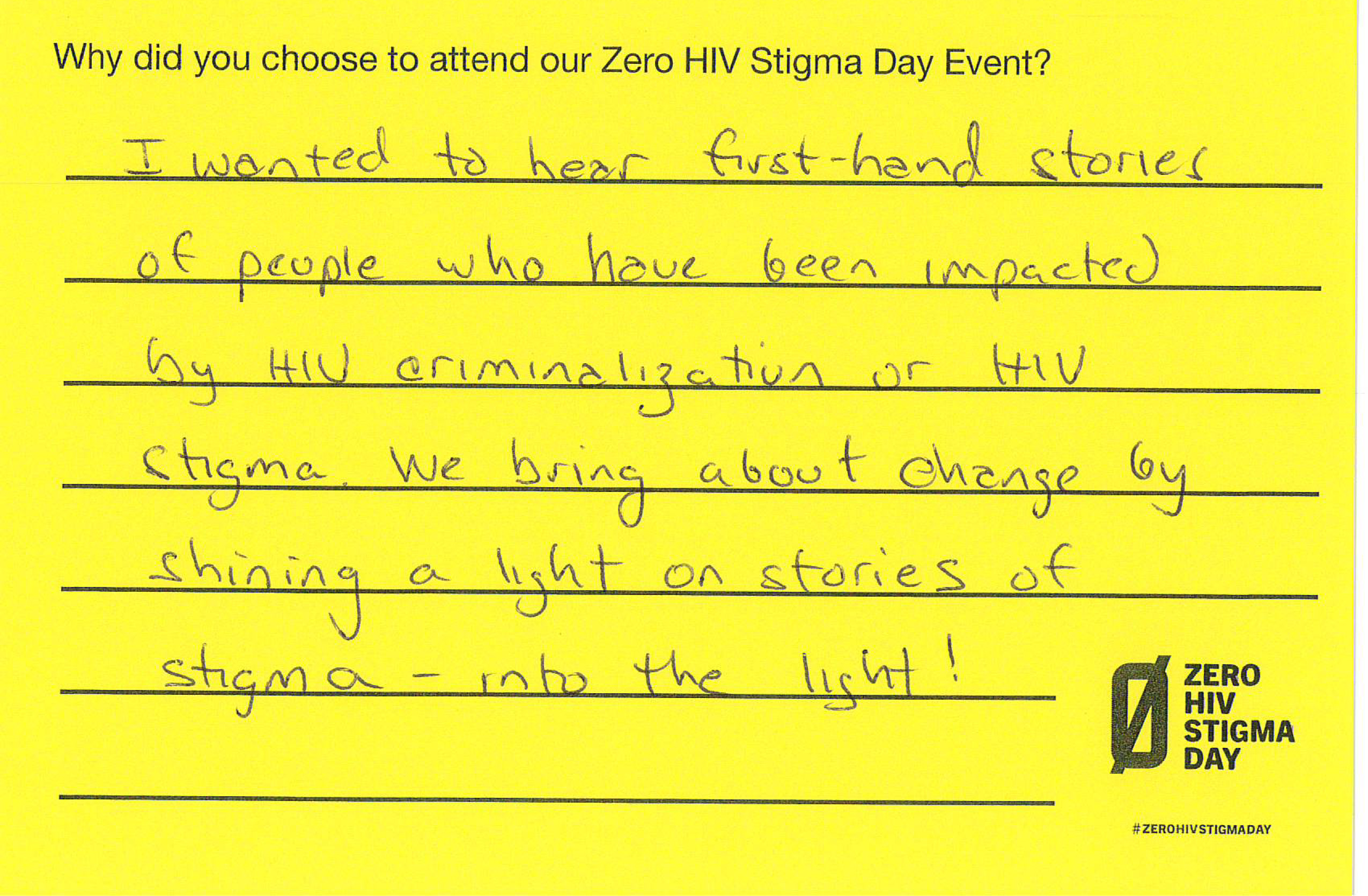
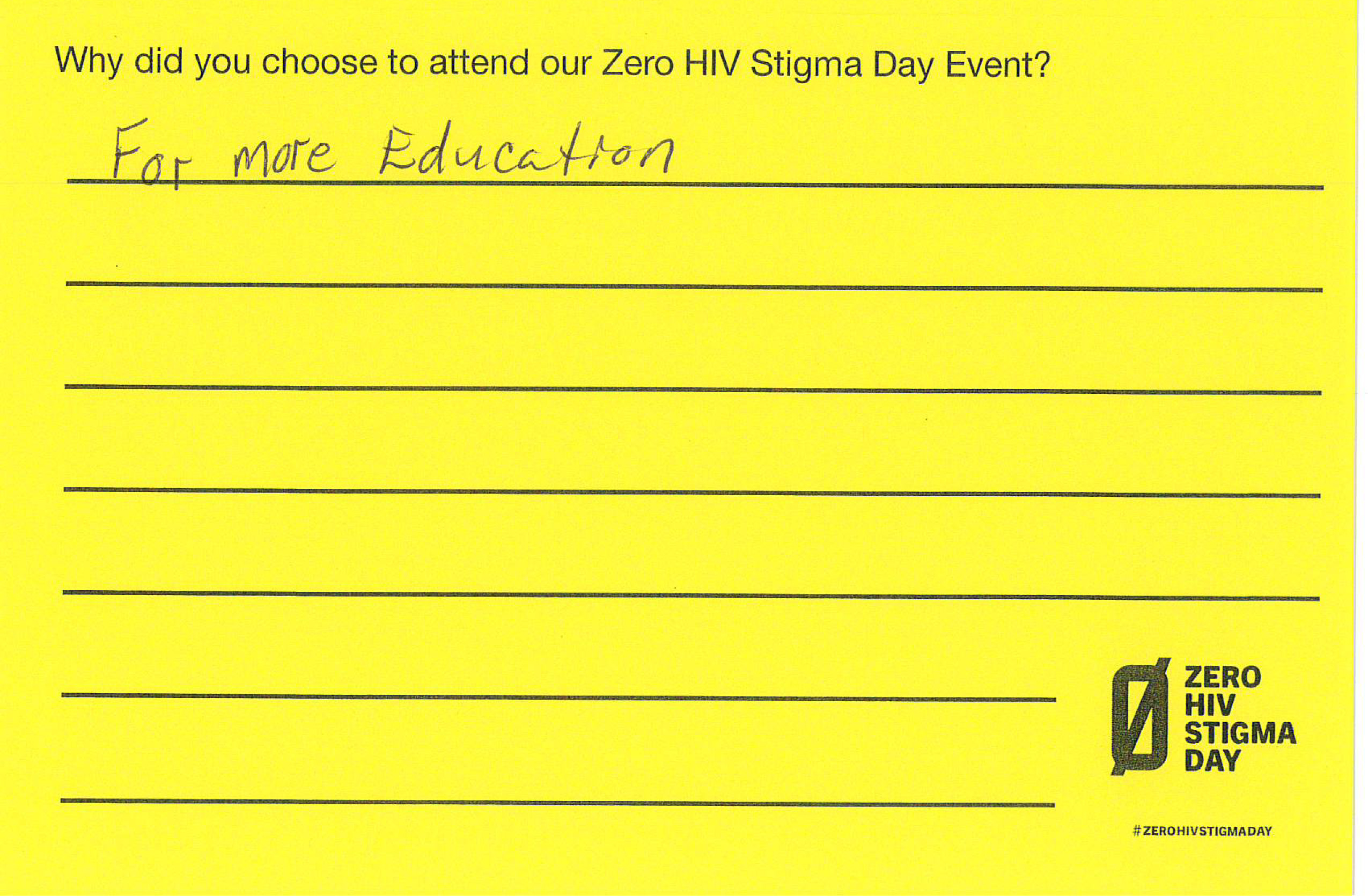
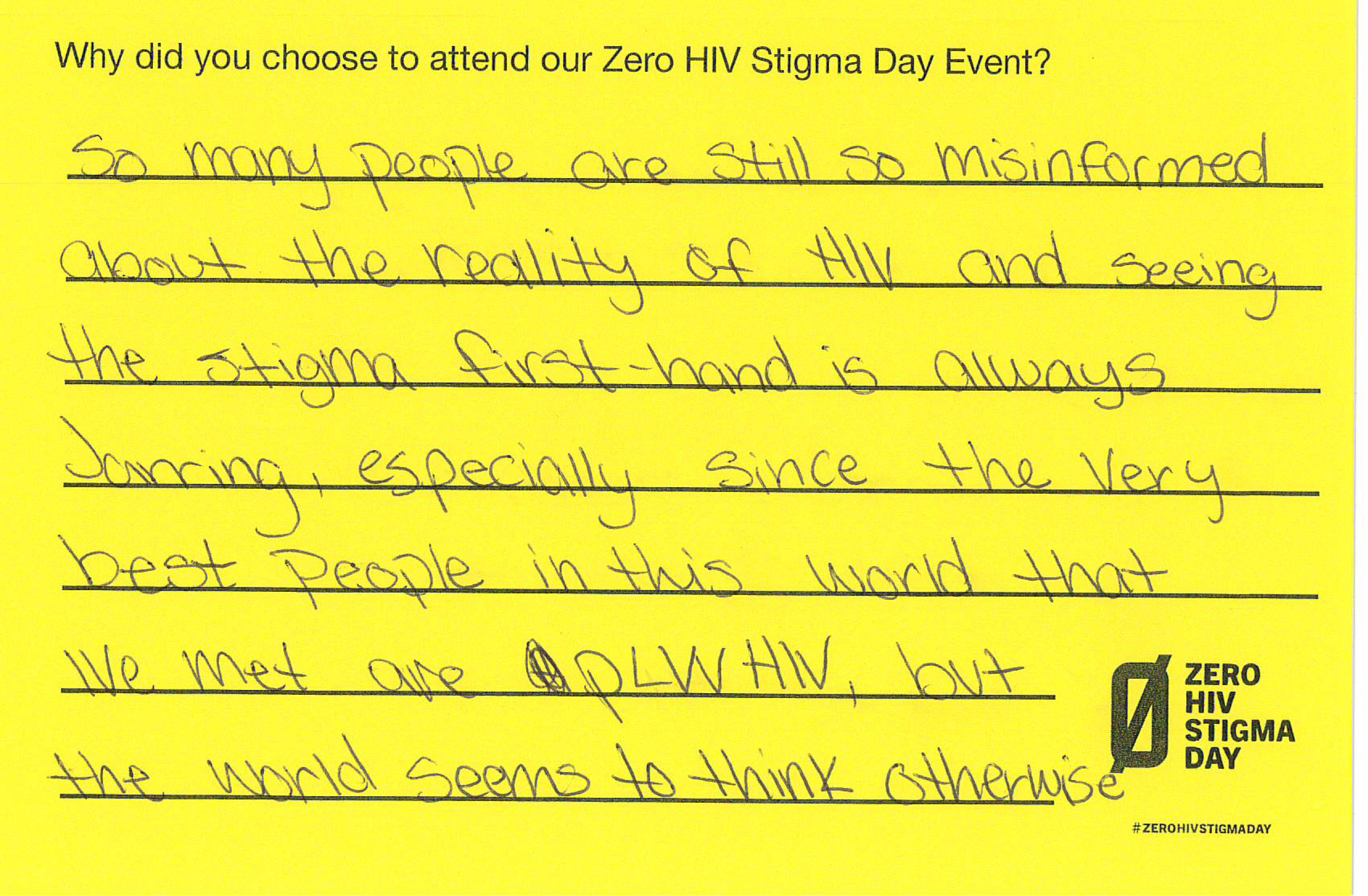
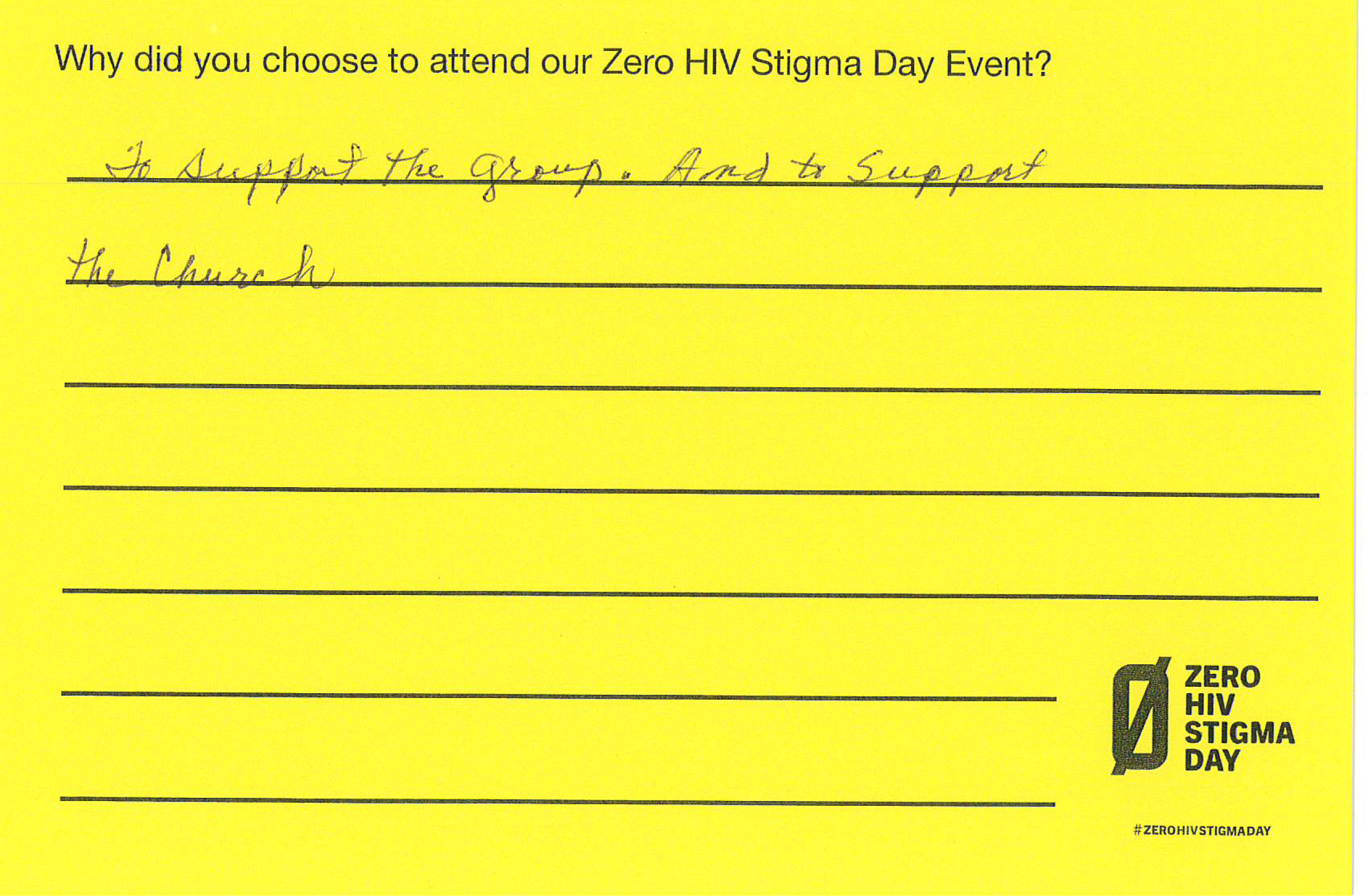
We asked everyone who attended to share why they attended this year’s event. We used this as part of an interactive art exhibit on HIV stigma. There were other questions as part of this HIV Stigma Clothesline exhibit – I’ll post those later.
Professor Peacock with their interactive HIV Stigma Clothesline Project.
Here are those responses! Click on an image below, then scroll through the gallery.
As head into Pride month, I want to talk about coming out of a different closet – publicly disclosing one’s HIV positive status. I believe it can play a significant role in ending the HIV epidemic here in Marion County, where 53-68% of people living with HIV are men having sex with men (MSM). The HIV epidemic has most deeply affected our LGBTQ+ community. I believe there are some important lessons we can apply from one community to another.
For me as a queer man, the process of coming out of the LGBTQ+ closet – taking off the mask, pushing through the fear of rejection & discrimination, finding self-love & community – is very similar to the process I went through disclosing my HIV status. In fact, it took almost 10 years for me to fully process the trauma, loss, and grief of my initial HIV diagnosis in 2012. I wish someone had handed me a link or brochure – similar to this one on disclosure from POZ magazine, or this one on Living with HIV regarding duty to inform from the Indiana Department of Health. It might have accelerated my own journey.
If you’re living with HIV, the HIV community needs you to consider coming out of the closet with your HIV status. My hope today is I’ll start you on your journey of self-discovery and acceptance.
If you know someone living with HIV, I hope you’ll share this blog with them. We need to bring about systemic change, and one way to do so is to come out, come out – wherever you are!
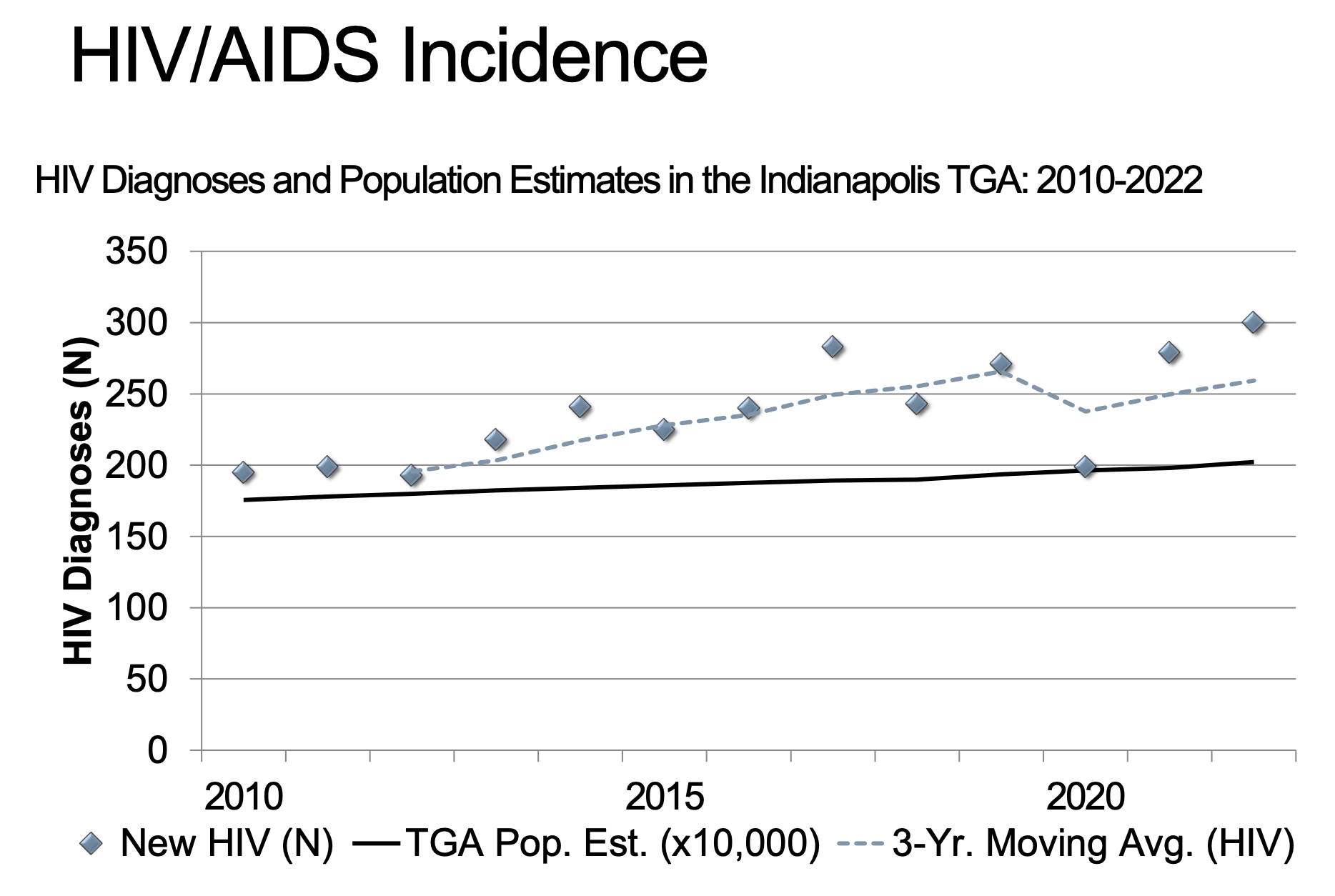
Of the 7,411 people living with HIV in that same area in 2022, an estimated 13% or 964 people are unaware of their status. We know that people who are not aware of their status are much more likely to spread the virus – so it’s imperative that we get more people to know their status through testing.
The CDC recommends that all adults have at least one HIV test in their lifetime; for populations at risk, testing is recommended at least every 12 months. The key to ending the epidemic is early diagnosis, which is one of four pillars in Marion County’s Plan to End the HIV Epidemic. The four pillars are diagnose, treat, prevent, respond. Click here to learn more about the plan, or go to the Side By Side website at endinghivtogether.org
What Anonymous People did for Recovery
“If everyone thinks about alcoholism and addiction as a negative thing, nobody is going to want to get help.” – The Anonymous People
A key shift came in the recovery movement, when people realized that anonymity – a bedrock of the 12-step approach to recovery – had come to hurt the movement by keeping people in silence and limiting their collective voice. Most importantly, people weren’t getting the help they needed.
For me, HIPPA is to HIV as the anonymity of the 12 steps was to Addiction. We need to break the cycle of silence because Silence = Stigma. We need our own mini version of Anonymous People for HIV!
I believe most of the 1.2 million people living with HIV in the US – the 13,900 in Indiana – the 5,420 in Marion County – are also suffering in silence.
We need to change that, in order to being about a similar shift in our community’s ability to diagnose, treat, prevent & respond.
Coming out reduces stigma
Coming out – even to just one additional person you know – starts to put a name and a face to HIV. It’s much harder to demonize people living with HIV if you know one personally. Coming out challenges stereotypes and misconceptions that people have about the virus.
HIV-related stigma and discrimination persist as major barriers to our ability to diagnose, treat, prevent & respond. By coming out, people living with HIV can challenge the stereotypes and misconceptions surrounding the virus. The very act of sharing one’s personal story humanizes the epidemic. All of this contributes to reducing the stigma associated with HIV. We also know that when more people openly discuss their HIV status, it helps break down the fear and ignorance that perpetuates stigma and discrimination.
Publicly disclosing one’s HIV-positive status can inspire others to get tested for HIV, much like coming out of the LGBTQ+ closet inspires others to come out. When people see individuals living with HIV being open about their status, it can motivate those who may be at risk to seek testing and know their own status. Early detection of HIV through testing is crucial for accessing appropriate care and treatment, preventing further transmission, and ultimately curbing the spread of the virus.
We need more people to get tested! We need more people to know their status. We literally need to find the 964 people in Marion & surrounding counties who don’t know their status. Hopefully, the rate shown earlier will begin to go down as more and more people get tested. But in the meantime, it will probably continue to rise as we close the gap on people not knowing their status.
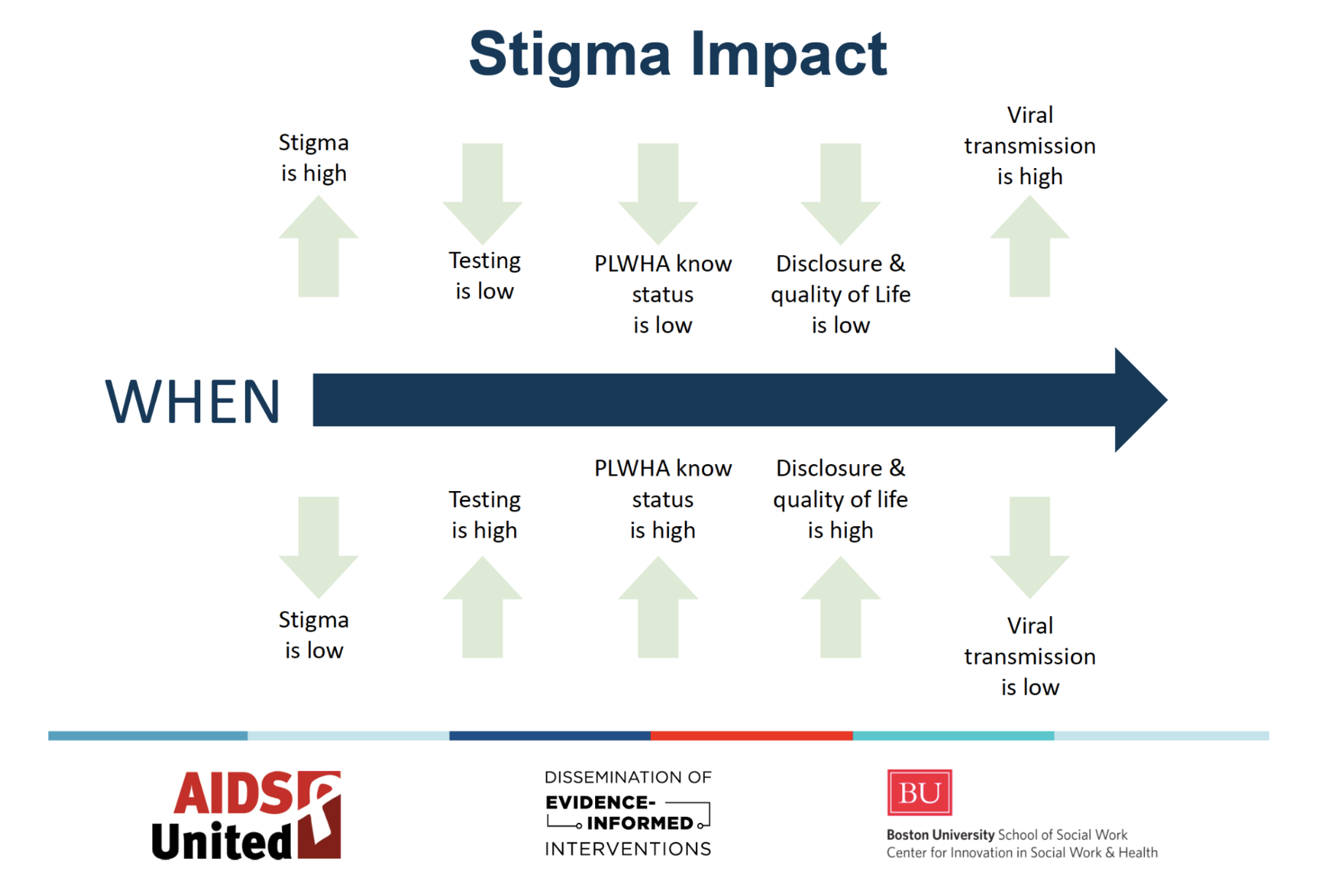
For me this chart sums it all up: when stigma is low, testing is high! When testing is high, people know their status – they aren’t afraid to tell others their status – and we curb the transmission of the virus.
With the medical advances in HIV science, we know that HIV is no longer a death sentence. It’s a manageable chronic health condition. But, that doesn’t mean it doesn’t feel like a death sentence at first.
I’ve healed a lot over the past 3 years since I came out publicly with my status. Granted, I’m relatively privileged. I’m a GWM and work for myself – so the risk of job-related discrimination is low. As I tell people, my boss knows I’m HIV and doesn’t have a problem – neither should you. Not everyone has that privilege. But I would argue that on a personal level, coming out to others about your status is liberating for your own mental health.
I experienced grief related to my diagnosis without even realizing it. I had largely dealt with the loss of my job in 2010 stemming from my addiction to crystal meth. I learned more about grief when I lost my mom suddenly in 2012 from untreated alcoholism. But nobody had ever helped me connect with the losses related to my HIV diagnosis in 2011. Loss of self-confidence. Loss of love and romance as I feared it. Loss of fear-less sex as I knew it. It took my me years to connect with those losses and properly grieve them.
A key part of my “HIV Recovery” was my support system. I had a great therapist – though I wish “the system” had pushed me harder to get into a support group for newly diagnosed individuals. That’s part of the reason I started the Hoosier HIV+E, a peer-led support group for people living with HIV in Indiana. For our mental health, we need a safe space, peer-led support and community.
If you’re thinking about coming out more with your HIV status, make sure you have a good support system – and at least for a period of time, try out therapy or a support group.
Coming out empowers others
By sharing our stories and experiences, we as people living with HIV can empower others who are facing their own diagnosis. Coming out demonstrates resilience. I learned how resilient I really am through my friends in the HIV community. It also takes great courage and strength to come out – but it shows others that it is possible to live a fulfilling life with HIV. And yes, even have fulfilling sex!
This is where our power in numbers grows. Coming out will encourage others to seek support, to adhere to their treatment and to lead productive lives. It’s that visibility that matters. Ultimately, coming out positively impacts not just ourselves – but the people around us. It’s my way – and hopefully your way – of contributing back to reducing the overall impact of the epidemic.
Coming out educates & informs the public
Many people are not aware of the breakthrough advances we’ve made like Undetectable = Untransmittable (U=U) and PrEP. I believe we have the science to end the HIV epidemic. But stigma – stemming from ignorance and fear – stands in the way.
Just like when I came out of the closet as a gay man, people had questions for me. It led to conversations, and through that, they became educated about being gay. When I came out more publicly as living with HIV, I also got a lot of questions. I quickly learned, I needed to learn more about the disease I had been living with for 7 years at the time! Just living with HIV doesn’t necessarily make me an expert on everything about the disease.
Coming out as HIV-positive helps raise awareness about the virus and its impact on individuals and our communities. We can educate others about HIV transmission, prevention methods, the importance of regular testing, and the availability of effective treatments. When people know more, they can make better decisions about their own sexual health. This in turn leads to improved uptake of prevention measures like PrEP, more testing, and better adherence to treatment. Yep, the four pillars are all lifted up when the larger public knows more!
As I’ve gotten involved with HIV Criminalization Reform, I’m learning that legislative change requires two things – power and money. Power is largely defined by the number of constituents who care enough to speak up! That’s another reason why we need more people to come out of the closet in states like Indiana, where our laws are dated on 30-year old science and unfairly prosecute people living with HIV.
Coming out with one’s HIV status can be a catalyst for policy change, as it brings attention to the issues faced by people living with HIV. By sharing our personal experiences and advocating for our rights, individuals living with HIV can contribute to shaping laws, policies and programs that are more responsive to our needs. This can lead to improved access to healthcare, prevention services, anti-discrimination laws, and increased funding for research and support initiatives – ultimately finding a cure!
It is important to note that coming out as HIV-positive is a deeply personal decision, and individuals should carefully consider their own safety, support systems, and readiness before doing so.
Coming out can have negative effects and adds a level of vulnerability that can be triggered or triggering. Find a support network from healthcare providers, counselors and peer networks like the Hoosier HIV+E in Indiana. If you’re new to advocacy, get a mentor.
Being public about your status brings its own rewards, helping normalize HIV with a face & voice. I understand that not everyone is in the position (aka privilege) to disclose their status publicly, but the more of us who do find the courage, the more effective change we can bring about in ending the HIV epidemic.
Will you join the HIV Anonymous People Movement?
So as we start out this Pride month, I invited you to consider your own “coming out story” as it relates to living with HIV. If you know someone living with HIV, be their friend – ask them how they are doing – share this blog with them. Every voice matters, every voice counts. We need your stories to change public opinion, to end the HIV Epidemic.
Today, I came across TWO sponsored ads on Facebook my WebMD. The worst of the two was about dating for people living with HIV. It sucked.
Needless to say both ads by WebMD left me wanting better.
For my sanity, I needed to right this wrong. So I’m re-writing their article with my own voice.
I’m admittedly plagiarizing in a creative licensing approach to bring at least one additional voice of lived experience. I really don’t think anyone is going to sue me over this, but if so, this is my act of corporate and civil disobedience.
Disclaimer: I’m SURE WebMD reviewed this content with their internal panel of people living with HIV for stigmatizing language for things that didn’t quite land right. The people involved did the best they could and intended no harm. In fact, it may have been written by someone who is also living with HIV. We are all human (including me).
Nonetheless, they fall short (as I’m sure I will from my narrow, majority-except-for-the-gay-thing GWM perspective). But here I go because I can’t be silent.
WebMD – get into 2022 and rework your language! Make it person-centric and don’t put the burden of discussing sexual health primarily on the person living with HIV. Consensual sex between two or more adults mean all parties are responsible for their own health, for asking the right questions, and for sharing important health information. Be precise with your language – language matters. We need medically accurate information.
Someone probably got PAID to write the WebMD article. I’m not getting paid. So please receive these edits as a Letter to the Editor, bringing about change by taking control of my own narrative.
For everyone – I want to learn more complete, helpful and accurate ways of writing too – so your comments are welcome. Your trolling is not – so don’t make me close comments.
Top Tips for Dating When You’re a Person Living with HIV (revisited)
Finding a partner while living with HIV may feel scary. Here are some tips from others who understand what you’re going through, who are also living and even thriving with HIV.
I give credit to WebMD for most of this content – source article here. I have added or edited content where I thought the information was dated, inaccurate or poorly worded. I’ll underline text where I made edits
Living With HIV
Finding a partner when HIV is something you’re living with can feel scary, but you can have a fulfilling relationship. HIV is treatable, and with treatment, you can live a long and normal life. Your partners can also take steps to minimize their personal risk of getting HIV.
Be Informed
It’s sometimes hard to talk about HIV with new or potential partners. It’s normal to feel stressed or embarrassed, but learning more about your condition can help. Ask your doctor about how and when to disclose your status. Do your own research online or by talking to a care coordinator, case worker, self-advocate, peer support, mentor, or other trusted, knowledgeable people in your community. Find a support group, in person or online. More information and conversations about HIV will make it easier to talk about living with HIV.
Remember That Treatment Is Prevention and U=U
HIV medication lowers the amount of HIV in your blood until it’s undetectable. This helps your immune system repairs itself and stops you from getting other illnesses. If you’re taking medication as directed and are undetectable for at least six months, the virus is untransmittable – a nerdy way of saying you cannot sexually transmit HIV to your partner. That’s right. U=U. Undetectable=Untransmittable. Can’t find it, can’t share it. It’s that simple.
Decide when it’s best to disclose
There are many factors to consider when deciding whether or not to disclose to your partner. Your safety is just as important as the safety of your sexual partner. There may be laws in your state that require you to tell your partner that you are living with HIV before having sex or sharing needles.
It is everyone’s responsibility to get tested for HIV and other sexually transmitted infections (STIs). No one can force you to disclose, but in most cases it is recommended to avoid misunderstanding and to do no harm.
But the world is grey, so here are some factors to consider in deciding when it’s best to disclose:
Knowing when to disclose your HIV status during dating can be a big worry. If you aren’t having sex, you can decide when to tell a potential partner. Talk about it when you’re both sober, and you feel safe.
In a safe, consensual relationship between two or more adults, it’s helpful for all partners to take the initiative to know and share their HIV status, either HIV negative or positive. In this way, everyone is taking responsibility and making decisions for their own sexual health.
In other circumstances, it may be unsafe to disclose your status to your partner because of abuse, domestic violence or other real life situations. Consider reaching out to a local domestic violence advocate for help in getting out of an unsafe situation. In some states, there may be legal risks for not disclosing. This is where harm reduction comes into play. What poses the least risk of harm? Do that first. But get help. You do not have to do this alone.
Knowing that an undetectable viral load poses no risk of sexual transmission means you can make informed decisions about whether or not to disclose your status. This is all about risk management and making informed choices based on your circumstances and the best information possible.
In some states, laws may be written that make it “their word against yours” if you were to be charged with a crime for not disclosing your status to a partner. Consider following up any important conversations with a brief email or text message as written proof that you disclosed your status. It may sound awkward to do, but the law isn’t always fair. Alternatively, send that email or text to yourself or make a note to a written diary of the date, time and details of the conversation.
Knowing the legal realities in your state for people living with HIV can help reduce fear, shame, stigma or other barriers to disclosure. Most states have information on HIV criminalization, or contact these national organizations [SERO, Health Not Prisons Collective]
Practice Harm Reduction to minimize risk
There are many things you and your partner can do to minimize risk associated with HIV and other sexually transmitted infections. The relative risk of any behavior increases if you have multiple partners.
Knowing the relative risk of various sexual behaviors, you can decide when to tell a potential partner based on whether you are engaging in behaviors that have no or negligible risk of transmission. [POZ Magazine Article on HIV Transmission & Risks] Talk about it when you’re both sober, and you feel safe.
Consider using condoms, which prevent HIV transmission as well as other sexually transmitted infections.
Practice safe sex by engaging in activities that pose no risk of HIV transmission. Oral sex has no risk of transmission as long as there are no open sores or cuts in the mouth or on the genitals. Touching, use of toys, frottage and mutual masturbation are examples of other safe sexual activities. Toys should not be shared, or if they are, clean them in between use. [POZ Magazine Article on HIV Transmission & Risks]
Request Your Partners to Take PrEP
Encourage your partners who are not living with HIV to talk to their doctor about PrEP. PrEP stands for pre-exposure prophylaxis, which means they take it before sex or needle sharing to lower their risk of infection. It’s a highly effective medicine. PrEP for your partner would make most sense if you aren’t undetectable or have trouble staying undetectable or in situations where there may be multiple partners involved.
Practice Self-Care
Whether or not you are living with HIV, dating and finding the right person takes time. You might feel stressed about your love life and how HIV affects your relationships, but be kind to yourself. Take time to do what makes you feel good and helps you maintain your sense of self.
Find Support
Living with HIV can be stressful and lead to a lot of emotional distress. You might find it helpful to talk to a counselor about ways to cope with your feelings and your condition. Finding other people who live with HIV can help you feel a sense of community. Plus, you can ask them for advice.
Be Yourself
If you feel embarrassed about living with HIV, you’re not alone. But remember, it’s not something to feel ashamed about. Look for a partner who appreciates you for who you are. Be yourself and ask for help if you’re struggling to feel confident.
I will improve this, but wanted to get SOMETHING out that spoke more to my truth, to my experience, to my learning. I could do better. There are some places to flesh out. But it’s a start.
Keep tellin’ the story.
Sawubona
Professor C Todd Peacock III Community Artivist, Connector, Storyteller & Healer




 The Magical Storybook of Professor Peacock