Eventually I realized what really bothered me about it was…
I do the same thing all the time.
There are times when I love how life unfolds, reminding me that the universe will continue to take care of me if I stay out of the way…
I’m making a transition from photography as a hobby to using my lens to tell stories as professional photographer. My intent is of course to earn some income along the way. Who wouldn’t want to do what they love and get paid for it?
I’ve been looking for ways to refine my skills and to learn new techniques. I’ve also been looking for ways to add to my portfolio, even it in the beginning it means some pro-bono work. It gives me exposure and starts to get the word out about C Todd Creations.
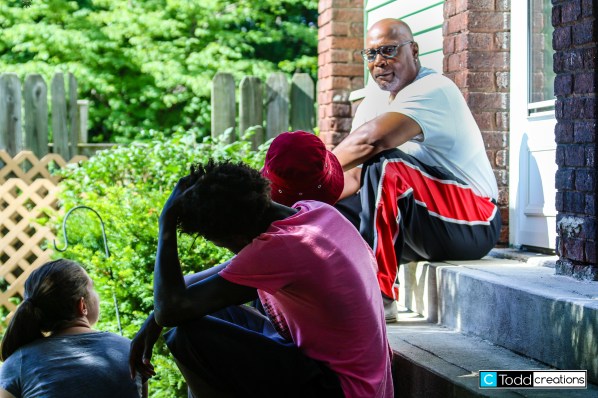
Last week, I spent time with Broadway’s “roving listeners.” Each year, Broadway Church hires local youth from the neighborhood. They roam the neighborhood, getting tSo know their neighbors. They name, connect and celebrate the gifts, talents and stories of the people living here in Mapleton-Fall Creek. Here are some of their stories…
Steve P. sharing one of life’s lessons his father taught up as a kid. It’s the same one he taught his three sons…
Last week, we started a series at Broadway UMC, naming, celebrating and blessing the vocations of those in our community – the ways in which people choose to live our their faith in our neighborhoods, schools and places of work. We were all asked to bring along a “symbol” or tool of our trade to share at communion. This seemed like another great opportunity to “insert my lens.” So, I planned on bringing one of my pictures along to service “vocation plate” at communion. I also brought my camera to capture some of the ways in which people chose to share their story.
When my friend Mike (who also happens to be our pastor) saw some of my photos from my walk with the rovers, he suggested they be included in the slideshow projected at the front of the sanctuary before service.
What a great chance to have my work showcased. And I didn’t even have to ask.
Marketing is my least favorite business activity, so I was grateful and excited.
Then there are times when life unfolds…and I get in the way.
I still love how life unfolds. It just takes me a little longer to get from “WTF?” to “Oh yea…that universe thing!
And in these situations where my ego gets in the way, there is usually a lesson to learn…or re-learn 🙂
When I got to the sanctuary, I settled into a pew towards the front, where I could easily take pictures during the service without disturbing too many people. The pre-service welcome slides started. As my images started to float across the screen, I recognized the Ken Burns and other effects used by the slideshow application. Then it hit me… Those were my photos…but the included watermark had been cropped out! (Remember that marketing thing!? It may be my least favorite business activity, but it’s still important – especially a new small business owner).
I was frustrated, disappointed, angry, sad…
The voice in my head started in… “Why would someone have cropped out my watermark? Don’t they respect artists? Don’t they know I’m trying to make a living from this?”
Then the committee in my head started to freak out. “WTF? They really don’t give a crap about me as a person and as an artist here. They talk all of this crap about shining a light on the gifts and talents of our members and neighbors. And, when it really matters and could have made a difference, they screw me over. What a bunch of hypocrites.”
Then that little voice started – you know, the one driven by “fight or flight” genetics, just like Darwin said. And since I was now in control of the universe, with the ability to know people’s thoughts and intentions, I did what any self-respecting artist would do. I picked up my shit, and headed out. “I’ll show them…” I started to craft the articulate email I was going to send out as soon as I got home…
As I was walking out, a friend who I hadn’t seen in awhile ran up to me. He was only adding to the fuel for my growing road rage. We had a misunderstanding the last time we saw each other which was still unresolved. I’ve also been disappointed by his multiple unfulfilled offers to use me for a shoot on of his projects. Anymore, I’m so done with his empty promises, I discount anything he says and rarely give him more than a cursory listen. And the committee in my head feeds off this self-pity. “He’s just like the rest of them. He really doesn’t give a crap about me as a person or as an artist. He talks all of this crap about shining a light on the gifts and talents of our neighbors. And, when it really matters and could have made a difference, he lied to me and ripped me off. What a bunch of hypocrites.”
As I walked home, with my bruised ego and growing rage, some recent conversations I’ve had with another friend Tony came to mind. We’ve watched some great TedTalks on shame and guilt. He’s also more recently talked to me about CBT – cognitive behavioral theory – in the context of life in general as well as for people in recovery. With CBT:
“negative patterns of thought about the self and the world are challenged in order to alter unwanted behavior patterns or treat mood disorders such as depression.”
One of the techniques used is thought tracking, where we take time to pay attention to those initial thoughts that come up in our head – that “committee speak” I refer to. Understanding those, then probing deeper with questions like “If that’s true, then what else is true?” or “If that’s true, why does that matter to me?”
I’ve been trying this recently, asking myself a series of those questions for at least three cycles…or until I reach the deeper truth or belief that might drive those initial thoughts.
In summary, CBT is a way I can catch myself, ignore my first reaction, and “stay with my feelings” until I’m better understanding what’s behind my feelings, my impulses, my thoughts. Over time, if those underlying beliefs don’t serve me well, I can explore alternatives that are more in line with how I am wanting to live out my life.
As I probed, I realized several alternatives:
Though it’s possible there was deliberate intent to crop out my watermark, it’s also possible that he added the photos to a template slideshow and the appliction inadvertently cropped the picture.
If this were true, there is still an opportunity to share why watermarks are important to an artists (with legal ramifications / protections), and make a formal request in the future when I share CTC photos to maintain the integrity of the original photo and watermark when sharing. But to assume malintent is unfair and with little basis in facts.
With the second friend, it’s likely that like me, he is busy and human. I’m sure I’ve made offers or promises to do something, send something, ask something on behalf of someone else…and I forget or get busy and find other important tasks
Again, if this were true, there is still an opportunity to approach him, and discuss how I feel now when we talk about work or projects. But, I’m able to see him as perfectly imperfect (like me), bound to disappoint (like me), but generally, having pure and others-centric intentions or motives.
So, a lot of thoughts and words to say –
take a moment, stop, breathe, count to ten, and probe into those thoughts to see what else I learn about my feelings, reactions, and beliefs.
And, give others the benefit of the doubt, don’t assume intent, and be gentle with everyone -starting with me.
I’ve reflected a bit on Memorial Day this year. It’s been a mixed bag – but there was one gem to come from my reflections.
I’ll break my college writing class, and cut to the chase.
As I reflect on what Memorial Day means to this country, it’s about celebrating those who lost their lives in service to their country.
I want to create a movement called Recovery Day.
It needs to be in September because of National Recovery Month. To not have it confused with Labor Day, I’d propose the final Monday**. Conceptually, it becomes similar to Memorial Day’s purpose, though uniquely focuses on those lost their lives because of mental health or substance abuse disorders. With addiction and recovery, the US War on Drugs contributed to our current situation and must be shut down, giving way to a new executive order.(***)
Recovery Day is the final Monday of September each year. It recognizes those who lost their lives because of mental health disorders, including substance use disorders (also known as addiction.) We honor the veterans(^) who fought their personal battles to overcome their problems and advance recovery opportunities for all Americans.
Part of the celebration around Recovery Day includes telling people’s stories, so they are not forgotten. We see this all the time on TV or on the radio (*), where comrades or family or friends share a memory of their lost hero. With Facebook, YouTube and other social media tools, it’s even easier for memories to be shared, creating a common bond connected to some of our deepest yearns – to celebrate life, to be interdependent one with another, to find connection, to find meaning.
Recovery Day is borne out of a desire to honor our dead in the United States of America, much like we do on Memorial Day for those who gave their life in service to their country
Executive Order: National Recovery Day
We request an Executive Order from President Obama, declaring something similar to:
National Recovery Day
The date of National Recovery Day shall be the final Monday of September each year. It is designated for the purpose of strewing with flowers, or otherwise decorating the graves of fellow citizens who lost their lives during their battle with mental disorders and/or substance use disorders and whose memories live in almost every citizen’s heart, in each family tree, in our community memories, or in our nation’s collective memory.
It is the purpose of the Commander-in-Chief to inaugurate this observance with the hope that it will be kept up from year to year, while a person in long-term recovery, family or community members remain to honor the memory of their departed comrade. The Commander-in-Chief earnestly desires the public press to lend its friendly aid in bringing to the notice of comrades in all parts of the country in time for simultaneous compliance therewith.
In this observance no form of ceremony is prescribed, but communities and individuals will in their own way arrange such fitting services and testimonials of respect as circumstances may permit.
Hear ye, Hear ye:
Whereas our current understanding of our Nation’s War on Drugsis that it has been damaging our country since its declaration in 1971;
Whereas our nation lacks broad understanding and community surrounding issues of physical, emotional and mentalsafety and wellbeing;
Whereas mental and/or substance use disorders often show up in multiple diagnoses for the same person;
I do declare that a new day has come for our nation.
Another voice of remembrance is needed to bring deeper understanding, healing and connection as citizens and neighbors.
This national voice of remembrance is needed because:
I believe those who lost their lives during their battle with mental disorders and/or substance use disorders are veterans of our great nation;
I believe their journey of recovery was personal, though it draws upon common needs and principles to support a life in recovery;
I believe their recovery was a process of change through which individuals are improving their health and wellness, living a self-directed life, and striving to reach their full potential;
I believe their battle was daily, overcoming and managing their disease(s) or symptoms, … making informed healthy choices that support physical and emotional wellbeing;
I believe their battle has been having ripple effects into our families, communities and society at large; like an iceberg approaching our nation’s shores, we must seek to more fully understand the full impact the adverse effects of these diseases are having on our society.
In this observance no form of ceremony is prescribed, but communities and individuals will in their own way arrange such fitting services and testimonials of respect as circumstances may permit.
Background & Supporting Concepts
Recovery, Recovery Coaches and the War on Drugs
Those with substance use disorders in particular have been been fighting their own personal battle on a larger national battleground, created when President Nixon declared our nation’s “War on Drugs.”
Likewise, we need to help at a community level to shift the conversation to one of recovery as well.
Recovery is seen to more holistically help to people reach their full potential, much like the approach a life coach might take with someone. Many states, including Indiana, now offer certified Recovery Coaches – also known as peer recovery support services.
In 2014, President Obama’s Administration issued a national blueprint for drug policy. This Strategy calls for drug policy reform rooted in scientific research on addiction, evidence-based prevention programs, increased access to treatment, a historic emphasis on recovery, and criminal justice reform.
It’s time for more people in long-term recovery to come out of the closet… We’re hurting our own cause, our own acceptance, our own sense of shame.
Building on its success and our collective understanding of the twelve step recovery movement, thinking up until recently is largely steeped in the experience of the twelve step recovery movement. One can not argue “the steps” have helped millions of individuals recover their lives and their personal self-worth. However, recent thinking and research is helping us see the limitations of anonymity-based personal growth.
The “secrecy” around “the rooms” fuels shame and does nothing to help improve public opinion or to reduce the societal stigma of being of suffering from a substance use or mental disorder. The traditions and steps, as many understand or interpret them, strongly discourage “coming out” in public as someone in recovery for some very important and historically valid reasons. However, we’ve not made as much ground as other sub-cultures who have been wrestling with inadequate civil rights. Some or our “sister movements” are not as old as the Twelve Step movement that started in the 1930’s. We’re already seeing that we can find language to tell our story that both honors the traditions of the twelve steps while giving a “face and voice” to recovery. If we look to some of these other movements for ideas along with the current shifts in thinking, I believe we can make much more tangible and long-lasting changes, building on the work already done by many, which I’ve tried to include generously herein as links.
The Cost of Anonymity
To understand how much this culture of anonymity is hurting us, one only has to look at the gay rights civil movement. It started to gain momentum in the late 1950’s with the Cooper’s Donuts Riot, gaining its long-term momentum in the late 1960’s with theStonewall Riots.
The journey of LGBTQ citizens, from the shadows of our psych wards, through the Stonewall riots, to current day is a powerful “rise to inclusion,” though like any civil rights movement, change is slow and unpredictable. But, hindsight gives us hope and encouragement that we are making a difference, one closet at a time.
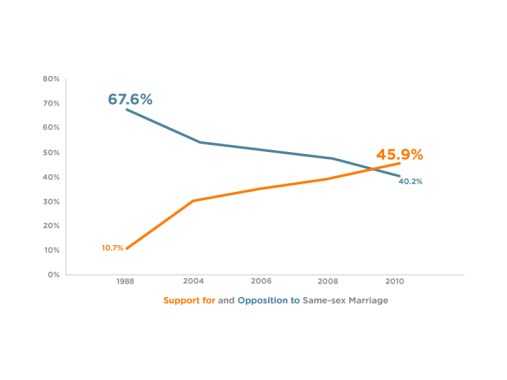
Men and women who are gay, lesbian, bisexual or transgendered are now visible and recognized in the US by most major church denominations; we are sitting in the boardrooms of major corporations; we are running local “mom and pop” cakeries and bakeries. More importantly, for many reasons including changes in laws by Cities, States or at a Federal level, we are clearly seeing changing attitudes towards gay marriage.
Support and Opposition Trends: Same-Sex Marriage in the US
Understanding the Disease, Recognizing Heroes, Finding a Cure
Like any disease, mental disorders and/or substance use disorders do not define individuals, their limitations nor their successes. Much like veterans returning from combat, their recovery is a process.
Like any disease, our understanding and knowledge of its causes, symptoms, treatment methods grows with science and technology. We use that to improve prevention, diagnos(es) better treatment(s) and better quality of life for those living with the disease.
But on a larger scale, our Nation’s “War on Drugs” did more harm in the long run. Our country owes these veterans both recognition for their service, along with a new national focus on finding cures for these chronic conditions. Similar to finding the cure for cancer or HIV/AIDS, there are two sides to this “holy grail.”^^^
The Federal organization that is very much leading the way and setting the tone for behavioral health care and recovery is SAMHSA (Substance Abuse and Mental Health Services Administration). SAMHSA has developed a working definition and set of principles for recovery. A standard, unified working definition will help advance recovery opportunities for all Americans, and help to clarify these concepts for peers, families, funders, providers, and others.Their Recovery Pamphlet can be found here, including a working definition of recovery and “10 Guiding Principles of Recovery.”
In addition to these efforts, I agree with SAMSHA’s position in their Recovery Pamphlet that we must also continue to work to expand health insurance coverage for treatment and recovery support services. I also believe we need to overhaul our healthcare system, and continue to expand the concepts of access started in 2010:
We must continue to address gaps in availability, affordability and access to services, enormous strides in which were made with the 2010 federal statute known as the Affordable Healthcare Act;
to be better equipped to honor the many “spheres of recovery” and to share their stories (individual, organization, community and government based)
How can we stand up for our rights while honoring the anonymity tradition of our twelve-step groups? This is a great publication (Indiana) with practical information, tips and resources. (click link or thumbnail below)
Footnotes and References
* – well, if you listen to something with more content like via our public airways like PBS – whether through TV, radio, podcasts, video blogs, – or my new favorite, Ted.Com (an app on many smart TV’s)
** -in line with how similar holidays are defined, but not to be confused with Memorial Day, Veteran’s Day, Labor Day, etc.
*** – another thought would be to combine this into one declaration. It recognizes those who lost their lives because of the diseases of mental health and addiction. We honor these heroes and veterans because they somehow maintained hope, connection, and meaning in their lives in spite of and often because of their illness(es). They were able, in their own way, to celebrate their autonomy, their own beauty, and their sense of belonging and contribution to life. Their legacy inspires us to create places of belonging with safety on all levels (physical, emotional, sexual, spiritual, emotional). These micro-communities create connection, interdependence, meaning and autonomy. They practice compassion, hospitality, inclusion and empathy as a way of encouraging reflection, trust, self respect, and self-expression.
“A veteran (from Latinvetus, meaning ‘old’)[1] is a person who has had long service or experience in a particular occupation or field.[2]” (source link)
It goes on to only further define military veterans vs. war veterans, and military conflict vs. wars. This helps to understand the complex layers – and we’re potentially going to add another one. But, is that any different than these rare but otherwise great examples to follow, where elected or appointed leaders have stepped in and made a declaration on behalf of the nation, to find connection, vulnerability, and healing but focuses uniquely on military veterans. In this same sense, Recovery Veterans become another way to further refine the broad term we use as “Veterans.”
This page refers to military veterans, i.e., a person who has served or is serving in the armed forces. Those veterans that have had direct exposure to acts of military conflict may also be referred to as war veterans (although not all military conflicts, or areas in which armed combat takes place, are necessarily referred to as wars).
^^ I give credit to a lot of content I’m quoting from SAMHSA’s Working Definition of Recovery. They make this an many other useful tools available at a price and/or free of charge. They do require you create a login name/password to use their store. For that reason, I can’t provide a “working link” to their password-protected documents. They will link properly once you create a login and stay logged into their site while clicking any links in my blog.
^^^ – Let’s not kid ourselves. Having worked for 19 years for a Pharmaceutical company at a mid-level global management position, I never even heard an inkling or whisper of what is on everyone’s mind:
“how do pharma companies rig the game so cures are funded half-seriously purely for good-will, knowing full well that Pharma’s income stream and high profits are because of the free range they have on pricing in the US? We are the last major (or probably minor!) country that does not regulate human and animal pharmaceutical pricing. “
In that world, they have massive incentives:
to focus on medications that provide patient relief from chronic symptoms
to find better treatments for known diseases
to create medical need – creating medical support for new treatable conditions, which of course require the discovery of new medicines to treat their symptoms
All of this is threatened by a single cure.
I’m working on a time-value of money decision analysis tool that helps calculate hypothetical but representational samples of a product’s unit cost combined with various pricing strategies, and using this “NPV” or “EVA” calculation to compare to a representational sample of bring a vaccine or cure to market. I think this will explain why Pharma companies don’t ever have to “whisper” their evil plan. Good decision analysis for their projects will implicitly kill the “cure option.” But, just like valuing the “do nothing” option, our FDA must ask Pharma companies to show their analysis BEFORE approving new symptom-based options (when one or more viable options are on the market.”)
Along with NVC, ABCD and Mark Nepo’s writings, Chuck C’s book “A new pair of glasses” turned my worldview upside down. His insight into the human ego transcends addiction and could be read by all. Here are mp3 from original talk that formed basis of the printed book.

 The Magical Storybook of Professor Peacock