Content note: This piece includes discussion or imagery tied to sex, substance use, and erotic imagery. It may be activating for readers with addiction histories around sex, substances, or stigma. Please take care while reading.
I picked up some art today from Magpie’s First Friday exhibition. February’s theme was The Dark Side of Love. I had submitted a piece titled “Nothing Bad Happened.”
For March, the theme is HOOKED: An Exploration of Addiction.
As someone in recovery from chemsex addiction, I hesitated to submit something. The shadow does not disappear just because behavior changes. It shows up in memory, in intimacy, in fantasy.
Addiction has been described as a thinking disease. My instinct is to outrun the thoughts or distract myself. My therapist tells me to sit with them instead.
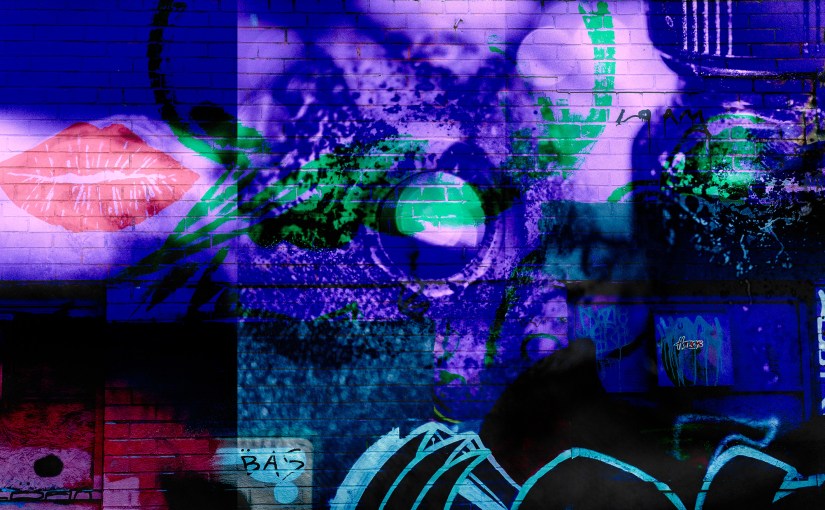
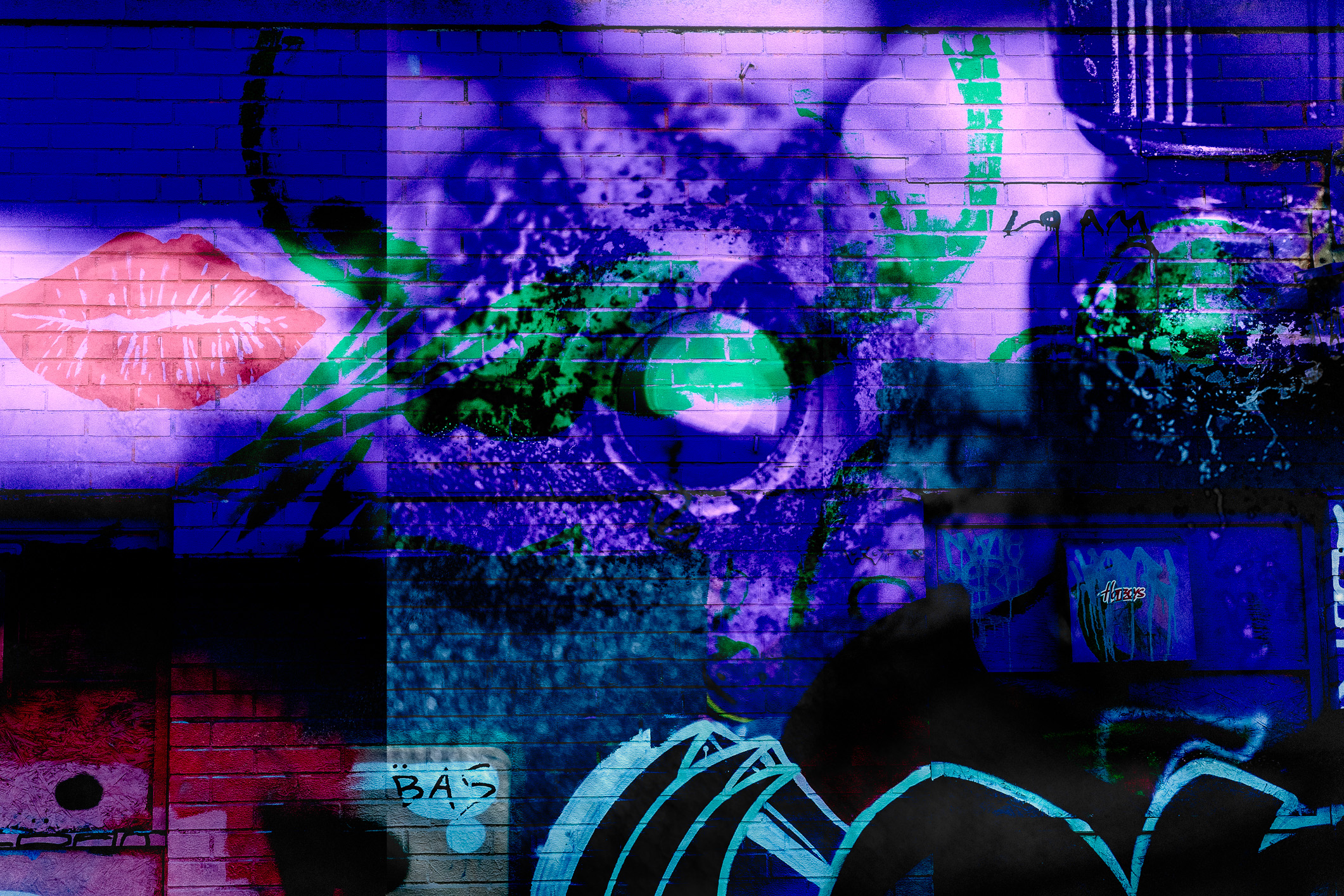
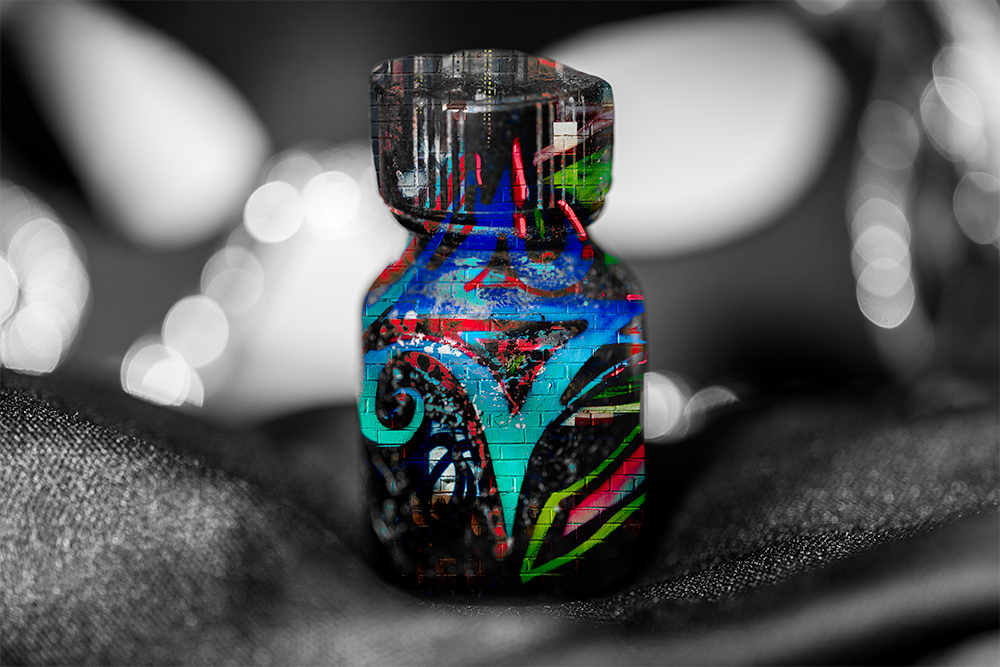
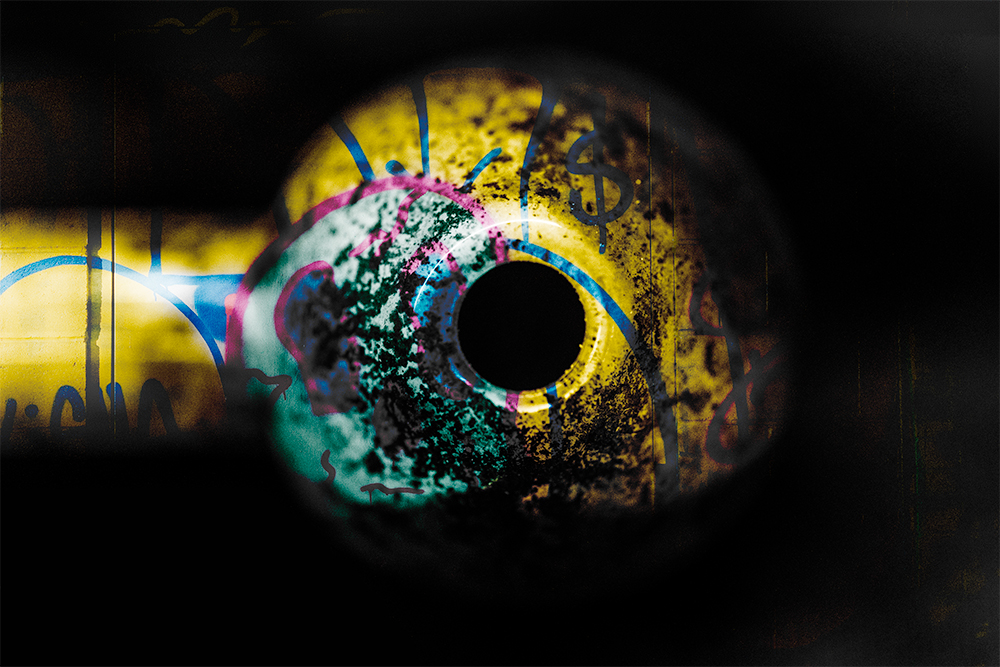
Relapse Fantasy came from doing exactly that.
Relapse does not start with using. It starts in imagination. In a flicker of memory. In a sensory echo. Rather than pushing those thoughts away, I photographed them.
These images are not about returning to old behavior. They are about recognizing the moment before it begins. They are about interrupting the cycle in real time.
My work may not sell. That isn’t the measure. For me, creating it is part of staying accountable. I am in recovery, and this work is part of how I maintain it.
“I am being called to take care of myself in a new way.” ~ AB
Relapse Fantasy
Just This OnceThis Fits in My HandI Am the DrugTunnel Vision
Exhibition Statement
Artist Statement – Relapse Fantasy
Relapse doesn’t begin with action. It begins with a story I tell myself.
Chemsex addiction fuses sex and stimulant use in a way that rewires the brain’s reward and attachment systems. Dopamine begins to feel like intimacy. Intensity begins to feel like connection. The brain remembers that pairing long after behavior changes, and it can make the fantasy sound almost reasonable.
Relapse Fantasy explores that negotiation with the brain — the moment when pleasure tilts toward compulsion, when “just a taste” sounds logical, when repetition disguises itself as ritual and obsession passes for desire.
I’ve stood inside that logic.
I’m not documenting use. I’m documenting the sales pitch.
As someone navigating recovery in real time, I make this work to externalize the thought before it becomes behavior. The fantasy isn’t neutral. It’s persuasive. Naming it is how I interrupt it.
Chemsex is not only an individual struggle. It reflects how quickly intimacy and intensity become entangled in queer culture in ways we rarely name out loud.
If this work resonates uncomfortably, that’s okay. Discomfort can be information.
If this work resonates with your own experience, I encourage you to seek support. You do not have to navigate it alone. If you are struggling with addiction, support is available at 988 (https://988lifeline.org/) or local recovery services (Indianapolis resources).
Keep tellin’ the story,
Professor Peacock
Note: These are my thoughts and my story. I used AI to make helpful edits to my ramblings and online journaling, including some organization to be more blog-friendly.Images are photographed and manipulated by me.
In abstinence-based recovery, it gets thrown around like a scarlet letter. Relapse means you failed. Relapse means you’re “back out there.” Relapse means you’ve lost your chip, your clean time, your credibility. It’s all-or-nothing, black-and-white, success-or-failure.
But here’s the thing: life isn’t black and white. And neither is recovery.
That’s where harm reduction has been such a gift to me. Instead of demanding perfection, it allows me to ask a more useful question: How can I reduce harm, no matter what choices I make?
When “Relapse” Becomes a Roadblock
The problem with calling it a relapse is the shame that follows. That shame can be louder than the actual use itself. I could spend a weekend beating myself up, convincing myself that I’ve ruined everything, that I should just give up. And ironically, that shame spiral is more likely to push me into more use – not less.
When I think about my own journey, relapse just doesn’t fit. Sometimes, yes, I make a choice that doesn’t line up with my intentions or my values. Sometimes I pick up something I’ve been avoiding. But that doesn’t mean I’ve suddenly undone all the progress I’ve made or that I’m back at zero. It means I made a choice – sometimes a healthier choice, sometimes a riskier one.
Harm reduction flips that on its head. It says: You’re still here. You’re still worthy. Let’s talk about what happened without judgment.
A Different Kind of Honesty
I want to be able to say:
“I chose to use because I was hurting.”
“I made a decision that didn’t line up with my values, and I want to unpack why.”
“I was stressed and slipped into an old pattern, but I’m not starting over at zero.”
That kind of honesty matters. Not because it excuses risky choices, but because it makes space to talk about them without fear. The real danger isn’t the choice itself. It’s the silence that stigma creates.
Words Like Overdose Don’t Always Fit Either
Even the language around risk needs reframing. “Overdose” implies I took too much. But often, the truth is scarier: I didn’t take what I thought I was taking at all. I may have signed up to use meth, but I didn’t sign up to smoke fentanyl. That’s not “overdoing it” – that’s contamination in a poisoned drug supply.
When we keep using the old language, we keep reinforcing old narratives: that the problem is the person, not the system. But if we reframe it, we see the truth. The real problem is unsafe supplies, criminalization, and a lack of support.
Moving Forward Without Shame
So I’ve stopped saying relapse. I’ve started saying: I chose to use.
That doesn’t make the choice “good” or “bad.” It just makes it mine. It keeps me honest without putting me in the box of failure. And it leaves room for growth, for reflection, for harm reduction.
I’m not back at square one. I’m still on the path. And maybe that’s the point: recovery, or whatever we want to call this messy, human process, isn’t about perfection. It’s about progress. It’s about staying alive. It’s about learning to meet ourselves where we are—without shame, without silence, and without that old, heavy word: relapse.
Keep tellin’ the story. Professor Peacock
Note: These are my thoughts and my story. I used AI to make helpful edits to my ramblings and online journaling, including some organization to be more blog-friendly.AI created the featured image used in my blog.
I’m preparing thoughts for an upcoming podcast conversation with Halle Pino on recovery and harm reduction. I want to bring in the aspect of Chemsex recovery & harm reduction, since that has been a part of my story and is something I don’t think we talk about enough – especially in the queer community.
I also fired my last therapist because I don’t respect him or his approach to therapy. After a month of waiting, I finally heard from my new therapist. So I feel like I’m going out on a first date, and it might be helpful to capture some of my story to know where to pick back up with therapy. So welcome to my TedTherapyTalk. Enjoy the ride!
Chemsex: How I Got Here
“Chemsex means using drugs as part of your sex life, and it’s most common among gay and bi men. There are typically three specific ‘chems’ (drugs) involved: Methamphetamine (Crystal Meth), Mephedrone (Meth), GHB and GBL (G).” – Source: The Rainbow Project
Chemsex is often referred to as “party and play” or “pnp” on gay hookup apps.
People participate in chemsex for various reasons. For many of us, these party drugs enhance our sex drive or allow us to keep at it for extended play sessions. For others like me, substances help reduce inhibitions. I have a lot of hangups about gay sex from my upbringing and society in general. So, using a substance helps me push off some of that internalized homophobia and stigma around gay sex, around butt sex, around sex in general.
Gay sex still makes me uncomfortable sometimes, but we need to get more comfortable talking about sex and sex education. My ignorance, fear, chaotic substance use, lack of routine STI testing and bad timing led to my HIV diagnosis in 2012. I’ve been undetectable ever since but living with HIV is an entirely different level of stigma, even today in the LGBTQ+ community. That’s why authors like Dr. Fawcett call this “the perfect storm” – the intersection of men, drugs and a virus. (I bring up his research later…) It shows up on all sorts of levels for many of us, particularly on a deeply personal level. So no wonder I choose to use substances that help me overcome all of these layers.
When I was hard into the party scene, I found that chemsex also gave me a heightened feeling of intimacy – at least in moderation or in the beginning. Sadly for many like me who may not be able to control our use of certain substances, it often leads to the antithesis of intimacy. In recovery from chemsex substances like GHB and meth, I’ve had to slowly relearn – or if we’re totally honest, learn for the first time in my adult life – what true intimacy is.
Like many gay men, I have always chased beauty and youth almost to a fault. I’m far from a natural beauty, so I’ve also struggled to connect with guys – particularly as I age. (Yes the irony of those two statements is not lost on me. I’m a product of my generation, coming out as a gay man in the 1980’s and 90’s). I’m socially awkward and not very good at flirting. Alcohol is a good social relaxer for me, and my drinking doesn’t cause major consequences in my life. But, when “pnp” was involved, everyone’s inhibitions were lowered and guys who might not otherwise want to play around with me were more likely to get naked with me if they were high. And since I was often the privileged white guy who bought the meth or GHB, I found a lot of beauty and youth!
The other aspect of my life that contributed to my addictive choices that led to a chemsex addiction can be summed up as relationship grief & loss as an adolescent and young gay adult, coupled with religious trauma during my college years. From my research, it isn’t uncommon to find some sort of abuse, loss, or trauma in the gay community that contributes to the higher rates of addictive behaviors.
Intersectionality: LGBTQ+ & Addiction
I know. Terribly cliche. But here’s what I found in my research:
Gay and bisexual males and females were two to three times more likely than their straight counterparts to have used illicit drugs other than marijuana in the past year.
About one third of bisexual females, bisexual males, and gay males had a substance use disorder (SUD) in the past year. About one fourth of lesbian females had an SUD in the past year.
Bisexual females were three times more likely than straight females to have had an opioid use disorder in the past year.
I recently wrote an Arts for Awareness around Harm Reduction. I did a fair amount of research on harm reduction, particularly in the gay community and particularly in the Black community with men having sex with men. Sadly, we didn’t get the grant award but it was an amazing learning process for me to research more and form more of my own beliefs around harm reduction. I should publish parts of it some day just because of the research. But here are some quotes from what I learned.
“Together, we can challenge stigma, promote safer substance use practices, and pave the way for a future where harm reduction is not just an option but a fundamental aspect of addiction recovery”
Harm reduction is an evidence-based approach to addressing substance use disorder (SUD) that emphasizes minimizing the negative consequences of substance use rather than solely promoting abstinence. This strategy is supported by research, practical interventions, and endorsements from public health organizations. Harm reduction initiatives, such as needle exchange programs, have been effective in reducing the transmission of HIV and hepatitis C among injection drug users by providing access to clean needles. Additionally, naloxone distribution programs have significantly reduced overdose deaths by equipping individuals at risk of opioid overdose with life-saving medication and training. (I think I had help with that from ChatGPT…just being honest.)
Today, I stick to weed and poppers – so California sober I believe, that’s my harm reduction. And I do enjoy true sober sex – it just doesn’t come naturally for me anymore. It’s something I’m working on.
For me, harm reduction extends to almost every facet of my life. I’ve even navigated to a point where I’m ready to do some deeper work – and I’ve found a combination of choices and experiences around harm reduction and recovery that works for me. So let’s keep digging…
Harm Reduction & Chemsex Recovery
My journey wasn’t just about overcoming addiction; it was also about confronting the realities of ChemSex, a facet of my past addiction and recovery journey that remains largely unspoken, particularly within our local harm reduction landscape. Known colloquially as “party and play,” ChemSex presents unique challenges, especially within the LGBTQ+ community, where it’s prevalent among men who have sex with men. I’ve witnessed firsthand how much of our harm reduction efforts focus on injection drug use and needle exchange programs, often overlooking the complexities of ChemSex-related harm. – Todd Fuqua
Many individuals who combine sex and drugs do so safely, employing harm reduction practices to protect their health and that of their partners. These individuals often feel satisfied with their drug use and its effects on their sex life, seeing no need for change. Source:https://ourhealthyeg.ca/chemsex
And then there are the rest of us. For me, I am unable to combine sex and drugs like crystal meth or GHB and do so safely anymore. For me, it’s the combination of the two – the chemsex – that can be so debilitating and a difficult choice to recover from. I didn’t discover the concept of chemsex until around 2021 – a good number of years into my recovery journey. I discovered the book “Men, Meth & Lust: A Gay Man’s Guide to Sex and Recovery” by David Fawcett Phd – and got connected with a weekly online support group for chemsex recovery. There’s been a lot of growth since then, and I am always in a state of recovery and growth. But let’s go back to the early days!
When I first got into recovery, we didn’t know about chemsex – at least not here in Indiana. This was 2010. So like many who struggled with what I now know to be a chemsex addiction, I was stuck with siloed recovery settings. I could go to one twelve-step fellowship for my drug addiction, but to really understand and take control of my sexual addiction, I went to another fellowship. And people in one fellowship didn’t always understand or want to understand the other addiction. Like much of American healthcare, we act in silos in much of our recovery community, particularly here in Indiana.
For 11 years, I struggled with this “disconnect” until I came across the term “chemsex” in my own research. My therapist at the time and I brought Dr. David Fawcett’s research and book into our therapy sessions. We learned together how fused these two addictions really are and why it’s such a touch one to overcome, because it’s literally about rewiring our brains. I found insight, support and growth attending an online chemsex support group for a period of time in 2021-2022. The only thing I haven’t done yet is sit down with a licensed sex therapist or sexologist, to explore some of my sexual patterns and fantasies to grow as sexual person. Sadly, insurance doesn’t pay for that level of work. So, no sex education in school – leaving us all to stumble our way through and figure it out…but don’t help us unlearn the fucked up stigma that contributed to my own mental, physical, emotional and sexual health. It’s a wonder so many of us in the queer community struggle with complex addictions.
So I’ve come to a point that works for me that would get me kicked out of traditional 12-step groups if I were to be honest. So, I choose not to go anymore. But, I will say that I learned a LOT of recovery in each of the fellowships, and for the first 5-10 years of my life in recovery, I learned new skills and patterns for showing up in the world, in community and in relationships. This was all through the twelve step fellowships. So although I don’t practice it today, I found a strong foundation for my recovery today. Fortunately today, a good foundation can be found in many paths to recovery.
One of the tools I learned is The Three Circles, where we have an inner, middle and outer circle of behaviors that are literally “shades of grey” to help define tends or patterns in sexual health (or other forms of recovery and addiction, even substance use!) They’re not just circles, they are a part of your plan to avoid slipping back into old habits. (Check out this article on The Three Circles).
There are elements that are healthy for us (the outer circle) that we try to practice to the best of our ability. Then there are the hard boundaries or things we want to avoid or stop doing – these are the inner circle. In traditional twelve-step language, these would be considered a relapse. In harm reduction, I’m much softer with myself – but that’s with a strong foundation in more traditional “black and white” thinking. I’ve grown, as has our collective understanding. Then there are the “middle” circle behaviors, which can be thought of as warning signs or grey zones – things that could lead us to our inner behaviors or thinking. Some call this the in-between zone.
With sexual addiction and recovery, you can’t think “all or nothing” because we are sexual beings – one can’t give up sex completely. It’s about knowing our boundaries. Same holds true for chemsex recovery. For me, the inner circle would be using a chemsex substance during sex. But I’m ok with using weed – it helps me relax, reduces my inhibitions and feels good! I might put weed in the middle circle – a warning sign, but not an unhealthy practice. For me.
In true harm reduction form, a person might define “having anonymous sex” as any of these circles – depending on their life circumstance, beliefs, wants or needs. Where something falls, or if it’s even on the map, varies for each person. For me, pornography was never a thing – so it wasn’t even on the map. It just wasn’t part of my sexual patterning. For me, my middle circle might include time spent chatting on the apps. It’s not a bad thing – there are no real consequences in my life other than a lot of wasted time. But, it’s a bit of a warning sign. It’s a signal for me to catch myself and ask the questions – what’s going on? how am I feeling? why might I be feeling that way? Interrupt the cycle, the addiction thinking, the desire to numb or check out. That for me is what I’m wanting to avoid.
Another way that harm reduction shows up for me as a recovering chemsex addict is I practice ethical non-monogamy with my partner. He is my primary sexual and romantic partner, but we both have outside interests, sometime shared. I have a high sex drive, and haven’t found monogamy to be a helpful “black and white” thinking for my recovery. Dr. Fawcett talks about sexual patterning, and for me, much of my sexual patterns were formed in my early 20s, in reaction to deep relationship and religious trauma. I’m working on balancing that sex drive and curiosity with connection and intimacy – but I’ve come to accept that there are certain patterns I can’t change, or choose not to at this time. So, I’ve found a middle ground that works for me, keeps me in a healthy, balanced recovery.
With harm reduction from a chemsex addiction, the three circles can become quite complex to map out – but very helpful to do so! I think I just found my first assignment to do with my new therapist – a Three Circles on my harm reduction approach to chemsex recovery and ethical non-monogamy! I have it in my mind, and we’ve talked about it at home. But it would be helpful to write out.
My consequences have always been during times of chaotic substance use with meth and/or GHB. My consequences in 2009 were much worse when I first entered treatment for an addiction to meth. I lost my career and my house. My consequences were difficult in 2012, when I was diagnosed with HIV and stage 2 syphilis. My consequences were rock bottom for me in 2014, when I was robbed twice and physically assaulted on once of those instances of robbery. Since then, I’ve crawled out of the meth pipe, finally putting it down in 2018.
Today, my consequences are much less severe. Worst case, seeking out new sexual encounters online adds to my depression, self-confidence and anxiety – or I might get an STI. I’m at least getting tested every six months, so that contributes to my health. Best case, it wastes a lot of time! And I’m ok with that – just for today.
Life in Recovery: We Do Recover
Even before I picked up my first substance at 33, I struggled with connection. I suffered from severe religious trauma during college, and suffered a tragic breakup with a guy I was dating at 22. I was a romantic at heart who boarded up his heart and didn’t let anyone get too close. I’m “attachment avoidant” and learning about true intimacy has been difficult to put in practice at times. Recovery is slow, and really a lifelong practice for me because my default it is to chase sexual activity over friendships, connections or intimacy. My therapist helps, as does my understanding and patient husband. And that book and those support groups.
Call to Action
Get help. Check out your area for in-person harm reduction support groups. Look online for harm reduction support groups, especially under the keywords Harm Reduction Works. There is an awesome Facebook group. I’ve found other local resources online. And if there is nothing in person, consider starting a Harm Reduction Support Group! I did in partnership with BU Wellness Network. We are currently reforming, and are meeting on the 1st and 3rd Tuesdays at noon at BU Wellness Network, 1712 N. Meridian, Indianapolis.
If you’re reading this and you’ve had experience with chemsex and are in any form of recovery, I strongly encourage you to get a copy of Dr. Fawcett’s book and integrate his approach into your own recovery program. It changed the lens through which I see my life in recovery and helped move me to a deeper understanding of chemsex addiction and recovery. When you’re ready, try out the weekly support group too. There are others – and other books. These are just the ones that worked for me.




 The Magical Storybook of Professor Peacock