Fear Is Rising. HIV Stigma Is Rising With It


The data says fear-based stigma is growing fastest. At the same time, our laws and policy debates continue to signal danger in ways that may reinforce that fear.

From 2021 to 2024, the share of U.S. adults holding at least one stigmatizing belief about people living with HIV rose from 31.5% to 43.0%. Fear-based stigma increased faster than blame-based stigma.

When outdated HIV criminal laws stay on the books, they send a message that science can’t erase: people living with HIV are still dangerous. I see the consequences of that message every day.

Law teaches the public who to fear.

Executive summary

The Williams Institute[1] found that HIV stigma among U.S. adults rose sharply from 2021 to 2024, with fear-based stigma rising meaningfully faster than blame-based stigma.[2] This matters because fear is the kind of stigma that gets written into policy, and recent institutional signals, including stalled legal reform and visible federal retreat from HIV commitments, may be feeding the fear rather than calming it.[2]

What the new data says

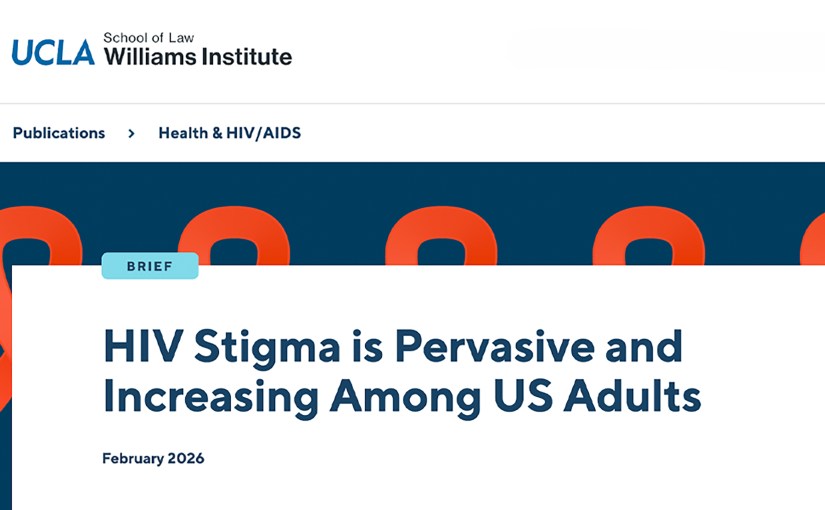
A February 2026 brief from the Williams Institute delivers a finding that should stop us cold: HIV stigma in the United States is increasing, not declining.[2]

From 2021 to 2024, the share of U.S. adults holding at least one stigmatizing belief about people living with HIV rose from 31.5% to 43.0%.[2] In 2024, about one-quarter of adults expressed blame-based stigma (26%), and nearly one-third expressed fear-based stigma (31%).[1]

But the increase is not evenly distributed.

The report describes two main forms of HIV stigma:

  • Fear-based stigma is discomfort or avoidance rooted in exaggerated or inaccurate beliefs about how HIV is transmitted.[2]
  • Blame-based stigma is belief that people with HIV are “immoral” or “blameworthy” and therefore “deserve” what happened to them.[2]

Both contradict modern science, including the basic reality that when a person living with HIV takes treatment as prescribed and gets and stays virally suppressed (undetectable), they do not transmit HIV to sexual partners.[3]

And one form of stigma is rising much faster than the other.

From 2021 to 2024, “blame-based stigma only” rose slightly (10.9% to 12.1%); “fear-based stigma only” rose more (12.8% to 16.8%). The share of adults endorsing both fear-based and blame-based stigma nearly doubled (7.8% to 14.1%).[2]

That pattern matters because blame is a moral judgment, but fear is a risk judgment.

Fear is the kind of belief that convinces the public they need “protection” from people living with HIV.

When stigma becomes law

The report says explicitly what too many public conversations avoid: fear-based stigma and blame-based stigma “run counter to scientific evidence” and still shape social and political conditions, including HIV criminalization and other structural discrimination.[2]

This is not theoretical. The Williams Institute notes that 32 states have laws that criminalize people living with HIV and 28 states impose enhanced criminal penalties tied to HIV status.[1] Indiana is in both of those numbers. The brief describes how many HIV criminal laws do not reflect current science about transmission risk and can criminalize conduct that poses negligible or no risk, such as spitting or biting.[2]

Here is the loop I cannot unsee anymore:

Stigma → shapes public attitudes → which shape law → which reinforce stigma.

A feedback loop.

Fear rarely grows in isolation. It grows in environments where institutions continue to signal danger.

The message laws send

There’s a piece of this that is hard to explain unless you live close to it. Laws do not just punish behavior. They tell stories about who is “risky,” who is “unsafe,” and who deserves special suspicion.

When HIV criminal laws stay on the books for decades after the science has changed, people living with HIV feel that. Even if enforcement is sporadic, the symbolism is constant.

And the message those laws send is hard to ignore:

You are still the monsters people were taught to fear in the 1980s.

I see this firsthand in our work with HIV Modernization Movement-Indiana.

For 10 years, we have worked to modernize HIV criminal laws in Indiana.[1] In that time we have achieved two significant legislative wins in 2020 and 2021, and one smaller penalty fix just this year in 2026.

But meaningful legal reform continues to stall in Indiana.

Our legislation has spent years bouncing between two chambers at the statehouse. Each session, it moves forward, then quietly gets redirected. From the outside, that looks like routine legislative gridlock. From the perspective of people living with HIV, it reads as a repeated institutional judgment: you are still dangerous enough that the law must keep treating you differently.

If you want to understand why fear-based stigma can rise even as treatment improves, start there.

Law teaches the public who to fear.

That is how fear-based stigma survives progress. Not because people have never heard “HIV is manageable,” but because their institutions keep teaching them “HIV is danger.”

Other possible drivers of rising fear

The Williams Institute brief documents the increase in stigma, but it is not designed to answer the “why now” question.[2]

I tried to think of some other reasons that come to mind from my advocacy work and interactions, in addition to the above analysis on the impact of outdated HIV criminal laws. Several other trends could explain fear-based stigma in particular.

One is the post-pandemic collapse in trust. When people distrust science and public health, they do not update their beliefs, even when the underlying facts change.

Another is plain HIV illiteracy. The science is clear, but the public’s mental framing is often stuck decades behind. Federal health agencies and providers still have to state, clearly and repeatedly, that people with HIV who are undetectable do not transmit HIV through sex. This is known as U=U, or Untransmittable is Undectable.[3]

A third driver is visibility that can unintentionally backfire. When HIV criminalization becomes more publicly discussed, the issue returns to the surface of public consciousness.

Government Signals and Public Risk Perception

The Williams Institute data stops in 2024. But the signals the current administration is sending now may shape what happens next.

When governments signal retreat from the HIV response, the public does not interpret that as progress. They interpret it as warning.

The White House issued an executive order in January 2025 directing a 90-day pause in U.S. foreign development assistance, pending review, with Office of Management and Budget enforcement through apportionment authority.[4]

Within the global HIV response, the policy debate has been especially loud around PEPFAR.[5] KFF reports that the administration’s FY 2026 budget request included $2.9 billion for bilateral PEPFAR activities, described as a $1.9 billion reduction.[6]

Even if some cuts are proposed rather than fully enacted, the social impact of the signal can be immediate: debate about shrinking HIV investment tells the public “this problem is getting less attention,” not “this problem is solved.”

Add symbolic erasure to that, and fear has fertile ground.

In late 2025, reporting indicated the U.S. government declined to mark World AIDS Day in the way it had historically.[7]

In February 2026, The Center for HIV Law and Policy’s Project Justice Partners workgroup published a statement framed around “defying erasure,” explicitly tying today’s HIV justice work to resisting silence and criminalization.[8]

Here is the backfire mechanism: When policymakers publicly debate cutting HIV funding or mute HIV awareness, they make HIV visible again. But visible as something the government is stepping away from. If the public already sees people living with HIV as risky, that retreat signal can be interpreted as: “They are going to be more dangerous now.”

The visibility, paradoxically, can amplify fear.

Policy decisions do more than allocate resources. They communicate priorities. When governments visibly debate cutting HIV funding, retreat from prevention commitments, or reduce public recognition of HIV awareness efforts, the public receives a signal about how seriously the threat is perceived.

For people whose understanding of HIV is already outdated, those signals can reinforce the belief that HIV remains a danger rather than a manageable condition.

Why this matters

Stigma is not a feelings problem. It is a public health problem.

The Williams Institute brief summarizes how stigma is linked to worse outcomes for people living with HIV, including poorer mental health, reduced engagement in care, and lower quality of life.[2]

Public health agencies also emphasize that HIV stigma discourages testing and accessing services.[9]

So when fear-based stigma rises, it is not just cruel. It is epidemic-fueling.

The challenge ahead

If fear-based stigma is rising, then the continued presence of HIV-specific criminal laws deserves scrutiny. Laws exist to address real harms and protect public safety. But they also send signals about how society understands risk.

When statutes continue to treat people living with HIV as uniquely dangerous decades after the science has changed, those signals can reinforce public fear rather than reflect current medical reality.

Over time, the gap between law and science can unintentionally sustain the stigma public health efforts are trying to reduce.

Next steps for advocacy messaging and strategy

Start treating fear-based stigma as a measurable communications failure, not a vague cultural problem:

  • Lead with U=U in plain language and repeat it relentlessly, because fear thrives on ambiguity.[10]
  • Pair that with a “law lags science” narrative that frames stalled reform itself as ongoing structural stigma.[2]
  • Pre-bunk the retreat-signal effect by naming how proposed cuts and muted awareness days can be interpreted as rising danger.[6]
  • Force accountability inside the legislature by making the bottleneck visible and concrete.

When law lags science long enough, the law itself begins to shape the fear it was originally meant to address.

The science has changed.
The people have changed.

Now the law (and the story it tells) must change too.

Keep Tellin’ The Story,
Professor Peacock

What are your thoughts on the reasons for this shift? Drop your ideas in the comments.

Note: The opinions expressed here are my own and do not reflect the views of HIV Modernization Movement–Indiana, the Williams Institute, or any other organization mentioned, unless quoted or attributed directly. This piece reflects my personal reflections and analysis. I used AI tools to help edit and organize my notes and online journaling into a more coherent, blog-friendly format.


Sources

[1] Williams Institute — HIV Stigma Is Pervasive and Increasing Among U.S. Adults
https://williamsinstitute.law.ucla.edu/publications/hiv-stigma-us/

[2] Williams Institute — HIV Stigma Is Pervasive and Increasing Among U.S. Adults (Feb 2026 Brief)
https://williamsinstitute.law.ucla.edu/wp-content/uploads/HIV-Stigma-Feb-2026.pdf

[3] CDC — HIV Treatment as Prevention
https://www.cdc.gov/hivpartners/php/hiv-treatment/index.html

[4] The White House — Reevaluating and Realigning United States Foreign Aid
https://www.whitehouse.gov/presidential-actions/2025/01/reevaluating-and-realigning-united-states-foreign-aid/

[5] Council on Foreign Relations — PEPFAR Has Saved Tens of Millions of Lives. Why Is It at Risk?
https://www.cfr.org/articles/pepfar-has-saved-tens-millions-lives-why-it-risk

[6] KFF — The Trump Administration’s Foreign Aid Review: Status of PEPFAR
https://www.kff.org/global-health-policy/the-trump-administrations-foreign-aid-review-status-of-pepfar/

[7] PBS NewsHour — Trump declines to mark World AIDS Day
https://www.pbs.org/newshour/show/trump-declines-to-mark-world-aids-day-as-funding-cuts-threaten-hiv-prevention-efforts

[8] Center for HIV Law and Policy — Defy Erasure, Defend Resistance, Disrupt Criminalization
https://www.hivlawandpolicy.org/news/defy-erasure-defend-resistance-disrupt-criminalization-positive-justice-project-partners-group

[9] CDC — Stigma and HIV
https://www.cdc.gov/hiv/health-equity/index.html

[10] CDC — Undetectable = Untransmittable
https://www.cdc.gov/global-hiv-tb/php/our-approach/undetectable-untransmittable.html
Body Positivity in Art: A New Project on Sexual Wellness


#CelebrateUU – Looking Ahead

Since 2019, I’ve been increasingly involved in bringing #CelebrateUU to life. When I first came up with the idea of celebrating #CelebrateUU anniversaries, I had no idea it would grow to a citywide exhibition. It’s a #BigMagic moment, from a book I read about the creative life (Big Magic, by Elizabeth Gilbert). I’ve learned to go with my creative flow, investing the time and energy, then seeing how far the Universe wants to me take the idea.

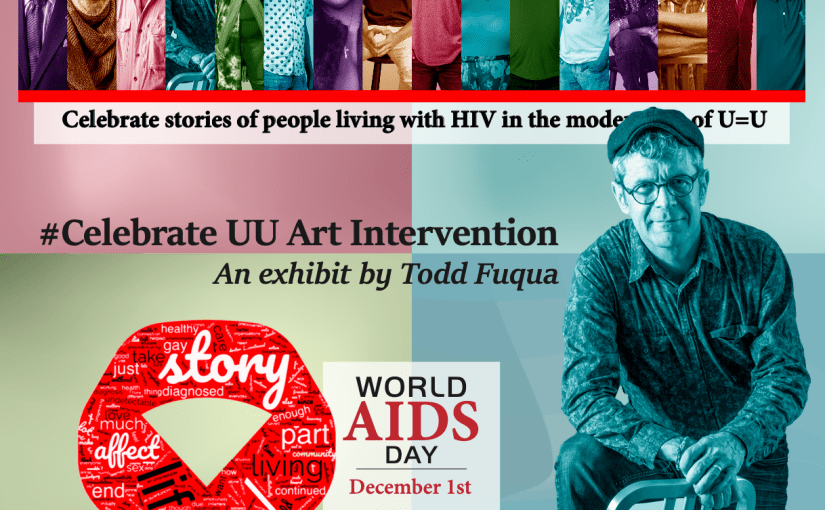
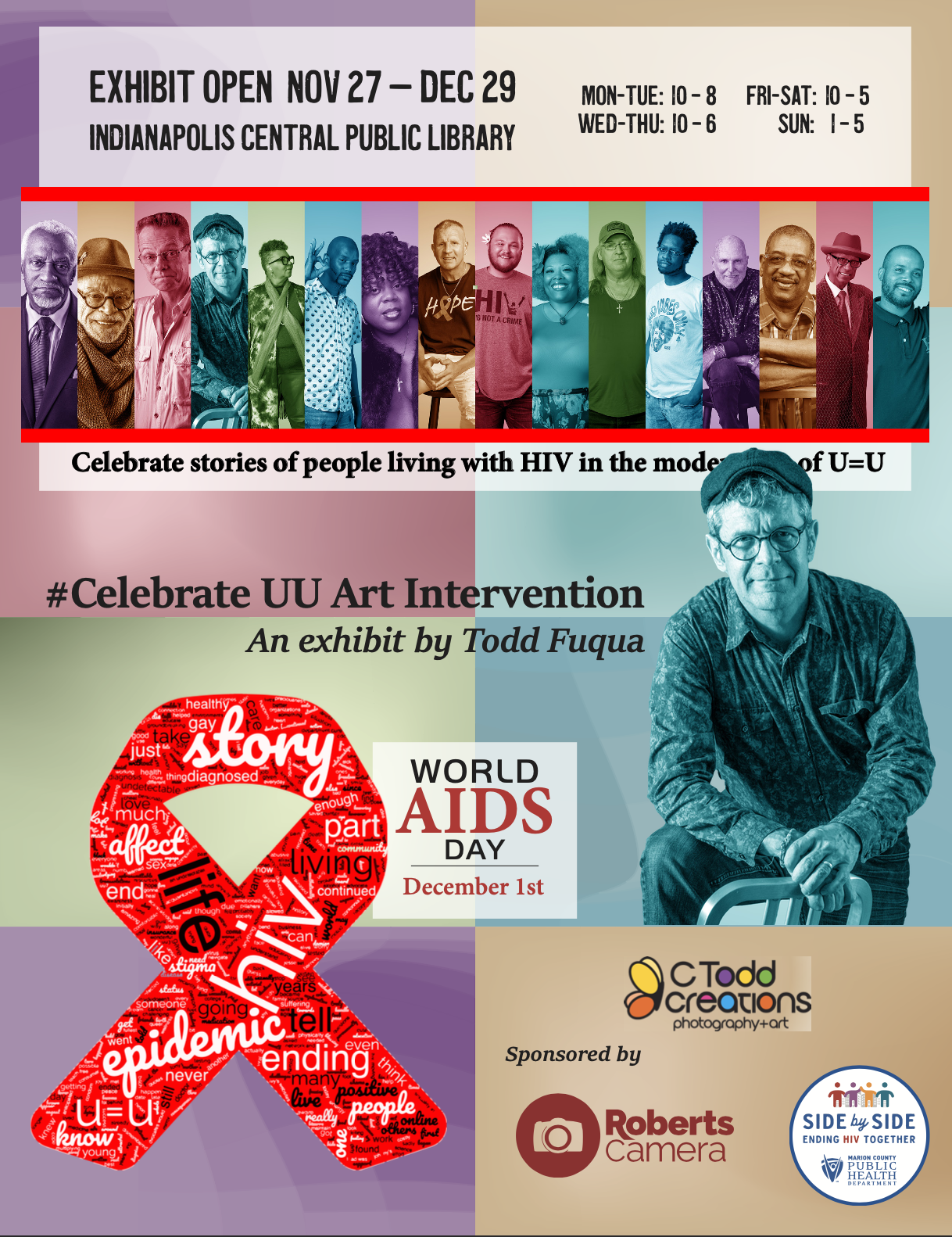
I’ll be releasing 10 new stories on December 1, 2024 at the exhibition opening that is part of a citywide World AIDS Day Community Reception hosted by the Marion County Public Health Department’s Ryan White HIV Services Program.

For the month exhibition, I’m grateful for sponsorship from the MCPHD Ending the HIV Epidemic Task Force, as well as Roberts Camera. I’m also grateful to the Marion County Library for allowing me to show my art in their public spaces. Through this project I learned of this FREE exhibition space – available to resident artists in Marion County!

#JustTheTip Campaign

I’ve had some creative setbacks this year – though I don’t like that language or self-talk, but it is my unfiltered mind response. I try to rephrase things today, to something like I have a great idea to raise awareness around harm reduction, and will be looking for new creative sponsorship or grant funding in 2025. There. The fact that I didn’t get the Indy Arts Council Arts for Awareness grant funding stream still stings a little. But, I have come to re-see this as a “not now, but…” response, not a “no, never” response from the Universe. That’s why I have networks with the @Indy Rainbow Chamber of Commerce, which has now gone statewide. I’ve also learned that @StepUp could be a reliable fiscal sponsor. They already serve that role for other statewide coalitions. This would allow my to ask for contributions that would be tax-deductible, that would fund the full project. I learned a lot from the grant response Q&A session after the notice of non-acceptance. It truly was a learning process – and I can’t wait to bring the #JustTheTip campaign to Indiana, on whatever level that looks. #BigMagic

Closing Out #CelebrateUU

So, when the stylized portrait phase of #CelebrateUU comes to a close on December 29th, I’ll have a huge time void. I’ve been asking the Universe to give me ideas, so I can hit the ground running. A creative life without projects is a dead one – or dying one. I’ve learned that the hard way.

I’ll have the input from my art intervention, where I ask people “How Did This #CelebrateUU Exhibit Make You Feel?” – inspired my a artistic mentor of mine. Thanks Al Duvall. HT to Dr. Carrie Foote, because I borrowed some inspiration from your workshop creative introduction. I’ll find ways to work quotes from that intervention into future social media posts, to keep working at HIV stigma through the stylized portraits and stories.

I know I want to continue to work in the HIV space artistically, but not ignoring HIV criminal reform, harm reduction, mental health, recovery, mental health. I will continue to champion the selfie portion of #CelebreateUU. That hasn’t taken off quite like I’d hope to based on the original concept. But there is time….

I’ve also thought about taking CelebrateUU statewide, or even nationally. If I could work the photo taking into a presentation or workshop, then I could take this on the road to Positive Living or US Conference on HIV/AIDS.

I know I want to get back into the @CToddDudeoir groove, and have already started that with a shoot with Logan Bloir, who I met through Man Crush Mania. I played with some of his images today. More to come…

#BodyPositiveSexPositive

I hope this isn’t passé. But, here’s my pitch to the Universe.

 I want to do a creative B&W nude portrait series to promote stories of sex and body positivity. Whatever that looks like to the person(s). 

Could be individuals, couples, thurples.

I’d want it to be a diverse set of individuals – age, gender identity, gender expression, sexual orientation, etc etc. I’ve learned to trust the Universe to bring me the right people. It may take time, but they show up. As they say, build it and they will come!

I like combining the storytelling with photographs. I think I want to do the series in the people’s home to be more intimate. This is out of my comfort zone – I like the control of studio lighting.  So I may change my mind but location aside, it’s one of the next projects I want to work on. 

The doubter in me has already started in on me. But anxiety is telling me to do this for with people who have lived experience with HIV, HepC or harm reduction. I may narrow that later. Make it a series on sexual health, wellness and prevention.

That’s what is unique about this project in terms of focus and storytelling.  I’ve wanted to do something in the HIV space and I realize now that stigma is very real in both areas – well all three, so I think there is a creative trifecta here.

My goal is to start work in this in January, after I’ve completed my #celebrateuu project. Not sure what that looks like at first – but I’ll dive in and start creating.

The new challenge will be finding funding so I can give participants a reasonable stipend for sharing their story and image. But I’m getting better at writing grants and could find help to locate donors or grants. In the meantime, I can do it time for print, where in exchange for their time, people get a select set of images from the photoshoot. I prefer cash.

Just putting this idea out into the universe.  

Thank you for coming to my #bigmagic ted talk. 

Spirit Journey 2: HIV Crim Artivism at Spirit & Place


When I was approached to create art for a recent Spirit & Place event around HIV criminalization and stigma, I was scared to death. How could I convey something meaningful through photography? I literally thought – I’ll have nothing. I can’t do this. Why did I agree to this?

I struggled in fear for several weeks, which I’ve learned is part of my process. Sans the fear, it’s actually a great way to percolate ideas and let them grow. I’ve also learned the best way to dispel fear is to act. So one day, I sat down and started to create some prototypes in Photoshop. It worked! I suddenly had several ideas I loved that really spoke to how I was feeling.

I’ve used the term “artivist” in my signature line for awhile. I picked up this term working on CelebrateUU. Since the initial rush of creation in 2019/2020, I hadn’t really done much work on artivism apart from social media. So I dove head first into creating pieces that used photography & art to address the topic of HIV criminalization.

How does it make you feel?

“How does an image make you feel?” This is the question that is always in the back of my mind as I create digital art from photographs. This questioning is also a form of art therapy, helping me to reclaim the shame & stigma I experience in life through digital art.

There is so much fear living with HIV. It’s kind of on “slow repeat” in the background of my life.

Fear of disclosure.

Fear of sex.

Fear of not being loved.

These are by far the top 3.

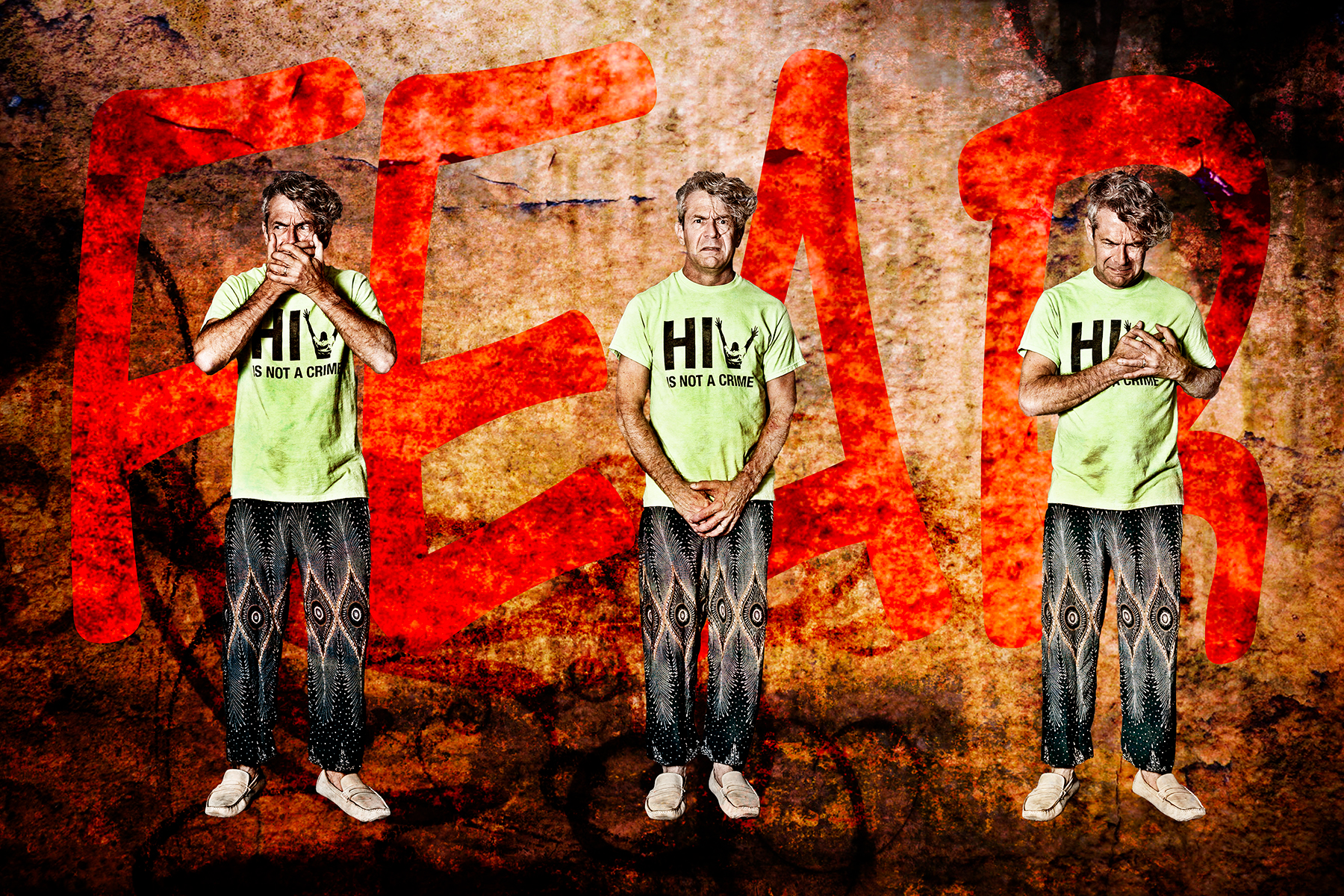
From that, came my first piece. Fear of…

Fear Of
Fear of…

Looking for something positive

Pun aside, I wanted to show more than fear or shame based art. I wanted to use this experience to bring healing, reclaiming the shame and stigma I experience living with HIV.

It was easy to identify with the stigma and fear created by our HIV criminal laws. wanted to go beyond that to rescript the negative messaging around HIV criminalization. 

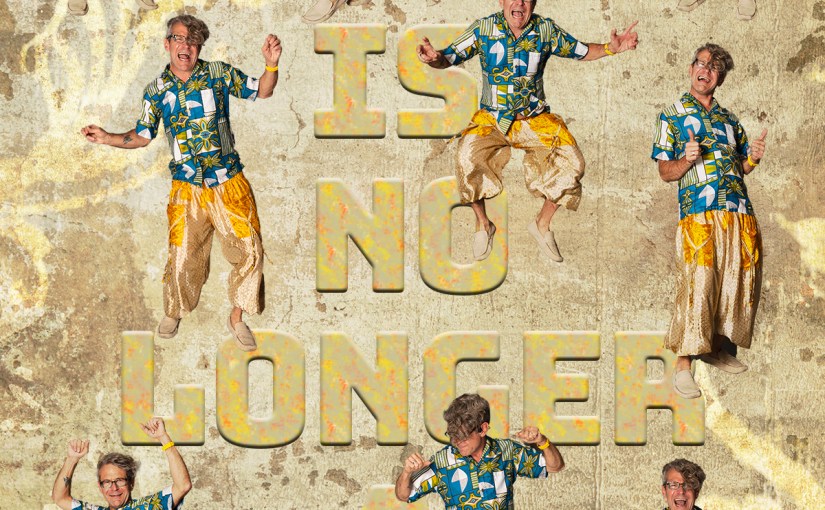
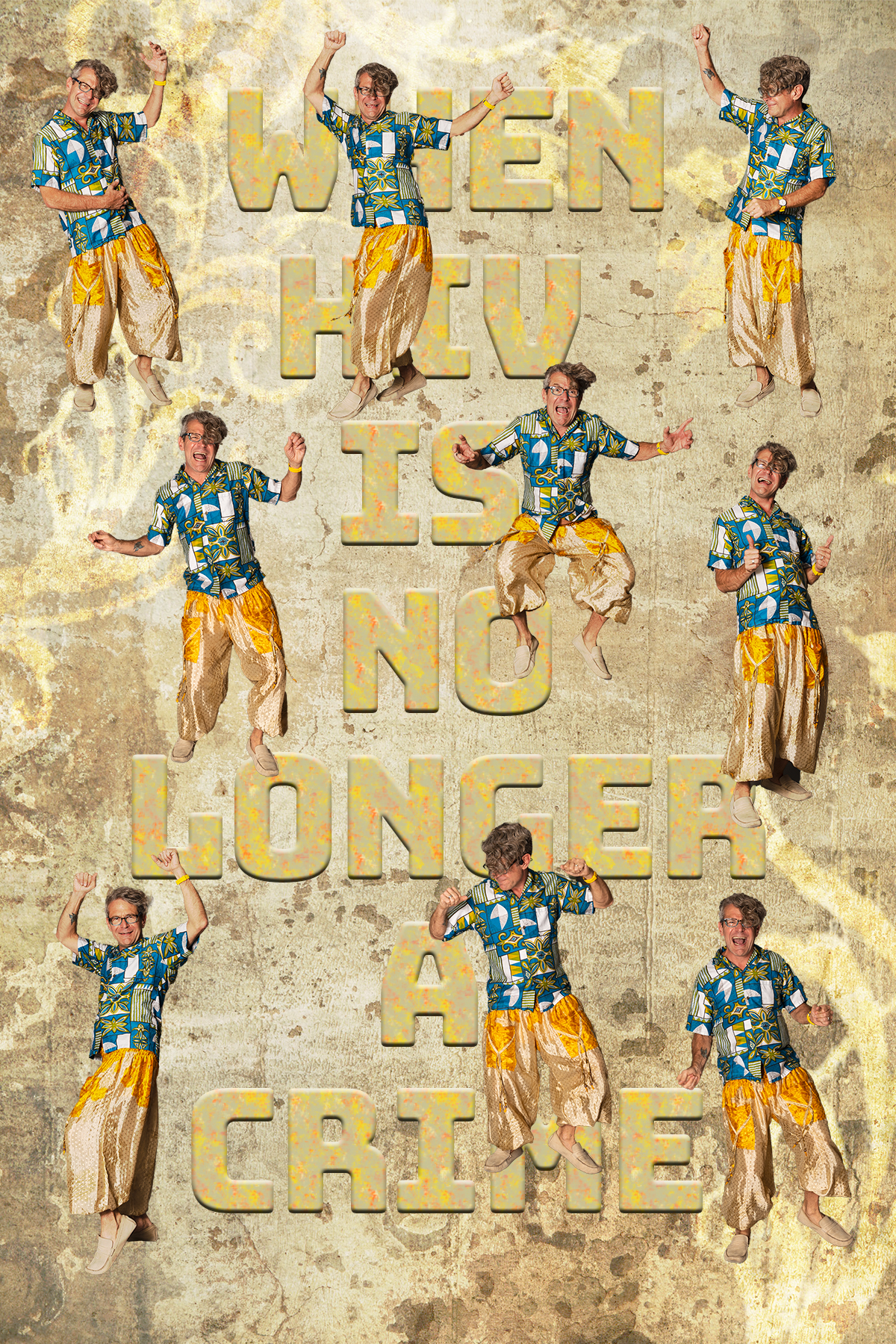
I reflected on “what will it feel like when these laws are modernized?” Immediately, I thought of joy. And when I feel joy – I love to dance. From there flowed my central piece of the exhibit, Happy Dance

Happy Dance
Happy Dance

Expand my skills, sharpen my tools

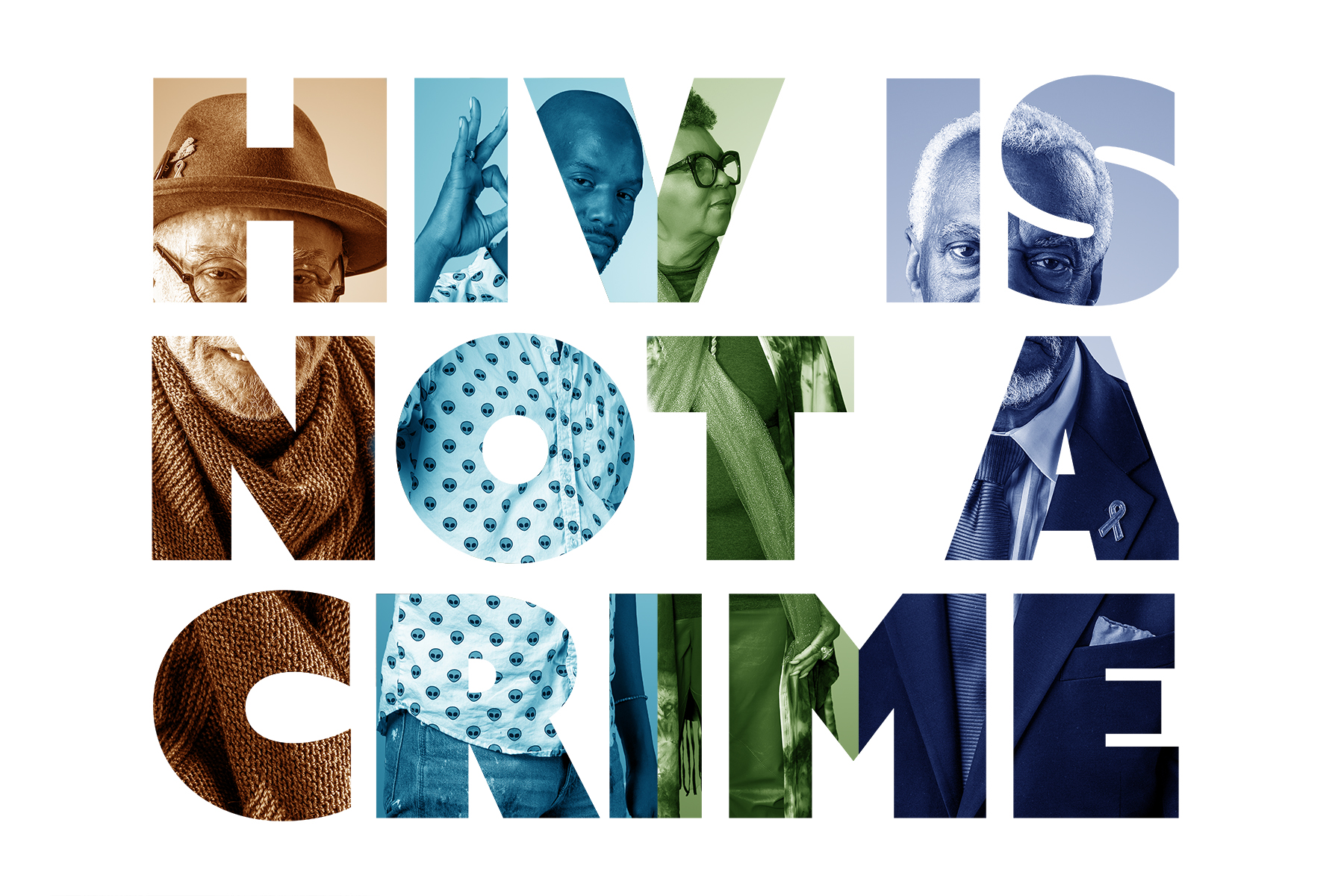
With artivism, words and graphic design are an important element of the creative process. I had seen a great example of images and text in a marketing banner for a local university. Students faces were used to mark out text in a cutout form. It was really cool. And I had almost no idea how to do it in Photoshop.

So this gave me an opportunity to sharpen my tools, and expand my skills in Photoshop. Most of the tutorials I found were for text cutouts based on a single image. I had multiple images, which needed to be moved around to align with the text. It was more complicated than the marketing banner. But each time I reworked it, I found a smarter way to do things. Would started out as a manual process, requiring lots of rework if I tweaked the design turned into a pretty slick smart object that allowed me to move the images around to show up best under the text.

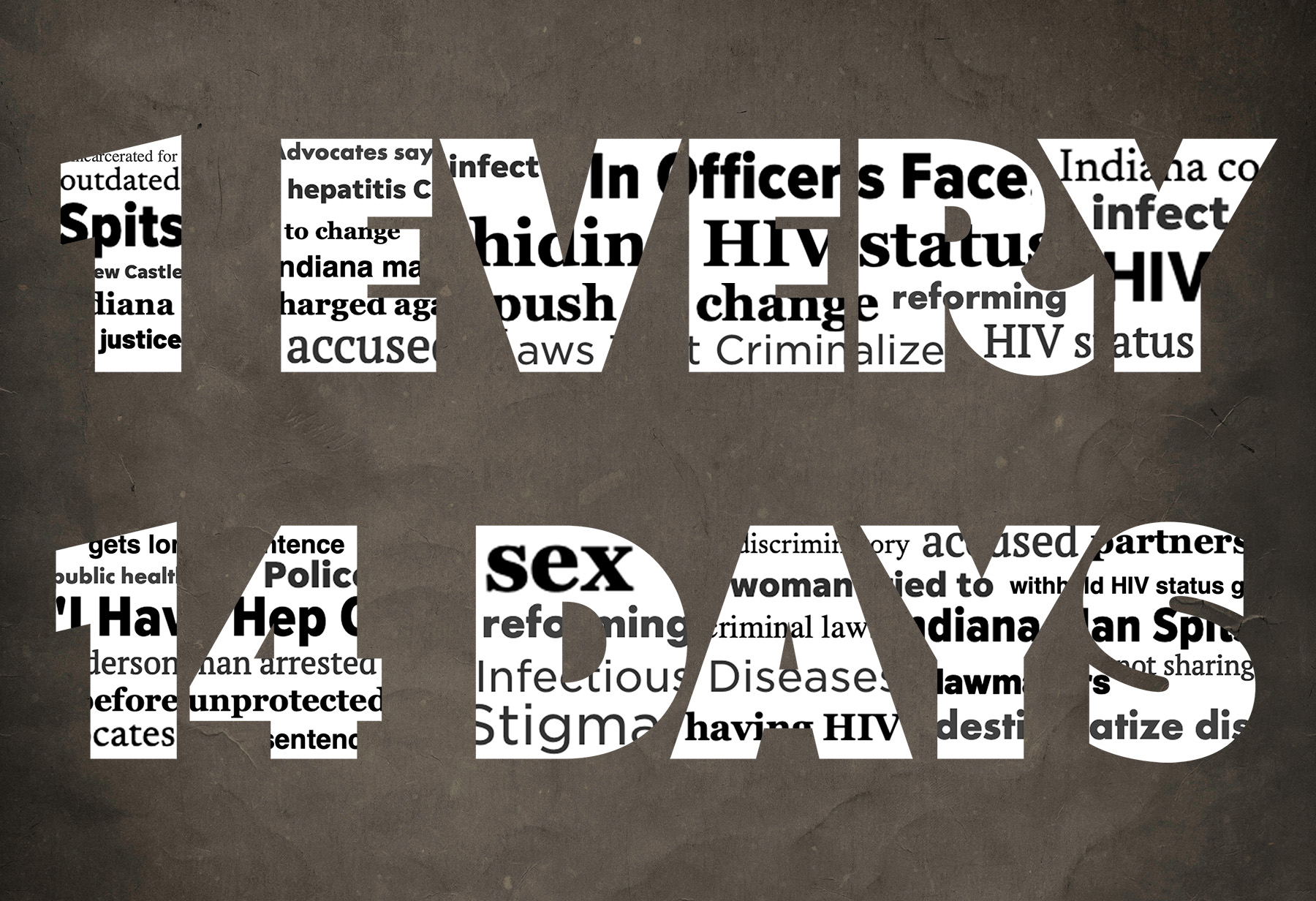
I used this technique in the next two pieces – HINAC Warriors and 1 Every 14 Days.

HIV Is Not a Crime
HINAC Warriors

1 Every 14 Days

Every 14 days in Indiana, someone in Indiana has court contact under outdated laws that unfairly criminalize people living with HIV or viral hepatitis. Nobody  should ever be arrested because of a health condition. 

“There is a movement in the U.S. to modernize HIV-specific criminal laws to bring them in line with current medical sciences and best criminal justice practices. …Experts argue that law reform is needed to effectively end the HIV epidemic.” – HIV Criminalization in Indiana Law Enforcement Research; Authors: Foote, Cisneros & Sears; 2022. 

For more information on efforts to modernize Indiana’s outdated criminal and public health laws,go to hivmodernizationmovement.org.

1 Every 14 Days

Manifest destiny – intention in art

I have seen how setting any intention can bring about the very outcome we desire, even when things are outside of our control.

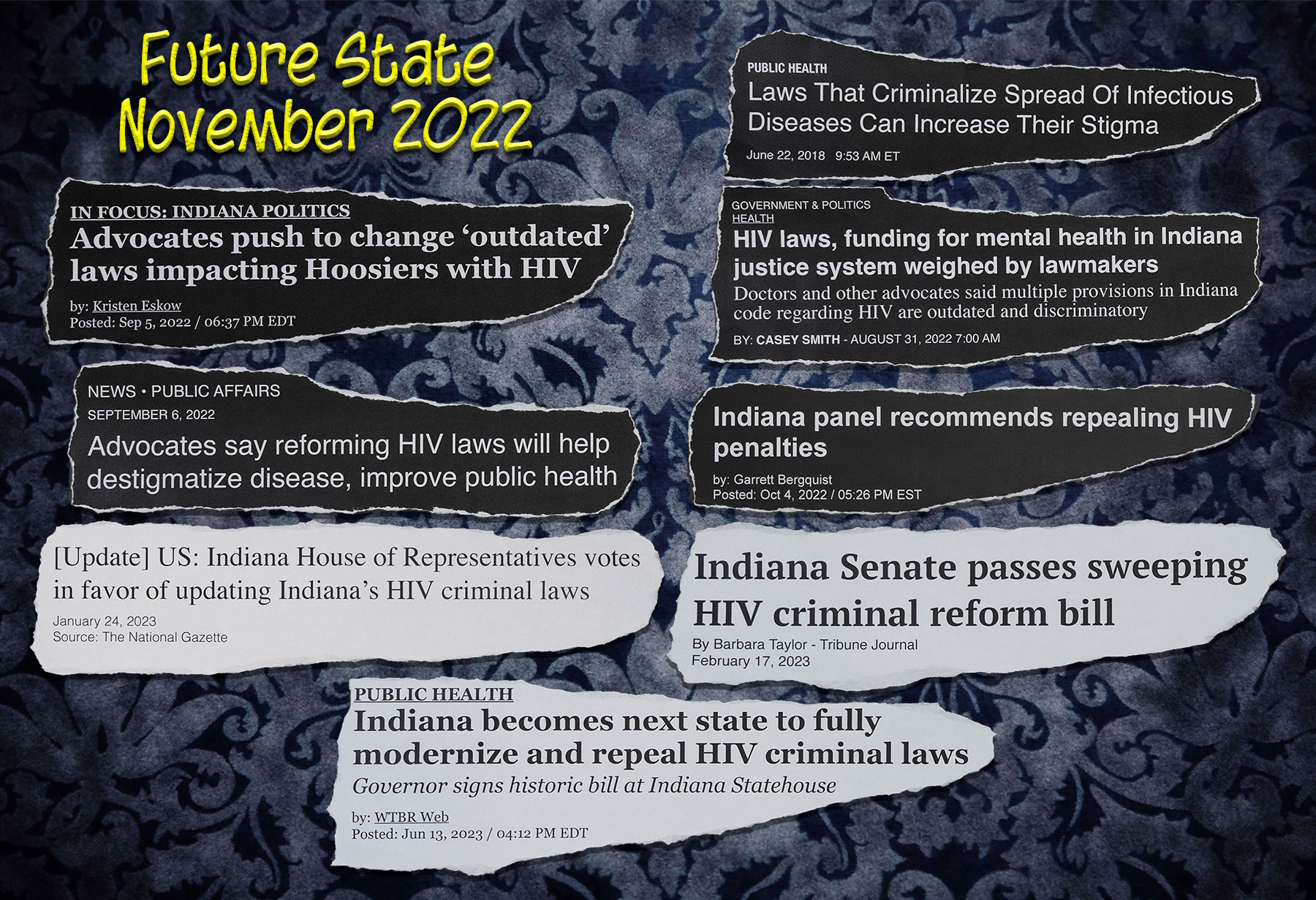
We’ve gotten a fair bit of decent news coverage this past year with HIV modernization in Indiana. I wanted to use these to tell part of the story. At one point, they were going to be part of Happy Dance, to somehow convey the moment when we were successful in changing that laws. In the end, I found they stood on their own – and were a way to set an intention for our work.

From there came the final piece around HIV Criminalization, November 2022 Future State: Will Life Imitate Art?

November 2022 Future State: Will Life Imitate Art?

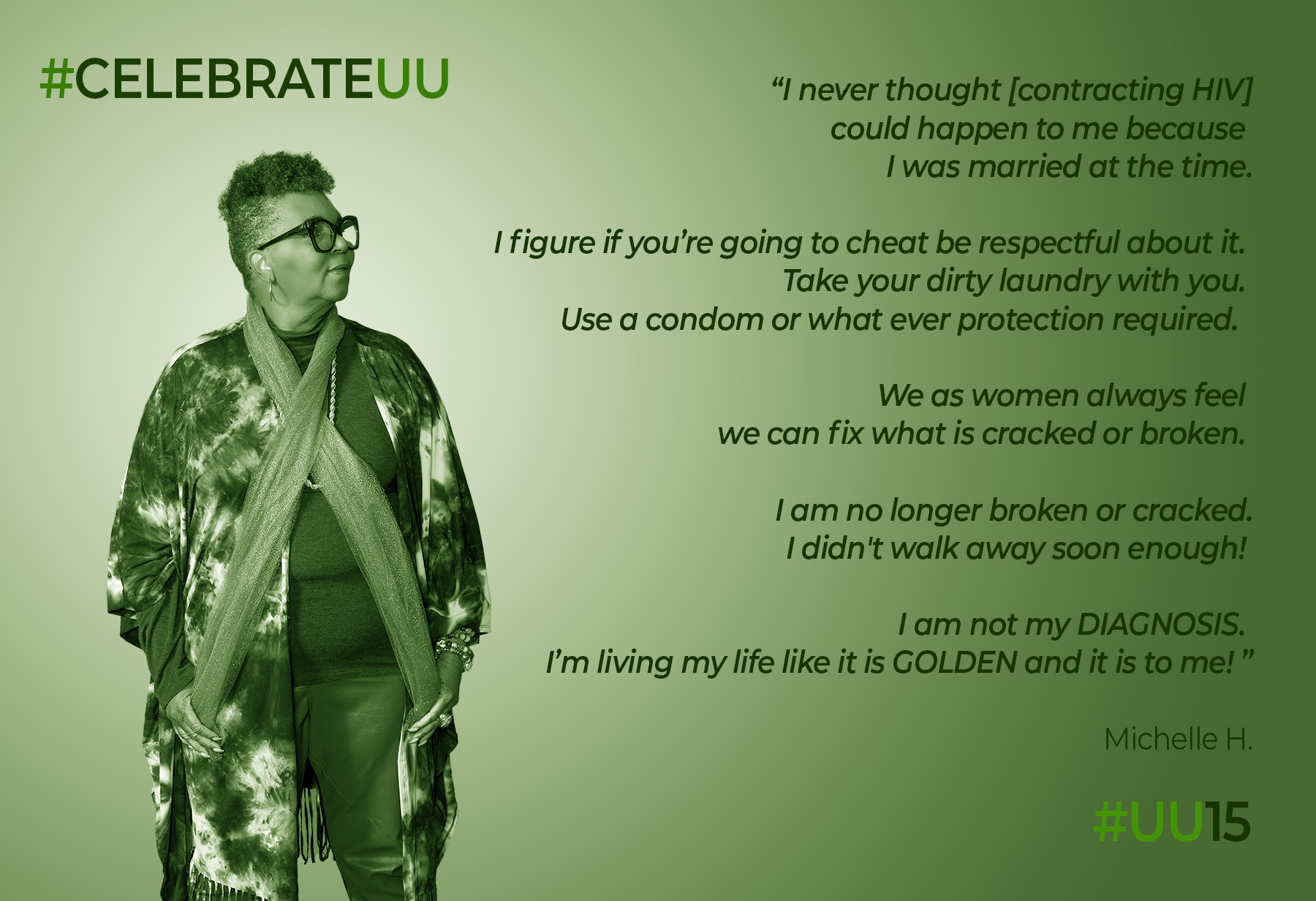
#CelebrateUU

I wanted to bring in U=U to the conversation, because our HIV criminal laws are based on 30 year old science. Since 2016, we know that when modern treatments reduce HIV to undetectable levels, it can’t be sexually transmitted. That’s also known as U=U – undetectable equals untransmittable. That’s huge.

If I my viral load is undetectable – which it is – why should I even have to disclose, because there is no risk of transmission? 

CelebrateUU builds on the concept of Undetectable=Untransmittable (U=U), calling on individuals living with HIV to start recognizing and celebrating our anniversaries of having an undetectable viral load. With this movement, we are putting a face and story to HIV and educating people about the science behind U=U. This is one powerful way to help end the stigma associated with HIV/AIDS.

I started CelebrateUU with 3 other individuals in 2019 & 2020. I had shared their stories on my CelebrateUU page, but had never shown them in a gallery setting. I’ve learned that every art pieces changes me, and that becomes even more true when I print them out. There’s something tangible and real to the story.

I also reached out to two friends who work in the HIV modernization space here in Indiana to include them as two new stories. Their faces & voices were premiered at Spirit and Place.

HIV Modernization
Ending The Stigma of People Living with HIV

Part of the Spirit & Place Festival

About this event

Through an art exhibit and panel discussion, learn how people living with HIV and their allies are working to end HIV stigma by modernizing Indiana’s outdated HIV criminal laws.

People living with HIV often face stigma and discrimination related to Indiana laws that criminalize them due to their positive HIV status. This event features speakers living with HIV who are working to end HIV criminalization through legislative change, activism, art, and community support.

A visual art show featuring Indy-based artist Contonnia Turner, Jr. and photographer/digital artist Todd Fuqua will provide a backdrop for the discussion. Contonnia Turner, Jr. is a talented young Black Hoosier with multiple layers of intersecting identity who creates artwork that reflects who he is physically, mentally, and spiritually. Todd Fuqua is an Indianapolis-based artivist (activism through art) who started a social movement called CelebrateUU, building on the concept of HIV Undetectable=Untransmittable (U=U).