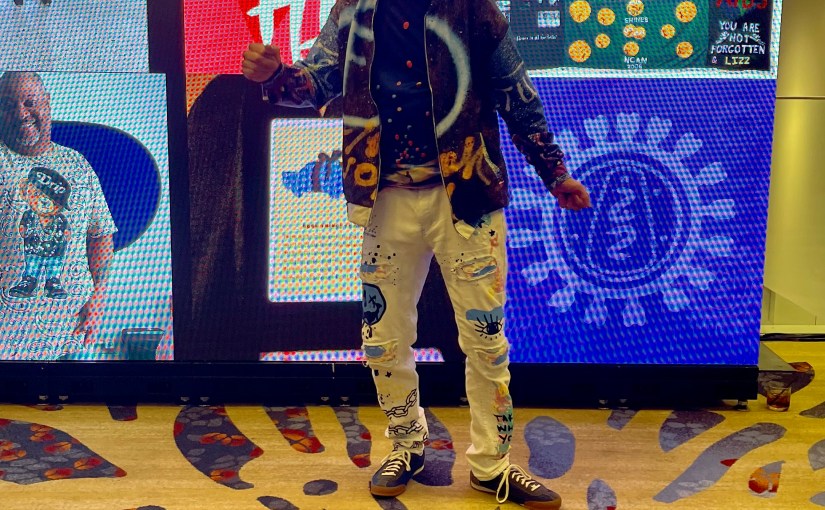
USCHA reminded me: gratitude is how we honor the fight, and responsibility is how we continue it!


What USCHA Taught Me About Legacy and Belonging

This was my first USCHA (US Conference on HIV/AIDS), and I wasn’t ready for it. I’ve been to HINAC (HIV Is Not a Crime) and AIDS Watch each twice, but this was different. There’s a magic at USCHA that gets under your skin.

I travelled to USCHA as part of NMAC’s 50+ Cohort, joining others like me from around the country who are aging and living with HIV. I’m grateful for the experience and the connections I made.

I’m 57. I’ve been living with HIV for 13 years. That’s my place in the timeline. Not better, not worse – just mine. But when I saw the decades of HIV/AIDS laid out at the Friday plenary, the science, the struggle, the survival – it cracked something open in me. For the first time, I felt the weight of what it means to be a long-term survivor. And I also knew that wasn’t me.

I came along after protease inhibitors, after HAART reshaped the fight. When I was diagnosed in 2012, my doctor told me, “The guidance is changing. We used to tell people to wait. Now we recommend you start treatment right away.” He still gave me the option – that’s how new it was. I didn’t understand then how historic that moment was. I do now.

In the 80s, I was a teenager. In the 90s, I was climbing the corporate ladder, coming out of the closet, largely disconnected from my community. By the time I came out, the epidemic wasn’t invisible anymore, but it was still tearing through our communities. The mid-90s would become the deadliest years. And while that grief was swallowing a generation, I was safe in my bubble, largely untouched, largely unaware. That’s the part that haunts me. The loss I didn’t live. The fire I didn’t feel.

So no – I don’t carry the same survivor’s guilt as those who were told they would die and somehow lived. My guilt is different. It’s the guilt of surviving in a post-HAART world, of being shielded by privilege, of waking up to a history I wasn’t part of, but which shaped everything around me.

At USCHA, no one made me feel like an outsider. But I did. I think people at USCHA saw me at 57 and assume I’m a long-term survivor. I’m not. I’m someone aging with HIV, without that same story. That difference is mine to wrestle with.

And yet, USCHA gave me clarity. It gave me a way to honor what came before me and what is still unfolding now. Because just as I look back in gratitude, I also look forward, knowing that those who come of age in the U=U and PrEP era will have their own place in history, too.

To say USCHA was “life-changing” sounds cliché. But this was something deeper. A reckoning. A reminder that every place in the timeline matters, including mine. And for that – for the people who came before me, for the community that still carries me forward – I am deeply grateful.

Keep telling the story,

Professor Peacock

Note: These are my thoughts and my story. I used AI to make helpful edits to my ramblings and online journaling.
Why 988 hotline matters


December 21 will always hold special significance for me.

As much as I try not to think about it, every year it creeps up on me. Some years, it has taken me to dark places. Some years, I’ve been able to see the growth.

This is one of those years where I’ve gained a new perspective on the night of December 21, 2009.

I’ve shared my story before. December 21, 2009 is the day I entered long-term recovery.

A lot’s happenened since then!

What’s changed?

This year, a new federal hotline service went into effect in Indiana. It’s called 988, as a phone call or a text.

“…Every person in every community nationwide can dial “988” to reach trained crisis counselors who can help in a mental health, substance use or suicide crisis.

988 is the first step in reimagining our crisis response, but there’s more work to do to ensure everyone receives the help they need — and deserve — in a crisis.” ~ NAMI

National Alliance on Mental Illness (NAMI), 988: Reimagining Crisis Response

988 vs 911

With the new service, I reimagined by own crisis situation back in 2009. What if I had been able to call 988 instead of 911?

Chances are they wouldn’t have sent the police, because I had called in an overdose and failed suicide attempt. What I needed was help. What I got was help – and an arrest 90 days later, just as I was just finishing my extended treatment at Fairbanks. With that arrest, my 19-year corporate career ended in me being fired. I lost my house. I was awarded and lost a plea bargain that could have reduced the charges to a misdemeanor. But early recovery was difficult messy and I failed a required drug test. Until recently, I had two felony charges on my record stemming back to that phone call.

I don’t sit in this awareness and wallow in self-pity. I’m glad with where my life is today. I’ve since been able to expunge my felony arrest record, which means I don’t have any more barriers to getting housing or employment. I can’t travel to Canada though – or at least I don’t think I can based on what I’ve read.

In general and thankfully, I’ve been able to land on my feet. I am self-employed, thriving as an artist and photographer, and have stable housing & transportation.

Even though I’ve suffered great losses and pain, I’m grateful to be thriving in my 50’s as an artist.

But it does demonstrate why this new 988 matters. How many lives can be salvaged, not torn apart by piling legal consequences on top of someone in crisis?

That could have been me…

It’s like the joke about what happens when you play a country & western song backwards?

You get your spouse back, your job back, you stop drinking.

Quite literally, I could have gotten the help to stop my using WITHOUT an arrest. In the long term of recovery, that would have been pretty useful.

Call or Text 988 if in crisis

So next time you or someone you know is in crisis, consider calling or texting 988 instead of involving the police via 911.

More about 988: NAMI’s Committment

NAMI is committed to advancing efforts to reimagine crisis response in our country. We believe that every person in crisis, and their families, should receive a humane response that treats them with dignity and connects them to appropriate and timely care. NAMI is calling for a standard of care for crisis services in every community that includes — 24/7 call centers that answer 988 calls locally, mobile crisis teams and crisis stabilization programs — that end the revolving door of ER visits, arrests, incarceration and homelessness.

NAMI Website

Keep tellin’ the story,
Thanks for listening

Professor Peacock III

Why does 988 matter?
Why does 988 matter? Reflections on 13 years in long-term recovery.

What have I learned?


That music heals.

I remember where I was when the news came.

The world wept.

More news comes.

We weep.

You remember where you were when the news came.

This music heals.

08.24.2022


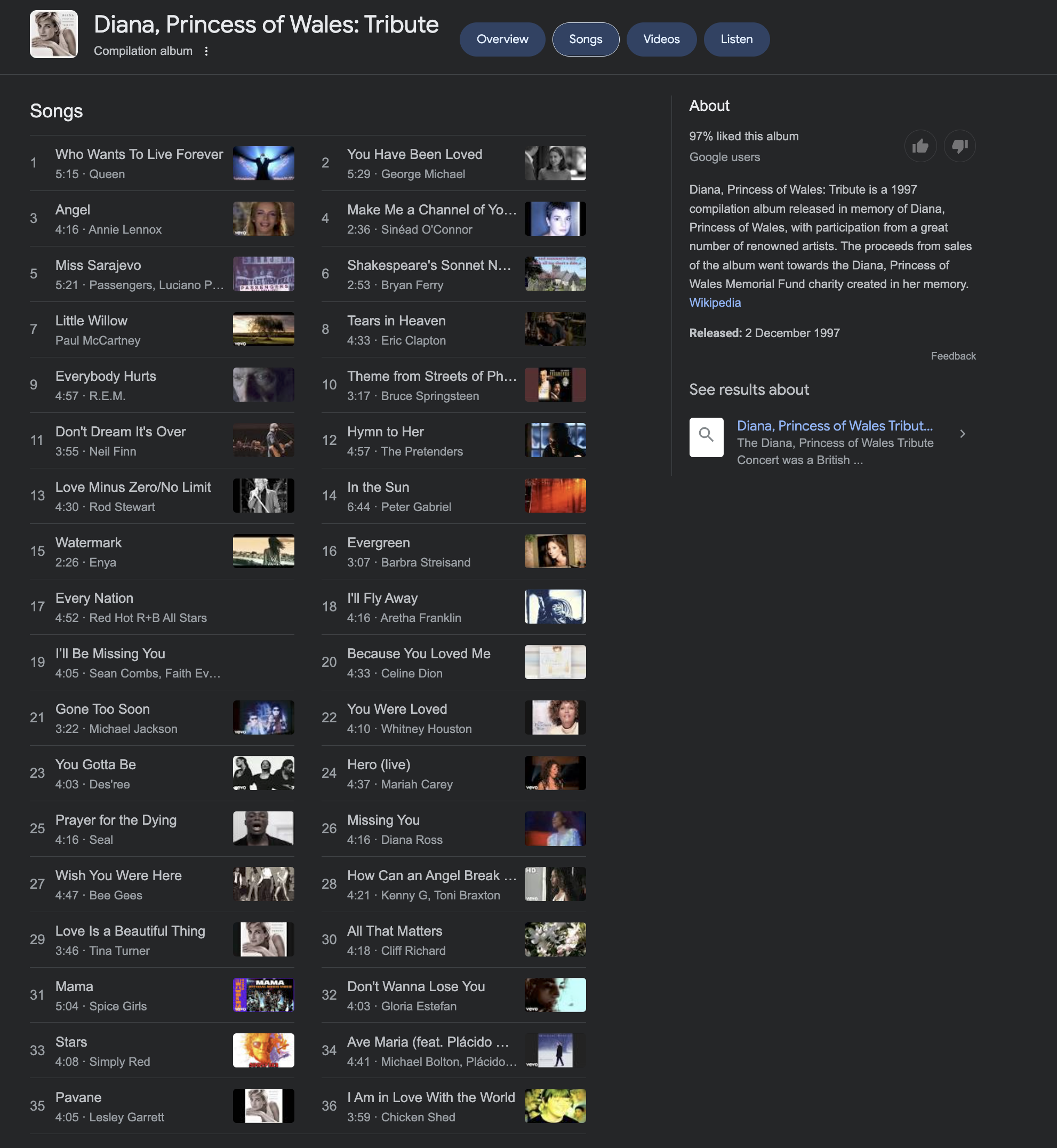
I invite you to find and listen to Diana, Princess of Wales: Tribute

You can find it on Pandora or purchase on Amazon.

Thanks for listening,

Keep tellin’ the story.

Sawubona

Professor C Todd Peacock III
Community Artivist, Connector, Storyteller & Healer