U=U, Ten Years Later: What the Science Settled and the World Still Hasn’t


I learned about U=U in 2019.

Not in 2016 when the message officially launched. Not at the beginning. I learned about it three years later, when the science was already clear and the evidence overwhelming. And what struck me immediately wasn’t the data. It was the disconnect.

Doctors had the science.
The world hadn’t caught up.

People living with HIV are still being treated as dangerous. Still criminalized. Still framed as a problem to manage rather than people to respect. The science says something radical and simple. Undetectable equals untransmittable. Zero risk. Full stop. But culture, law, and everyday beliefs are still operating on fear.

That gap changed me.

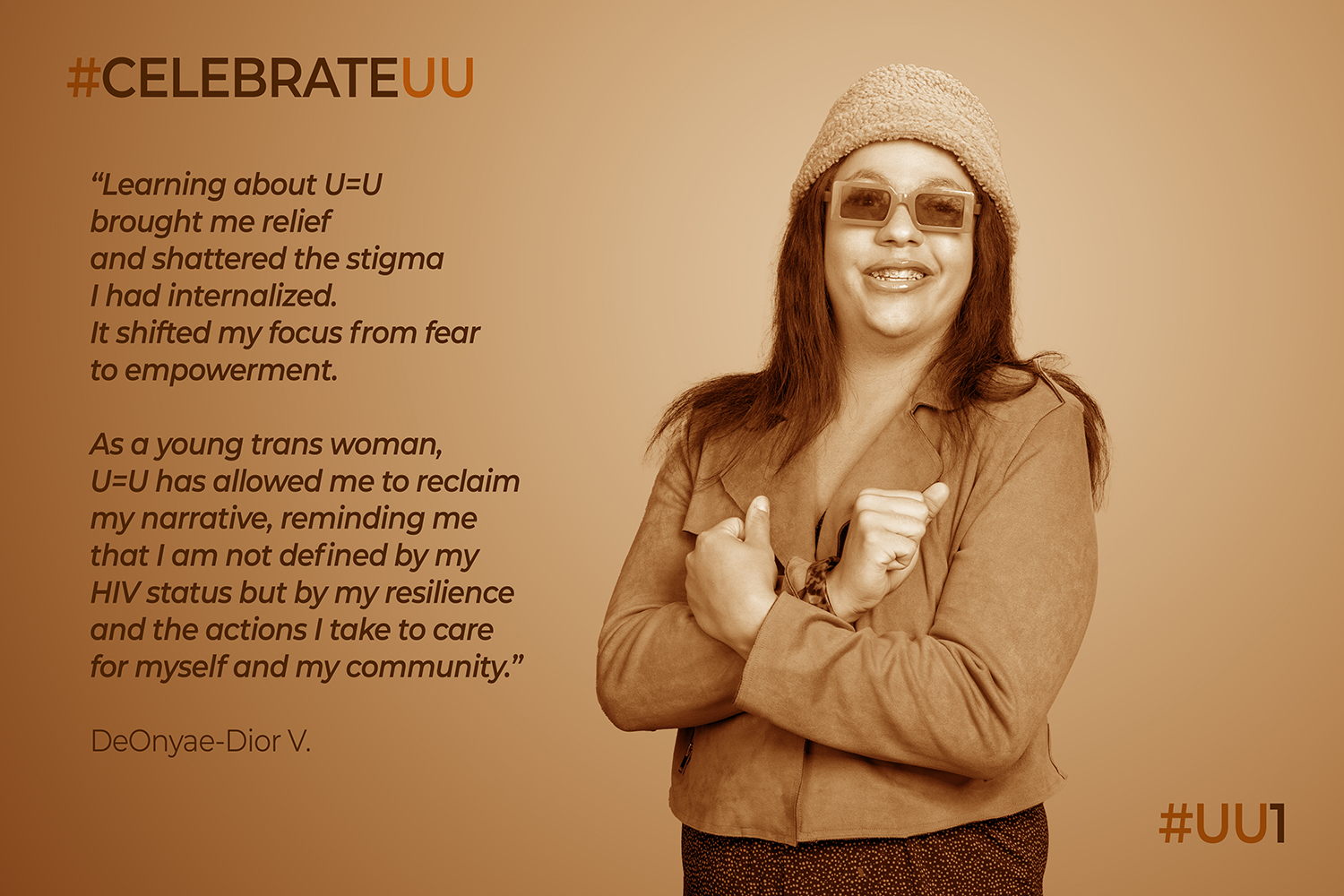
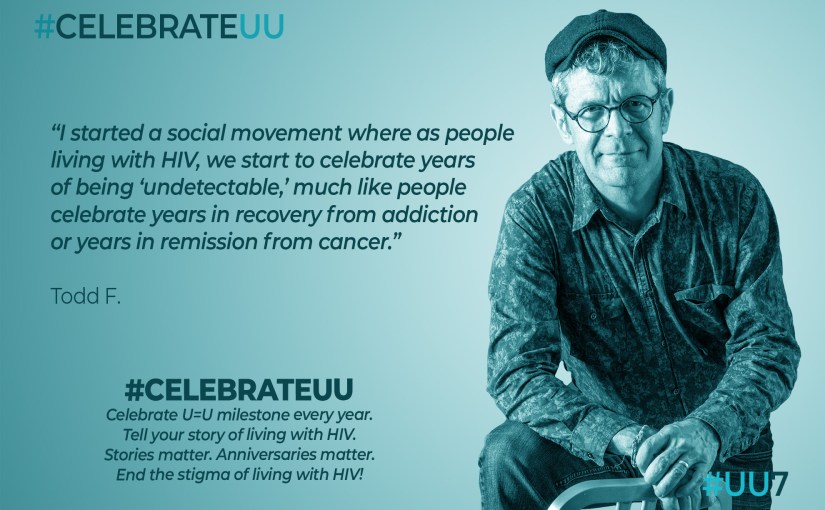
Later that year, I launched #CelebrateUU, not as an education campaign, but as a visibility project. I didn’t want to explain U=U. I wanted people to see it. Real people. Real faces. Real intimacy. Because stigma doesn’t dissolve through statistics alone. It dissolves when humanity becomes undeniable.
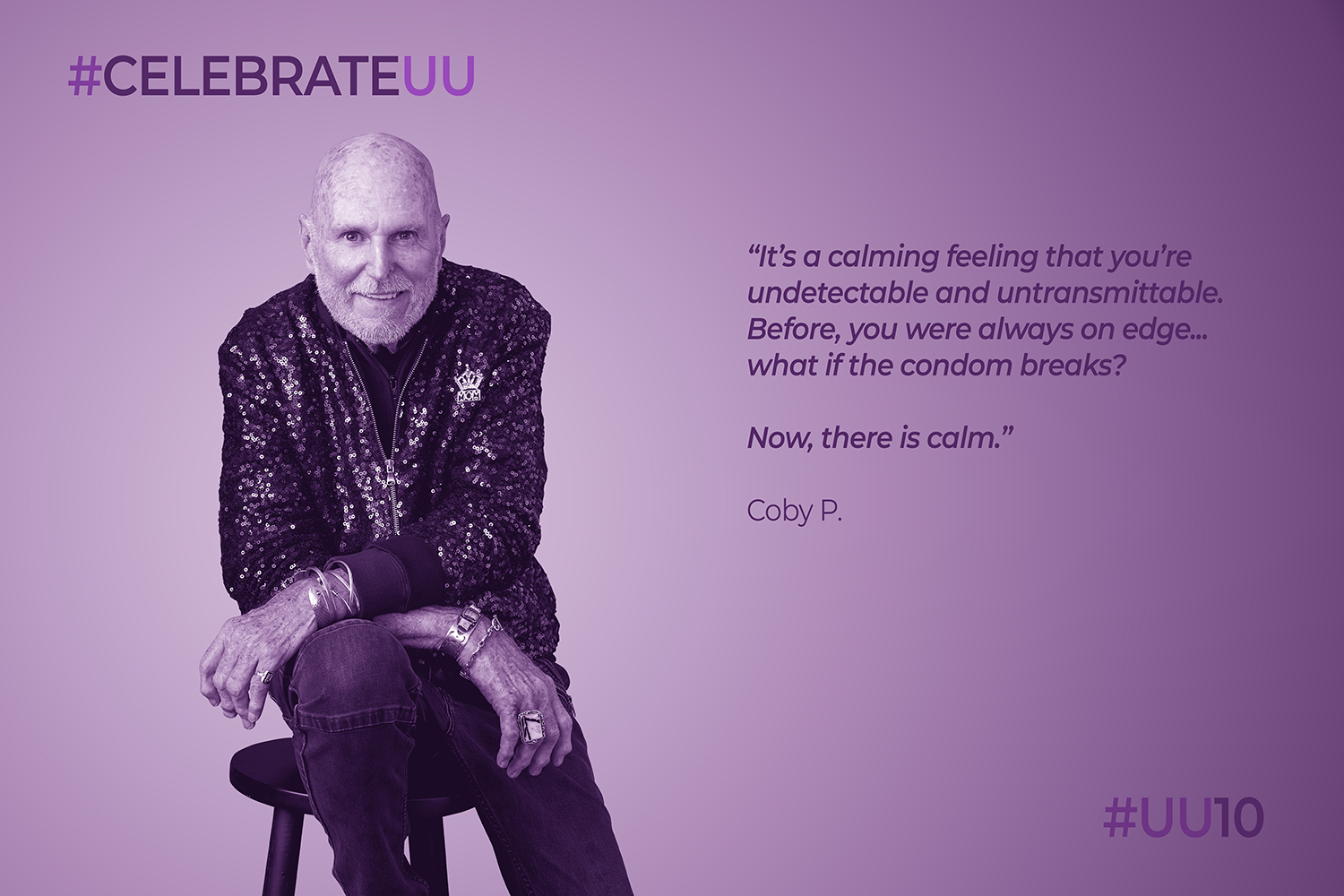
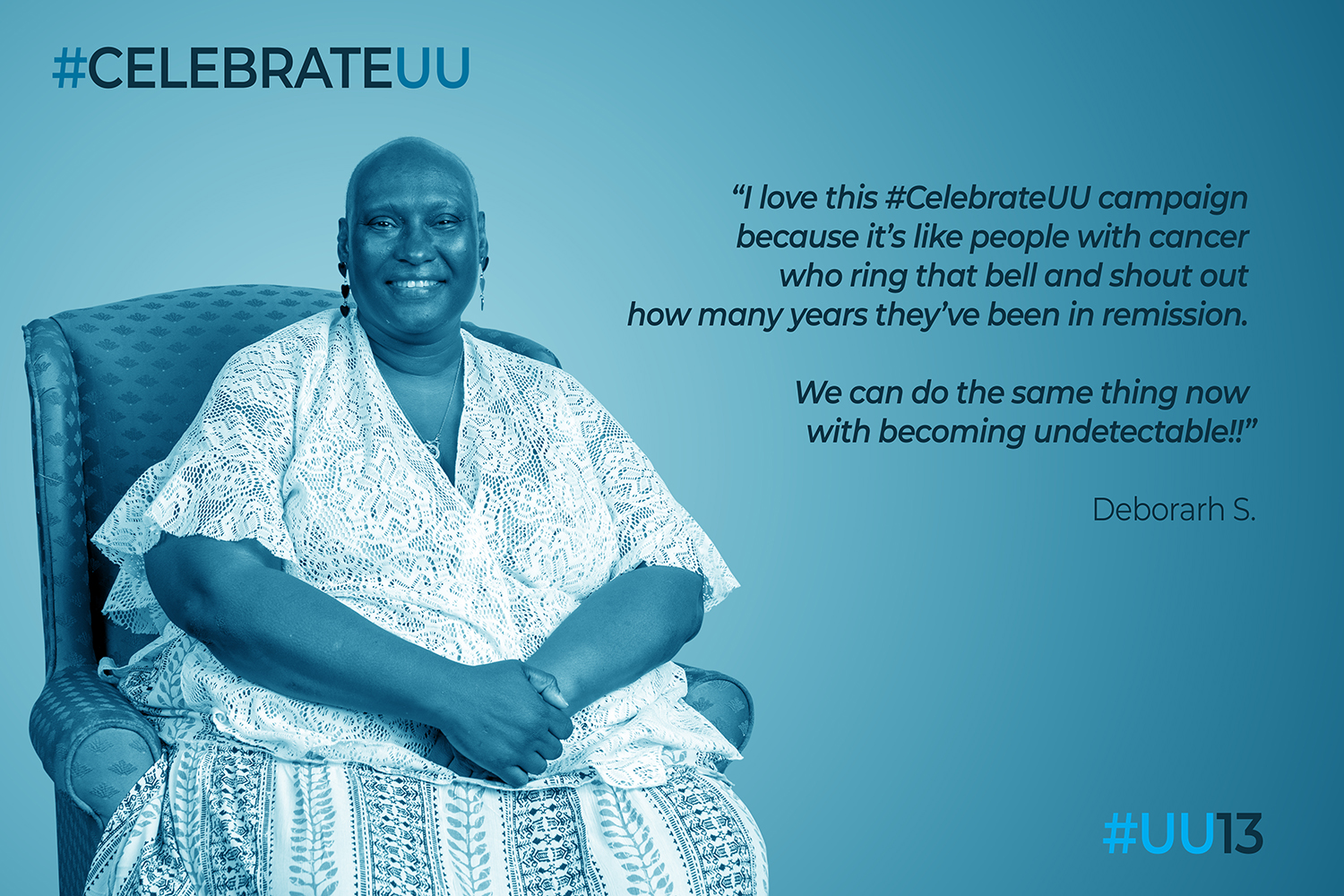
Over the years, I’ve watched U=U do incredible things.

When people receive clear, confident U=U information, it changes how they see themselves. It restores sexual confidence. It reframes treatment from obligation to empowerment. It opens the door to honesty, joy, and possibility. In clinical settings where providers speak clearly and without hedging, trust grows. Fear recedes. People breathe again.

But ten years in, it’s also clear where U=U hasn’t gone far enough.

U=U didn’t fail. But its impact has been uneven because belief spread slower than evidence.

Too many providers still hedge.
Too many public messages flatten U=U into a slogan.
Too many rural and marginalized communities are left behind.
Too many laws still treat people with HIV as a risk, not as people living with a managed condition.

And in the middle of this, a real and complicated concern has emerged. The fear that U=U creates a viral divide.

That concern deserves honesty, not avoidance.

A person’s value is not determined by viral load. Full stop. When someone can’t reach viral suppression, that is very often a failure of systems, not individuals. Housing instability. Mental health. Poverty. Trauma. Access gaps. Stigma itself. These are not personal shortcomings. They are structural barriers.

And the vast majority of people who are not virally suppressed still care deeply about preventing transmission. They take precautions. They disclose. They navigate risk thoughtfully and responsibly, often with far less support than they deserve.

But here’s the hard truth we can’t avoid.

Fear of creating a viral divide cannot be used to weaken or hide settled science.

The answer to inequity is not diluting the truth. It’s fixing the systems that keep people from benefiting from it. When we hedge U=U out of discomfort, we don’t protect people. We reinforce stigma. Worse, we create space for bad policy.

This matters because stigma doesn’t just live in attitudes. It lives in law.

U=U exposes how outdated HIV criminalization laws are, but science alone doesn’t repeal bad laws. When institutions hedge on U=U, they reinforce the idea that people with HIV are inherently dangerous, and that shows up in courtrooms, sentencing, and statutes.

In recent years, my work has shifted toward implementation. Grounded in U=U University, which clearly defines the science, I’ve focused on the question that ten years of U=U now demands: What happens after awareness?

Knowing the science is not the same as practicing it. When providers hesitate, when systems stay silent, stigma survives. And patients pay the price.

If a provider can’t explain U=U clearly, confidently, and consistently, then the promise of U=U remains theoretical for the people who need it most.

Ten years later, U=U has proven what’s medically possible. The virus can be rendered untransmittable. Fear no longer belongs in the science.

The work now is alignment.

Aligning healthcare with evidence.
Aligning law with reality.
Aligning public messaging with dignity.

Until our systems behave as if they believe what the science already tells us, U=U remains true, but its promise isn’t fully realized.

And that’s where the next decade begins.
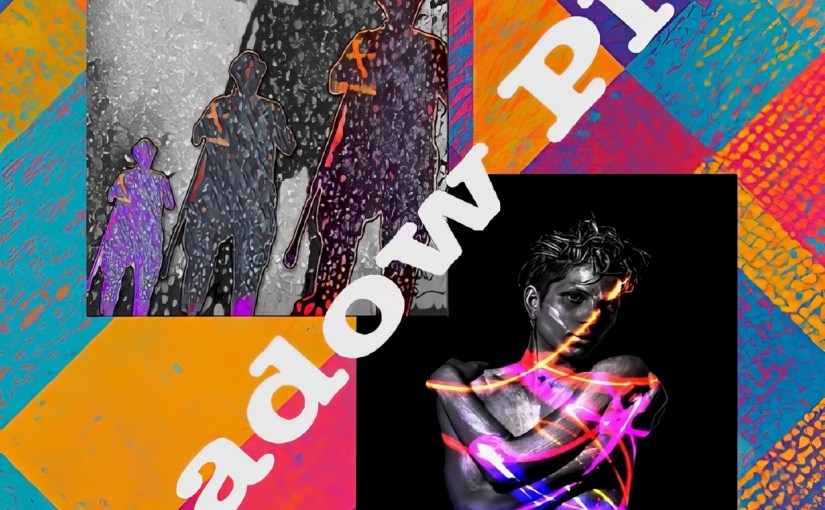
Shadow Play: A Pop-Up First Friday Event


Shadow PlayWhere bodies and cities meet in light and dark.

This exhibition brings together two queer artists who use shadow as both material and metaphor. Leslie Keith Shaw traces fleeting figures cast on sidewalks and streets, while Todd Fuqua creates digitally projected performances on the body itself. Together, their work transforms shadow into a space of queer joy, resistance, and play – blurring the line between public and intimate, concrete and flesh.


Finding Beauty in Unexpected Places

Art has always been a way to make sense of the world, to capture what might otherwise go unnoticed, and to transform struggle into something meaningful. For both artists featured in Shadow Play, creating images is not just about aesthetics. It is about survival, resilience, and finding joy where others might not think to look.

Leslie Keith Shaw has been making art in Indianapolis for more than two decades. His practice blends photography, scanography, and digital manipulation to transform everyday textures into vibrant, layered compositions. Sidewalk cracks, overlooked objects, and even items placed on a flatbed scanner become portals to hidden beauty. Living with HIV since 1987—a time when long-term survival was rarely imagined—Leslie approaches art as both sanctuary and celebration. Every piece is proof that life continues to hold mystery, meaning, and joy.

Todd Fuqua is a queer, non-binary photographer and visual storyteller based in Indianapolis who is also living with HIV. Their practice lives at the intersection of art and advocacy – what they call artivism. Through projects like #BLOOM, #CelebrateUU, and #ShadoWORK, Todd uses photography to explore identity, resilience, and liberation. Their imagery combines shadows, textures, and layered storytelling, with a strong emphasis on collaboration. Todd’s work challenges stigma, sparks dialogue about U=U and HIV criminalization, and celebrates the fullness of queer and marginalized lives.

What ties their practices together is a shared belief: that beauty and truth are always present, even if hidden at first glance. It could be a patch of sidewalk transformed into radiant abstraction. It could be a portrait layered with resilience and shadow. Both artists invite viewers to see differently. They encourage us to notice, to question, and to feel.

Together, their work affirms that art isn’t only about what is seen. It’s about what is discovered.


Call to Action

Join us for Shadow Play, a one-night pop-up exhibition on First Friday, October 4th, at 862 Virginia Avenue, Indianapolis. Step into an evening of light, shadow, and layered storytelling—an exploration of resilience, identity, and beauty in unexpected places. Don’t just see the art—experience the transformation.


Media Kit


FOR IMMEDIATE RELEASE

Shadow Play: Where Bodies and Cities Meet in Light and Dark
One-Night Pop-Up Exhibition | First Friday, October 3, 2025 | Indianapolis

Indianapolis, IN — This October, two Indianapolis-based queer artists will bring light, shadow, and layered storytelling to life in a one-night-only pop-up exhibition. Shadow Play opens Friday, October 3, 2025, at 862 Virginia Avenue (Mass Ave Knit Shop) in Fountain Square, as part of Indy’s First Friday gallery walk.

Shadow Play brings together the work of Leslie Keith Shaw and Todd Fuqua, two artists who use shadow as both material and metaphor. Shaw traces fleeting figures cast on sidewalks and streets, while Fuqua creates digitally projected performances on the body itself. Together, their practices transform shadow into a space of queer joy, resistance, and play – blurring the line between public and intimate, concrete and flesh.

For Shaw, who has been creating art in Indianapolis for more than two decades, overlooked textures – sidewalk cracks, discarded objects, even items placed on a scanner – become radiant abstractions. Diagnosed with HIV in 1987, Shaw’s practice is both sanctuary and celebration, proof that life continues to hold meaning, mystery, and joy.

Fuqua, a queer non-binary photographer and storyteller also living with HIV, works at the intersection of art and advocacy – what they call artivism. Through community-driven projects such as #BLOOM, #CelebrateUU, and #ShadoWORK, Fuqua layers photography, shadow, and texture to spark dialogue around stigma, resilience, and liberation.

What unites their work is a shared belief: that beauty & truth are always present, even if hidden at first glance. Whether drawn from the cracks of a city sidewalk or from the resilience etched on the human body, Shadow Play invites audiences to see differently—to notice, to question, to feel.


Event Details:

Shadow Play
First Friday, October 3, 2025
6:00 – 9:00 p.m.
Mass Ave Knit Shop: 862 Virginia Avenue, Indianapolis, IN 46203

Admission is free and open to the public.

The artists anticipate returning for November and December First Fridays, making Shadow Play an evolving installation across the fall season.

Press Contact:
C. Todd Fuqua
Email: todd@ctoddcreations.com | 317-847-1945
Event Website: https://bit.ly/ShadowPlayIndy
Media Kit: https://bit.ly/ShadowPlayMediaKit

Body Positivity in Art: A New Project on Sexual Wellness


#CelebrateUU – Looking Ahead

Since 2019, I’ve been increasingly involved in bringing #CelebrateUU to life. When I first came up with the idea of celebrating #CelebrateUU anniversaries, I had no idea it would grow to a citywide exhibition. It’s a #BigMagic moment, from a book I read about the creative life (Big Magic, by Elizabeth Gilbert). I’ve learned to go with my creative flow, investing the time and energy, then seeing how far the Universe wants to me take the idea.

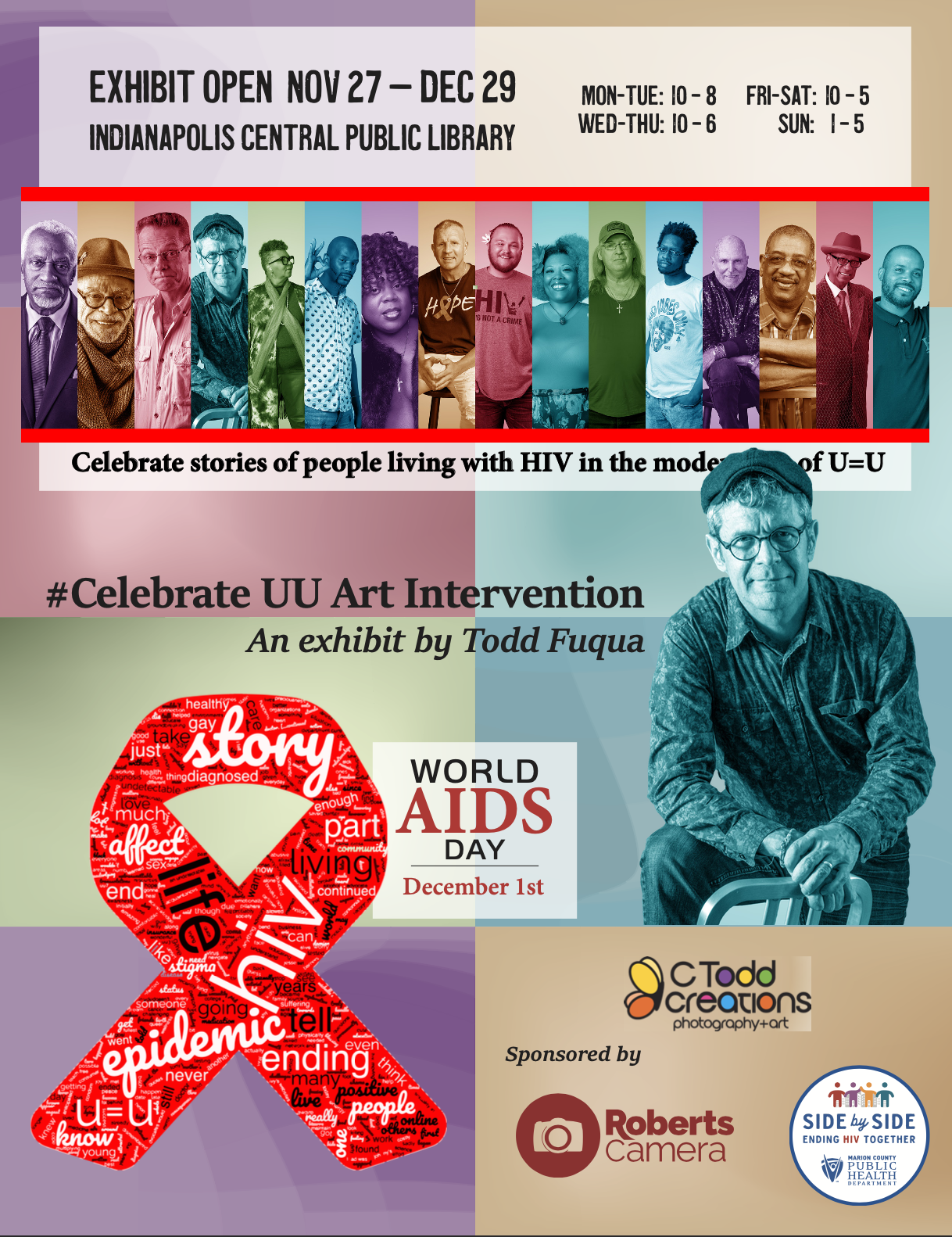
I’ll be releasing 10 new stories on December 1, 2024 at the exhibition opening that is part of a citywide World AIDS Day Community Reception hosted by the Marion County Public Health Department’s Ryan White HIV Services Program.

For the month exhibition, I’m grateful for sponsorship from the MCPHD Ending the HIV Epidemic Task Force, as well as Roberts Camera. I’m also grateful to the Marion County Library for allowing me to show my art in their public spaces. Through this project I learned of this FREE exhibition space – available to resident artists in Marion County!

#JustTheTip Campaign

I’ve had some creative setbacks this year – though I don’t like that language or self-talk, but it is my unfiltered mind response. I try to rephrase things today, to something like I have a great idea to raise awareness around harm reduction, and will be looking for new creative sponsorship or grant funding in 2025. There. The fact that I didn’t get the Indy Arts Council Arts for Awareness grant funding stream still stings a little. But, I have come to re-see this as a “not now, but…” response, not a “no, never” response from the Universe. That’s why I have networks with the @Indy Rainbow Chamber of Commerce, which has now gone statewide. I’ve also learned that @StepUp could be a reliable fiscal sponsor. They already serve that role for other statewide coalitions. This would allow my to ask for contributions that would be tax-deductible, that would fund the full project. I learned a lot from the grant response Q&A session after the notice of non-acceptance. It truly was a learning process – and I can’t wait to bring the #JustTheTip campaign to Indiana, on whatever level that looks. #BigMagic

Closing Out #CelebrateUU

So, when the stylized portrait phase of #CelebrateUU comes to a close on December 29th, I’ll have a huge time void. I’ve been asking the Universe to give me ideas, so I can hit the ground running. A creative life without projects is a dead one – or dying one. I’ve learned that the hard way.

I’ll have the input from my art intervention, where I ask people “How Did This #CelebrateUU Exhibit Make You Feel?” – inspired my a artistic mentor of mine. Thanks Al Duvall. HT to Dr. Carrie Foote, because I borrowed some inspiration from your workshop creative introduction. I’ll find ways to work quotes from that intervention into future social media posts, to keep working at HIV stigma through the stylized portraits and stories.

I know I want to continue to work in the HIV space artistically, but not ignoring HIV criminal reform, harm reduction, mental health, recovery, mental health. I will continue to champion the selfie portion of #CelebreateUU. That hasn’t taken off quite like I’d hope to based on the original concept. But there is time….

I’ve also thought about taking CelebrateUU statewide, or even nationally. If I could work the photo taking into a presentation or workshop, then I could take this on the road to Positive Living or US Conference on HIV/AIDS.

I know I want to get back into the @CToddDudeoir groove, and have already started that with a shoot with Logan Bloir, who I met through Man Crush Mania. I played with some of his images today. More to come…

#BodyPositiveSexPositive

I hope this isn’t passé. But, here’s my pitch to the Universe.

 I want to do a creative B&W nude portrait series to promote stories of sex and body positivity. Whatever that looks like to the person(s). 

Could be individuals, couples, thurples.

I’d want it to be a diverse set of individuals – age, gender identity, gender expression, sexual orientation, etc etc. I’ve learned to trust the Universe to bring me the right people. It may take time, but they show up. As they say, build it and they will come!

I like combining the storytelling with photographs. I think I want to do the series in the people’s home to be more intimate. This is out of my comfort zone – I like the control of studio lighting.  So I may change my mind but location aside, it’s one of the next projects I want to work on. 

The doubter in me has already started in on me. But anxiety is telling me to do this for with people who have lived experience with HIV, HepC or harm reduction. I may narrow that later. Make it a series on sexual health, wellness and prevention.

That’s what is unique about this project in terms of focus and storytelling.  I’ve wanted to do something in the HIV space and I realize now that stigma is very real in both areas – well all three, so I think there is a creative trifecta here.

My goal is to start work in this in January, after I’ve completed my #celebrateuu project. Not sure what that looks like at first – but I’ll dive in and start creating.

The new challenge will be finding funding so I can give participants a reasonable stipend for sharing their story and image. But I’m getting better at writing grants and could find help to locate donors or grants. In the meantime, I can do it time for print, where in exchange for their time, people get a select set of images from the photoshoot. I prefer cash.

Just putting this idea out into the universe.  

Thank you for coming to my #bigmagic ted talk.